
Parasa consocia
Parasa consocia
Description
How to identify
Parasa consocia is a species of moth belonging to the family Limacodidae, commonly known as slug moths. It is a member of the order Lepidoptera, characterized by a unique developmental stage where larvae resemble small slugs rather than typical caterpillars.
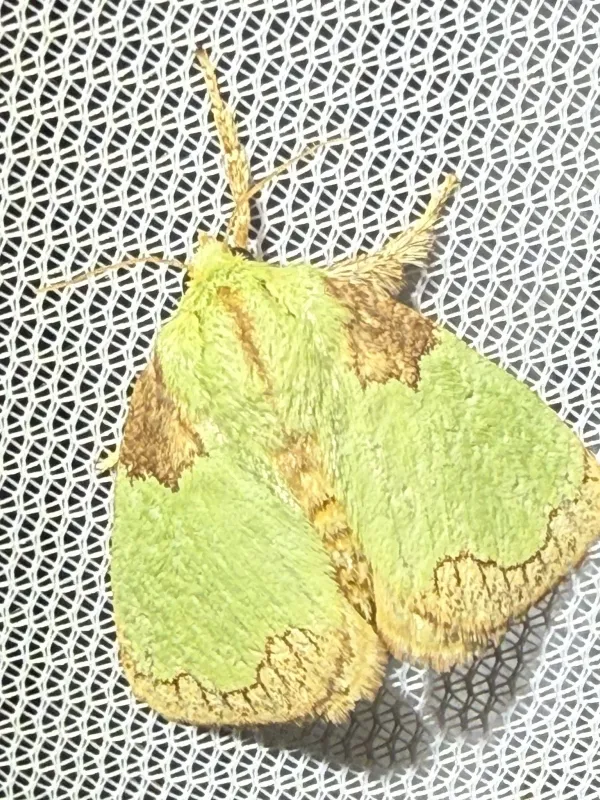
The adult moth has a wingspan of approximately 40 mm and displays a distinct green color with brown markings. While the adults are generally harmless, they play a crucial role in the reproductive cycle, with females laying eggs on the leaves of host plants.
The larvae are particularly notable for their appearance and defense mechanisms. Their bodies are covered in stinging spines or hairs that contain toxins, which can cause severe skin irritation, rashes, and burning sensations if touched by humans or animals.
The coloration of the larvae is aposematic—brightly colored with yellow, blue, or red patterns—which warns potential predators of their toxic nature. They undergo several molts, increasing in size significantly as they mature through their larval stages.
The pupal stage occurs inside a hard, round, brown cocoon often attached to the twigs or bark of the host tree. This protective structure allows the species to survive the harsh winter months until the conditions are favorable for the emergence of the next generation.
What it damages
Parasa consocia is a polyphagous pest, meaning it feeds on a wide variety of plants. It is particularly notorious for damaging deciduous trees, including fruit species like apple, pear, and plum, as well as ornamental trees like oak and elm.
The larvae possess strong, chewing mouthparts that allow them to consume large amounts of leaf tissue. Young larvae typically start by skeletonizing the leaf, leaving only the veins behind, while mature larvae devour the entire leaf blade.
Extensive feeding leads to rapid defoliation of the tree. When populations are high, the larvae can strip a tree of its foliage, which severely limits the tree's ability to undergo photosynthesis and store energy for the next growing season.
The damage caused by these pests leaves the host plant in a weakened state. A stressed tree becomes highly susceptible to secondary infections, fungal pathogens, and attacks by wood-boring insects, which can lead to long-term decline or death of the tree.
In nursery settings, this pest is especially destructive. The loss of leaves on young saplings significantly hampers their growth rate and can result in total mortality if the infestation is not addressed promptly.
When it appears
The life cycle of Parasa consocia is highly dependent on seasonal temperatures. The emergence of the first generation of adults usually occurs in late spring or early summer, synchronized with the budding and leafing out of their host plants.
After mating, females lay eggs on the undersides of leaves. The incubation period typically spans one to two weeks, depending on the ambient temperature and humidity levels. Larvae emerge and begin feeding almost immediately.
The peak feeding period for larvae is during mid-summer. Depending on the geographical region and climate, the insect may complete one or two generations per year. The larval stage is the most visible and damaging phase of their life cycle.
As summer draws to a close, the larvae prepare for overwintering. They descend to the trunk or remain on the branches to spin their cocoons. The pupal stage enters diapause, remaining dormant throughout the autumn and winter seasons.
Effective monitoring should begin early in the spring. Observing the leaves for early signs of egg clusters or initial feeding damage is key to preventing a widespread infestation before the larvae grow larger and more destructive.
Signs of infestation
One of the earliest signs of Parasa consocia activity is the appearance of irregular, small holes or patches of skeletonized tissue on the leaves. These patterns often occur in groups where the eggs were originally clustered.
The presence of frass, or larval excrement, on the leaves or the ground beneath the tree is a clear indicator of a feeding colony. These small, dark pellets often accumulate on lower leaves, revealing the location of the larvae hidden in the canopy.
Discarded larval skins, left behind after molting, are another sign that a population is actively developing. Finding these remnants can help garden managers identify the current age of the larvae and determine the urgency of intervention.
The cocoons are distinctive and can often be found by inspecting the bark and twigs. They resemble small, hard, brown nodes or buds and are often overlooked until a careful survey is conducted during the dormant season.
Any unusual yellowing or thinning of the canopy during the peak growing season should prompt an inspection. Because of the stinging nature of the larvae, gardeners should wear protective clothing when inspecting trees to avoid direct skin contact.
Control measures
Mechanical control is highly effective for small-scale infestations. This involves manual collection of the larvae (using protective gloves) and the pruning and destruction of infested branches containing cocoons during the winter months.
Biological control using Bacillus thuringiensis (Bt) is a preferred method for managing younger larvae. This bacterial insecticide is effective against lepidopteran pests while remaining safe for beneficial predators and pollinators.
Chemical control may be necessary for severe infestations. Use of registered insecticides, such as pyrethroids, can reduce population numbers. However, applications must be timed carefully to avoid harming beneficial insects during plant flowering periods.
Integrated Pest Management (IPM) encourages the preservation of natural enemies. Various parasitic wasps are known to prey on Parasa consocia eggs and larvae, playing a vital role in keeping pest populations below economic thresholds.
- Regular scouting of leaf undersides from June to August.
- Removing and destroying bark debris that may hide overwintering cocoons.
- Ensuring proper timing of insecticide use to minimize environmental impact.
- Promoting biodiversity in the orchard to encourage natural predators.
- Using light traps to monitor adult flight and predict the timing of the next larval generation.
Taxonomy
- Latin name
- Parasa consocia
- Order
- Lepidoptera (butterflies)
- Family
- Limacodidae
- EPPO code
- PARSCO
Discussion
No discussions yet — be the first.