
Green slug moth
Parasa chlorostigma
Description
How to identify
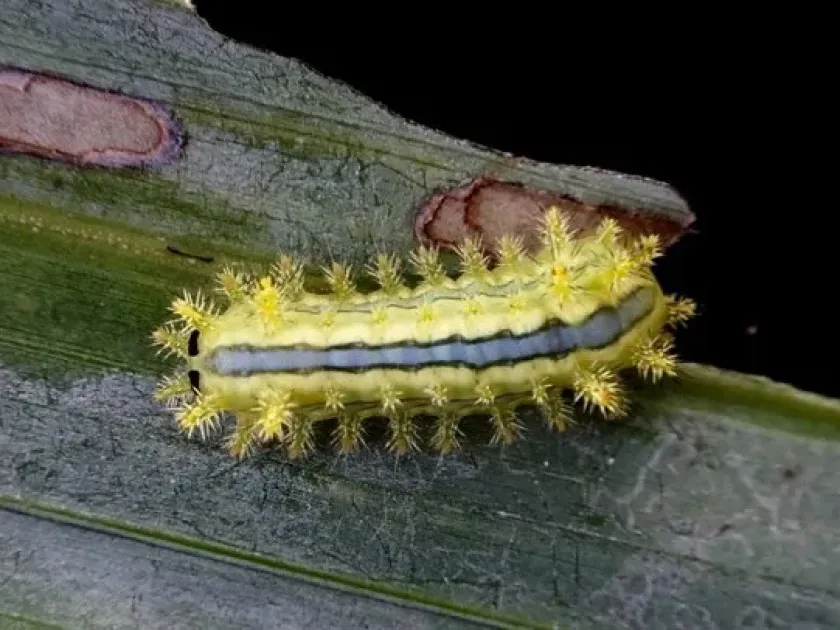
The green slug moth (Parasa chlorostigma) belongs to the Limacodidae family of the order Lepidoptera. These moths are widely known for their larvae, which resemble slugs due to their flattened, soft, and vibrant green bodies often adorned with distinct patterns.
The caterpillars have reduced or vestigial legs, moving with a smooth, gliding motion. Their unique appearance serves as both camouflage among leaves and a warning to potential predators regarding their often-irritating hairs or specialized glands.
The lifecycle consists of four stages: egg, larva, pupa, and adult. They typically overwinter as pupae within hard, oval-shaped cocoons attached to the bark of host trees or hidden within leaf litter, making them difficult to detect during dormant months.
Adult moths have a moderate wingspan, typically ranging from 30 to 40 mm. Their wings often exhibit green hues, allowing them to blend perfectly into the canopy, while their antennae are thread-like and sensitive to environmental stimuli.
The duration of the generation cycle is heavily influenced by regional temperatures and host availability. Understanding these developmental windows is critical for orchard managers who need to time their scouting and intervention strategies effectively.
What it damages
As a polyphagous species, the green slug moth affects a wide variety of woody plants. Common hosts include fruit trees like apples, pears, and citrus, as well as various ornamental shrubs and economic crops such as tea bushes.
The larvae feed on leaf tissue, starting from the leaf margins and advancing inward. During severe outbreaks, they can completely defoliate branches, leading to a significant loss of photosynthetic capacity and reduced vigor of the tree.
Repeated defoliation by these caterpillars weakens the trees, making them susceptible to secondary infections, such as fungal pathogens or infestation by opportunistic wood-boring insects. This cumulative stress often leads to stunted growth.
The loss of foliage directly impacts fruit yield and quality. Without sufficient leaf cover, trees struggle to provide enough energy for fruit development, resulting in smaller, poorer-quality harvests that fail to meet market standards.
In young plantations or nurseries, heavy infestations can lead to the death of saplings, representing a substantial economic loss. Managing this pest is therefore vital for maintaining the long-term health and productivity of the orchard.
Signs of infestation
The most noticeable sign of a green slug moth infestation is the presence of irregular, ragged leaf edges. As the larvae mature, they consume larger portions of the leaf, often leaving only the major veins behind.
Careful inspection of the undersides of leaves usually reveals the caterpillars, which can be difficult to spot due to their green color. Droppings (frass) on the leaves or the ground beneath the tree provide further evidence of their presence.
During the dormant season, search for firm, brownish or bark-colored cocoons on trunks and branches. These cocoons are highly resistant to weather and provide a safe shelter for the developing pupa, signaling where the next generation will emerge.
Leaf curling or webbing can also indicate the presence of larvae using silk to secure their shelters. These modified leaf structures are excellent indicators for monitoring current infestation levels during the peak growth season.
At night, light traps may capture adult moths. Monitoring these captures allows growers to track the population density and determine the timing of egg-laying, which is essential for initiating control measures before larvae cause major damage.
Control measures
Cultural control is the first line of defense; this includes manual removal and destruction of cocoons during winter pruning and the collection of larvae on smaller plants. Maintaining tree health through balanced nutrition promotes recovery.
Biological control methods are highly effective and preferred in sustainable orchards. Introducing or encouraging native natural enemies, such as parasitic wasps and tachinid flies, can significantly suppress the larval population naturally.
The use of Bacillus thuringiensis (Bt) based bio-insecticides is strongly recommended. These treatments specifically target the lepidopteran larvae, ensuring that beneficial insects and pollinators remain protected in the environment.
Chemical intervention should be reserved for threshold-exceeding infestations. When spraying is necessary, it is vital to apply insecticides during the early larval stages, when they are most vulnerable to contact or systemic exposure.
Integrated Pest Management (IPM) strategies, which combine pheromone monitoring, biological support, and minimal chemical input, are the best way to handle Parasa chlorostigma outbreaks while preserving the ecosystem of the orchard.
Taxonomy
- Latin name
- Parasa chlorostigma
- Order
- Lepidoptera (butterflies)
- Family
- Limacodidae
- EPPO code
- PARSCL
Discussion
No discussions yet — be the first.