
Green slug moth
Parasa chloris
Description
How to identify
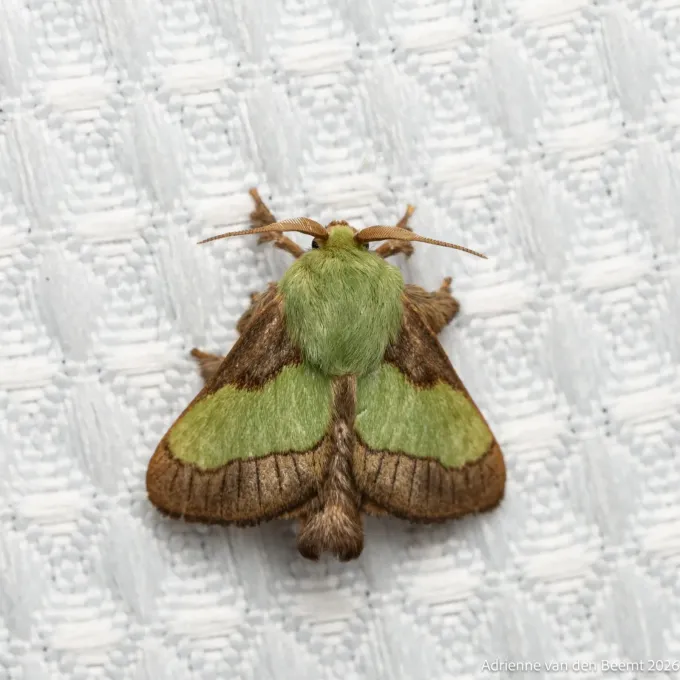
The Green slug moth (Parasa chloris) is a species of moth belonging to the family Limacodidae, also known as slug moths. They are distinct for their larvae, which resemble colorful, slow-moving slugs rather than typical caterpillars.
The adult moth has a wingspan of approximately 25–30 mm. Its coloration usually involves shades of green and brown, allowing it to blend into the foliage, making the adults difficult to spot during the day.
The larvae are bright green with striking patterns of red or yellow spots and possess rows of spiny projections. These spines can cause irritation if touched, serving as a defensive mechanism against predators.
The life cycle undergoes complete metamorphosis, including egg, larva, pupa, and adult stages. Overwintering occurs in the pupal stage within a hard, smooth cocoon attached to the twigs or bark of the host plant.
Adult moths emerge in mid-summer. Females deposit eggs in clusters on the underside of leaves, ensuring the hatching larvae have immediate access to food sources.
What it damages
The larvae of the Green slug moth are foliage feeders. They can cause significant aesthetic and physiological damage to a variety of woody plants, including ornamental and fruit-bearing species.
Preferred hosts include apple trees, pears, cherries, oaks, and several other deciduous trees. Young trees are particularly susceptible to heavy feeding, which can inhibit their growth.
Early-stage larvae skeletonize the leaf by consuming the softer tissue between the veins. As they grow older, they consume the entire leaf blade, leaving only the primary stems behind.
Heavy infestations can lead to partial or total defoliation of the tree. This reduces the plant's photosynthetic capacity, weakening the tree and making it prone to secondary diseases.
Beyond leaf consumption, the damage stresses the tree, which can lead to reduced fruit production and overall decline in vigor, especially in neglected or stressed garden specimens.
Signs of infestation
A primary sign of infestation is the presence of skeletonized leaves. In the summer, gardeners may notice parts of the leaf tissue disappearing, leaving a web-like appearance of veins.
Observing the larvae themselves is another clear sign. Their bright green color and unique appearance make them stand out on the leaves, usually on the underside where they hide from predators.
During the dormant winter season, look for small, smooth, oval-shaped cocoons attached to twigs or branch forks. Removing these is a proactive way to reduce the population for the next season.
The presence of insect frass (droppings) on leaves lower down in the canopy often indicates that larvae are active and feeding in the upper branches of the tree.
If leaves appear brown or scorched in patches despite proper watering, it may be a result of tissue death following feeding damage caused by the larvae.
Control measures
Effective management of the Green slug moth involves both physical removal and targeted biological control strategies. Prevention through early detection is the most successful approach.
Hand-picking the larvae is effective for small, accessible trees. When doing so, wear gloves to avoid contact with the irritating spines found on the caterpillar's body.
Biological insecticides, such as those containing Bacillus thuringiensis (Bt), are highly effective against the larvae while remaining safe for most beneficial insects and the environment.
- Inspect trees regularly during the growing season.
- Prune and destroy branches hosting large numbers of cocoons in winter.
- Use pheromone traps to monitor adult moth activity.
Encouraging natural predators, such as birds and beneficial predatory insects, helps maintain the population of the slug moth below the threshold where significant damage occurs.
Taxonomy
- Latin name
- Parasa chloris
- Order
- Lepidoptera (butterflies)
- Family
- Limacodidae
- EPPO code
- PARSCH
Discussion
No discussions yet — be the first.