
Paralebeda plagifera
Paralebeda plagifera
Description
How to identify
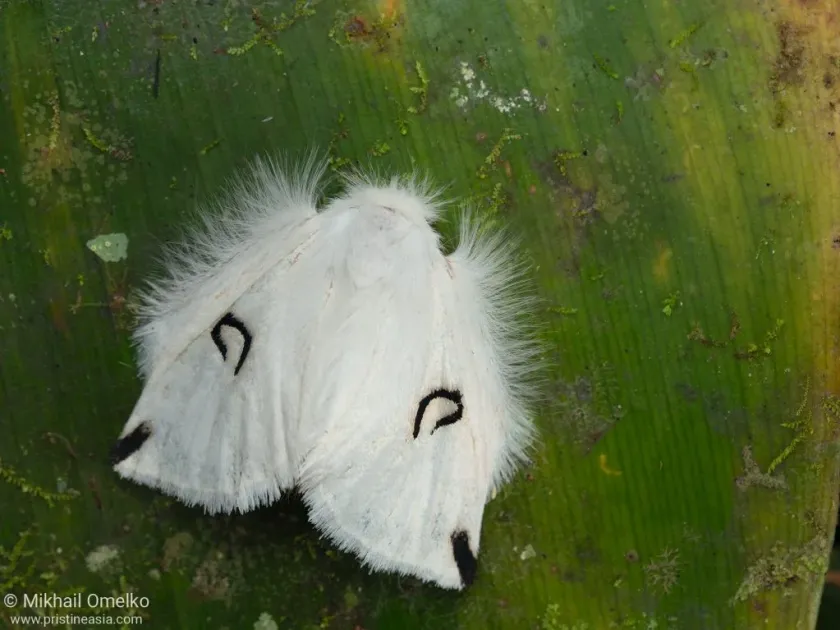
Paralebeda plagifera is a moth belonging to the family Lasiocampidae, order Lepidoptera. It is a robust, night-flying insect characterized by a dense, hairy body and broad wings typical of lappet moths.
Adults exhibit brownish-gray camouflage patterns that allow them to blend into tree bark during the day. Their significant wingspan and heavy build make them distinct members of the forest and orchard entomofauna.
The larvae are notably large and covered in tufts of hair, which serve as a primary defense mechanism against avian predators. Throughout their development, these caterpillars undergo several instars, increasing significantly in size.
Pupation occurs within dense, silky cocoons, which provide excellent protection against both environmental fluctuations and natural enemies during the dormant phase.
The biological cycle is well-adapted to deciduous ecosystems, yet the species shows high adaptability when invading agricultural sites, effectively utilizing cultivated trees as host plants.
What it damages
This pest primarily infests deciduous trees, including various members of the Rosaceae family. Consequently, it poses a direct threat to fruit orchards by consuming essential leaf tissue.
The larvae feed voraciously on leaves, starting from the edges and progressing to skeletonization. In instances of high population density, severe defoliation can occur, leaving trees virtually bare.
Such damage disrupts the plant's photosynthetic capacity, leading to weakened tree vigor, reduced flower bud formation, and ultimately lower fruit yield in the following growing season.
Young orchards are particularly vulnerable, as repeated defoliation can stunt growth and hinder the development of a healthy structural frame for the fruit trees.
Furthermore, the physical damage inflicted on leaves and branches can weaken the tree's systemic defense, making it more susceptible to opportunistic fungal and bacterial pathogens.
When it appears
Adult activity typically peaks during the warm summer months, when mating and egg-laying occur. The timing of the moth's flight can fluctuate based on regional climate and altitude.
Eggs are deposited on branches and twigs, where they develop over a relatively short period before larvae emerge. Active feeding usually takes place throughout mid to late summer.
The larvae reach their peak feeding intensity just before pupation, which is when the most visible damage to orchards is reported by farmers and agronomists.
Pupation generally commences in late summer or early autumn. The insect remains in the pupal stage within its cocoon to survive the harsh conditions of the coming winter.
Overwintering as a pupa on the host tree allows the species to emerge promptly when favorable temperatures return in the spring, initiating the next generation.
Signs of infestation
The earliest signs of infestation include ragged leaf margins and missing tissue, often leading to complete skeletonization of the foliage in localized areas of the crown.
Accumulation of larval excrement (frass) at the base of the tree is a strong indicator of an active feeding colony above, serving as an early warning for orchardists.
Direct observation of the large, hairy caterpillars during daytime inspections—often hiding in branch crotches—confirms the presence of this specific pest.
The discovery of silken cocoons attached to bark crevices or twigs is a clear indicator that the pest has successfully completed its lifecycle and likely established a local population.
A notable increase in insectivorous bird activity within the orchard often acts as a biological signal that caterpillars are present and being actively hunted.
Control measures
Effective management requires an integrated approach. Cultural practices, such as winter pruning and the removal of cocoons from tree trunks, help reduce the overwintering population.
During the growing season, bio-rational insecticides containing specific bacteria are highly effective against young larvae while sparing beneficial insects and pollinators.
Chemical intervention should be reserved for scenarios where economic thresholds are exceeded, utilizing targeted insecticides that provide residual protection to the foliage.
- Utilize pheromone traps for accurate monitoring of moth emergence.
- Encourage natural predators by installing bird boxes in the orchard.
- Manual removal of egg masses during dormant pruning sessions.
Maintaining high horticultural standards, including proper fertilization and irrigation, ensures that trees remain resilient enough to tolerate minor feeding pressures without significant yield loss.
Taxonomy
- Latin name
- Paralebeda plagifera
- Order
- Lepidoptera (butterflies)
- Family
- Lasiocampidae
- EPPO code
- PARBPL
Discussion
No discussions yet — be the first.