
Paralebeda
Paralebeda
Description
How to identify
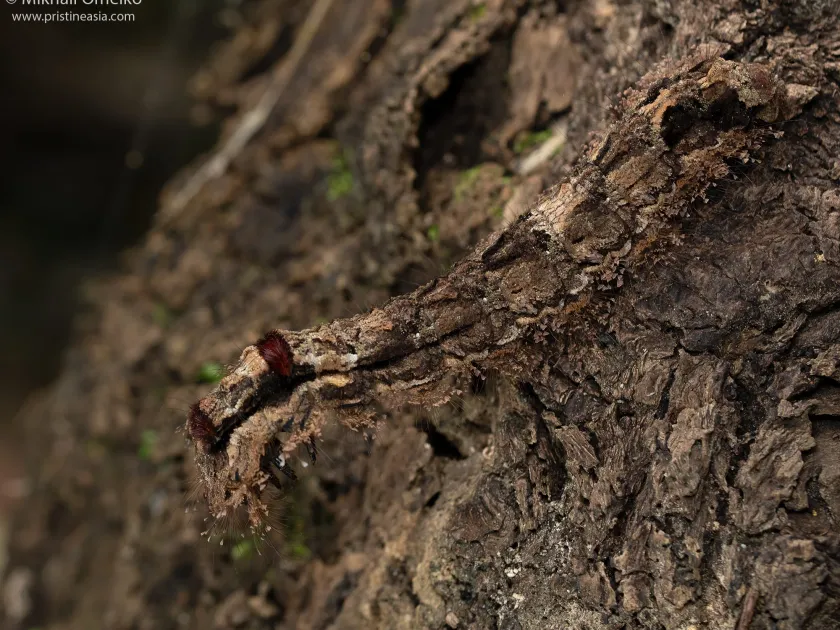
Paralebeda is a genus of moths belonging to the family Lasiocampidae, the order Lepidoptera. These moths are characterized by a robust body covered in dense hairs and wings with cryptic coloration that resembles tree bark.
The larvae, known as caterpillars, are often large and bear dense setae (hairs), which serve as a defense mechanism against avian predators and environmental stressors.
Adult females are generally larger than males and tend to be more sedentary, focusing their energy on oviposition on host tree branches after mating.
The life cycle encompasses a complete metamorphosis: egg, larva, pupa, and imago. Each developmental stage is highly adapted to the host plant environment.
These insects are primarily found in temperate and subtropical climates, where they thrive in habitats providing continuous foliage throughout the growing season.
What it damages
The primary damage is caused by the larval stage, which feeds voraciously on the leaves of various deciduous trees, including fruit and forest species.
Host plants typically include members of the Rosaceae and Fagaceae families, along with other woody ornamental trees found in managed landscapes.
Heavy infestations can lead to severe defoliation, which causes physiological stress to the tree, reduces its vigor, and may lead to branch dieback.
Larval feeding typically begins with the skeletonization of leaf tissue and progresses to the consumption of entire leaves, leaving behind only the thicker veins.
Trees damaged by this pest are often rendered more susceptible to secondary attacks by wood-boring beetles and opportunistic fungal infections.
When it appears
Adult moths of the genus Paralebeda are typically active during the summer months, with flight activity peaking during favorable nocturnal weather conditions.
The caterpillar feeding period coincides with the active vegetation phase of the host trees, spanning from late spring through the end of the summer season.
Overwintering occurs primarily in the pupal stage, protected within a tough, silk-based cocoon attached to the bark or buried in the leaf litter.
Population dynamics for the following season are largely determined by winter survival rates and the presence of suitable environmental cues during the pupation period.
Monitoring for adult flight using pheromone traps or light traps is a standard practice for agronomists to determine optimal timing for population control.
Signs of infestation
Visible signs of infestation include ragged leaf edges and uneven defoliation patterns that become increasingly apparent during mid-summer.
Significant accumulation of larval frass (droppings) on the ground or on lower branches is a strong indicator of a high-density feeding population in the canopy.
Cocoons may be observed during dormant season pruning, usually located in bark crevices or at the junctions of secondary branches and the main trunk.
Silken webs or trails on the leaves may also be present, though they are often less conspicuous than the physical damage caused by the feeding larvae.
Scouting for egg clusters on the underside of leaves or on small twigs is the most effective way to detect the early stages of a population outbreak.
Control measures
Manual removal of egg masses and cocoons during the winter dormant period is an effective practice for small-scale orchards and managed tree lines.
Biological control agents, such as microbial insecticides containing Bacillus thuringiensis, offer a targeted solution that minimizes impact on beneficial insects.
Chemical control involving systemic or contact insecticides should be reserved for periods when monitoring indicates that population thresholds have been exceeded.
- Maintaining tree health to improve resilience against pest attacks
- Encouraging natural predators such as birds and parasitic wasps
- Implementing integrated pest management (IPM) to minimize chemical reliance
All control measures must align with local agricultural safety standards, particularly regarding pre-harvest intervals when protecting fruit-bearing cultivars.
Taxonomy
- Latin name
- Paralebeda
- Order
- Lepidoptera (butterflies)
- Family
- Lasiocampidae
- EPPO code
- PARBSP
Discussion
No discussions yet — be the first.