
Vinous-throated parrotbill
Paradoxornis webbianus
Description
How to identify
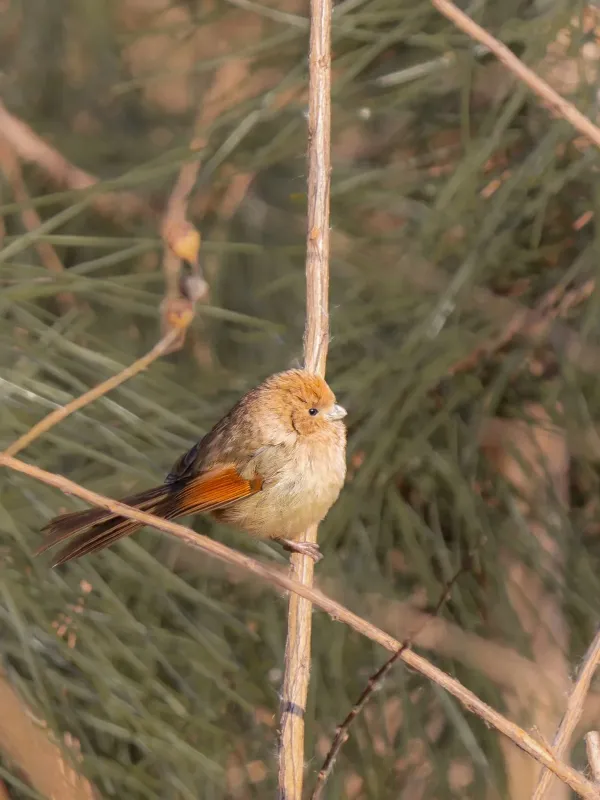
The Vinous-throated parrotbill (Paradoxornis webbianus) is a small, energetic bird species belonging to the Sylviidae family. It is easily recognized by its distinctive short, thick, conical bill, which is perfectly adapted for cracking seeds and searching for larvae.
These birds possess a buff-brown plumage and a long, slender tail, giving them a unique silhouette. They are highly social and move in large, noisy flocks, maintaining constant vocal contact with one another.
The species prefers dense habitats like reed beds, shrubbery, and tall grasses. Their ability to thrive in close proximity to human settlements often brings them into contact with agricultural areas.
Despite their small size, they are remarkably agile and can traverse large distances in search of optimal feeding grounds, making them highly opportunistic foragers.
In terms of behavior, they are very cautious and remain hidden within dense vegetation, only emerging to feed in open fields when they feel secure or when food sources are scarce.
What it damages
The Vinous-throated parrotbill can cause significant economic losses in cereal production. During the ripening stages of crops like wheat, rice, and millet, these birds congregate in flocks to feed on maturing grain.
The damage is primarily caused by stripping or pecking grains from the ear. This not only directly reduces the yield but also leads to weakened stems and potential lodging of the plants.
In addition to cereals, these birds can cause harm to vegetable crops and fruit plantations by damaging young shoots, buds, or developing fruits when natural food sources are unavailable.
Because they often feed in dense groups, their impact is localized but highly intense, potentially leaving small patches of the field completely destroyed or degraded.
Secondary infections are a hidden danger. By damaging the husk of grains or the skin of fruits, they provide entry points for various fungal and bacterial pathogens that further reduce the market quality of the harvest.
When it appears
The period of peak economic impact occurs during late summer and autumn, which coincides with the grain-filling and ripening phases of most field crops.
During the spring and early summer, the species is generally considered beneficial or neutral, as they feed primarily on insects, including many agricultural pests such as beetles and caterpillars.
Migration patterns play a significant role. As autumn progresses, nomadic flocks moving through agricultural landscapes can cause unpredictable and sporadic damage to crops that have not yet been harvested.
The intensity of their presence is highly dependent on the weather; in harsh years with low natural seed yields, the parrotbills start feeding on cultivated crops much earlier than in favorable years.
Winter months see a decline in their activity on open fields, as they move towards sheltered locations and change their diet to tougher vegetation, seeds from weeds, or dormant insects.
Signs of infestation
One of the primary indicators of a Vinous-throated parrotbill infestation is the presence of fragmented or empty grain husks still attached to the ears of the standing crop.
Observant farmers can notice flattened areas within the field where the weight of the flock has broken or bent the stems during feeding sessions.
In sunflower fields, signs include chewed or jagged edges on the flower heads, where the birds have systematically extracted seeds from the disc florets.
The presence of these birds is often announced by their constant, chatter-like calls that can be heard from nearby hedgerows or thickets, even if the birds themselves remain hidden.
- Empty or pecked grains at the edge of the field.
- Broken or bent crop stems.
- Presence of bird droppings on leaves and the soil surface.
Control measures
Effective management begins with non-lethal deterrents such as visual scares, including reflective ribbons, predatory bird silhouettes, and motion-activated flashing lights.
Acoustic deterrents, such as propane cannons or broadcast systems that play predator calls or alarm signals, can effectively clear flocks from large areas for significant periods.
Modifying the landscape is a crucial preventive measure. Removing overgrown hedge rows, dense scrub, and reed patches immediately adjacent to sensitive crops reduces the available nesting and hiding sites.
Adjusting planting and harvesting dates to avoid the peak activity window of the birds can reduce the duration of crop exposure to damage.
For high-value small crops, physical barriers such as bird netting or protective covers are the most reliable way to prevent access to the developing harvest.
Taxonomy
- Latin name
- Paradoxornis webbianus
- Family
- Timaliidae
- EPPO code
- PRXOWE
Discussion
No discussions yet — be the first.