
Laughingthrushes
Garrulax
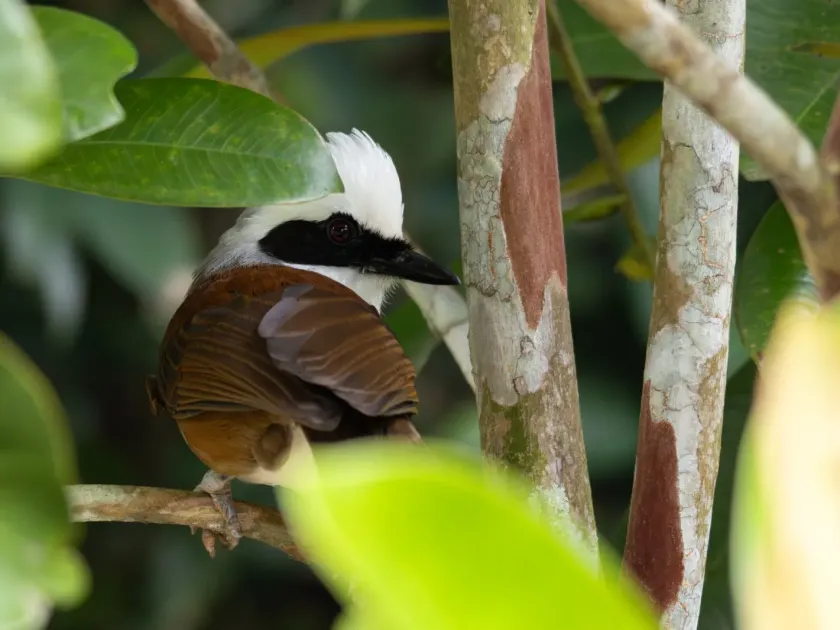
Description
How to identify
Laughingthrushes (genus Garrulax) are passerine birds belonging to the Leiothrichidae family. Known for their elusive nature, they typically inhabit dense shrubbery and undergrowth.
Physically, these birds are robust with strong beaks, well-adapted to foraging within thick vegetation. Their social structure often leads them to gather in active flocks.
Systematically, this genus includes many species prevalent in Southern and Southeastern Asia, where they thrive in diverse ecological niches.
In agricultural settings, they are often considered pests because they opportunistically exploit human-cultivated crops as a primary food source.
Their adaptive behavior allows them to move quickly between forest edges and orchards, making them challenging targets for traditional bird management strategies.
What it damages
The primary damage caused by laughingthrushes involves the destruction of berries, grapes, and small orchard fruits such as figs and citrus.
They feed by piercing the skin of ripe fruit, which exposes the inner flesh to secondary infections like mold, rot, and various fungal diseases.
Beyond mature fruit, they are known to nip at tender buds and shoots during the early spring, potentially stunting plant growth and reducing future yields.
Economic losses arise not only from the quantity of consumed fruit but also from the degradation of the remaining crop, making it unsellable.
Large flocks can cause significant damage in a very short period, sometimes destroying a substantial percentage of a harvest within a few days of peak ripeness.
When it appears
The peak period of pest activity corresponds with the ripening phases of fruit and berry crops, typically during the warmer summer months.
Seasonal shifts in wild food availability often drive these birds to enter agricultural fields, increasing their impact on orchard productivity.
During the nesting season, the increased nutritional demands of raising fledglings cause these birds to intensify their foraging, leading to heavier crop pressure.
Daily activity patterns show that they are most active during the early morning and late afternoon, utilizing these periods for heavy feeding sessions.
Farmers should anticipate higher visitation rates when natural forest forage decreases or during specific climate-driven migration events.
Signs of infestation
The most distinctive sign of laughingthrush activity is the presence of deep, deliberate pecks and puncture marks on the surface of ripening fruits.
Clusters of damaged, half-eaten fruit found on the ground beneath trees often indicate the presence of a foraging flock.
Frequent vocalizations and the sound of many wings taking flight in unison upon a human approach are strong indicators of their presence in the area.
Observation of droppings on branches or leaves surrounding fruit clusters is a clear sign that birds have been roosting or feeding in that specific area.
Visible mechanical damage to stems and apical buds during early spring development can also serve as a diagnostic indicator of their agricultural impact.
Control measures
Exclusion is the most effective method, utilizing anti-bird netting to completely cover sensitive berry and fruit crops during the vulnerable maturation period.
Bio-acoustic deterrents that mimic predator calls or bird distress signals can be used to disrupt foraging behavior, though they should be varied periodically.
Visual deterrents, such as reflective tape or mobile predator decoys, can provide short-term relief, provided they are relocated frequently to maintain effectiveness.
Maintaining a clean orchard by promptly harvesting ripe produce and removing fallen fruit helps reduce the attractants that lure flocks to the field.
Integrated pest management, combining physical barriers with sound-based deterrents, offers the most reliable way to minimize crop loss while respecting ecological balance.
Taxonomy
- Latin name
- Garrulax
- Family
- Timaliidae
- EPPO code
- GARXSP
Discussion
No discussions yet — be the first.