
Paracinema
Paracinema
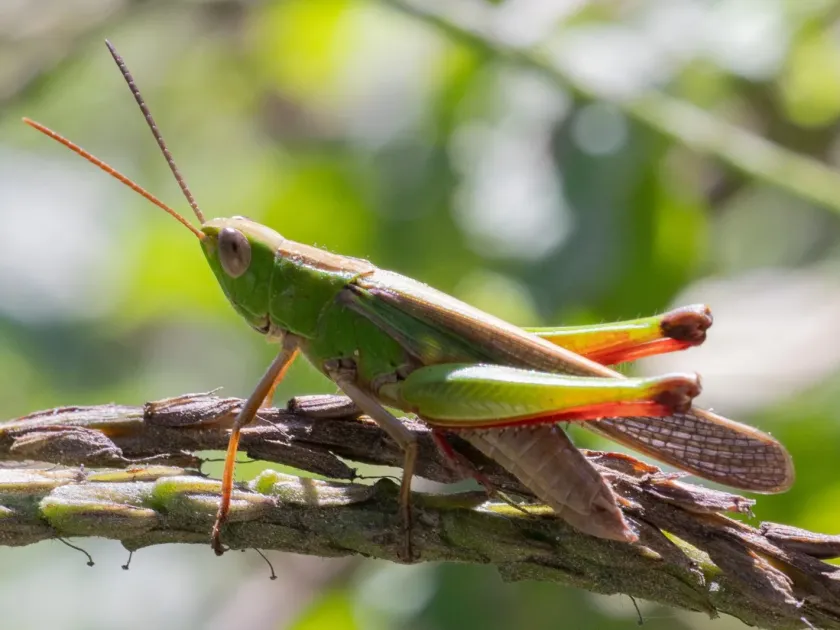
Description
How to identify
Paracinema is a genus belonging to the order Orthoptera and the family Acrididae (grasshoppers). These insects are morphologically adapted for jumping and living within dense grass and crop canopies.
Adults possess developed wings and powerful hind legs, facilitating movement over significant distances. Their coloration usually mimics the environment, ranging from shades of green to brown, which provides excellent camouflage.
The life cycle follows hemimetabolous development, consisting of egg, nymph, and adult stages. Females deposit eggs in the soil within protective pods, known as egg pods, which safeguard them from extreme weather conditions.
Nymphs resemble smaller, wingless versions of adults. Throughout their development, they undergo several molts, increasing in size and nutritional requirements until they reach maturity.
Accurate species identification often requires a microscopic examination of specific morphological features, such as the shape of the pronotum or the wing venation patterns characteristic of the genus.
What it damages
Paracinema acts as a pest to a wide variety of agricultural crops, with a clear preference for cereal grains. It poses a significant threat to wheat, barley, and maize cultivation in favorable ecological zones.
In addition to grain crops, these insects heavily feed on both annual and perennial grasses in pastures and meadows. This significantly reduces the productivity and nutritional value of grazing lands for livestock.
During outbreaks, populations can expand into neighboring vegetable and industrial crop fields. They consume both vegetative parts, such as leaves and stems, and generative parts, including spikes and developing grain.
The characteristic damage involves ragged edges on leaves, caused by the insect's mandibulate mouthparts. Intense feeding can result in the total defoliation of plants, severely impairing photosynthesis and yield potential.
Stunted growth and lodging are frequent indirect consequences of heavy infestations, leading to reduced overall yield quality and economic losses for farmers.
When it appears
The lifecycle of Paracinema is closely tied to seasonal temperature shifts. Overwintering eggs in the soil begin to hatch in the late spring, as temperatures consistently exceed 15 degrees Celsius.
Early-stage nymphs appear in late May or early June, when they are most voracious. This period is critical for monitoring as the young insects start consuming significant amounts of green biomass.
Adults emerge in mid-summer, typically throughout July. During this phase, their flight activity increases, allowing for dispersal into new habitats and host fields to find optimal feeding and breeding grounds.
The late summer months are characterized by the reproductive activities of the adults. Females search for suitable soil sites, often compacted areas or field edges, to deposit their egg pods for the next season.
The insects complete their lifecycle before the first frosts. By autumn, the adult population dies off, leaving the soil-borne egg stage as the only surviving link to carry the population through the winter.
Signs of infestation
Initial signs of infestation are identified by visible irregular notches along the leaf margins. Such damage patterns are classic indicators of grasshopper feeding activity.
Farmers can detect the presence of the pest by observing jumping activity in the field during the daytime. High density of individuals per square meter is an early warning of an impending outbreak.
Localized patches of heavily damaged crops are common. If left unmanaged, these patches often expand rapidly, leading to patchy fields with varying levels of growth and damage.
The accumulation of frass (fecal pellets) at the base of the plants or on the leaf surfaces provides another clear indicator of active feeding populations within the crop canopy.
Secondary symptoms include general yellowing and a lack of vigor in young plants. When combined with the observation of the insects themselves, these signs confirm the necessity for pest management intervention.
Control measures
Effective control starts with systematic field scouting and monitoring of population density. Decisions on intervention should be based on the established economic injury levels.
Cultural control measures, such as deep autumn plowing, are highly effective. This practice disturbs the soil, destroys the egg pods, and exposes them to natural predators and freezing winter temperatures.
Managing vegetation on field borders and road sides is crucial, as these areas often serve as primary reservoirs and breeding sites for the population before they migrate into the main crop.
Chemical control involving systemic or contact insecticides is recommended when population thresholds are exceeded. Treatment is most efficient when targeting the younger nymphal stages.
Integrated pest management (IPM) strategies, including the encouragement of natural predators like birds and parasitic wasps, can help maintain population stability and reduce the reliance on chemical inputs.
Taxonomy
- Latin name
- Paracinema
- Order
- Orthoptera (locusts)
- Family
- Acrididae
- EPPO code
- PRCISP
Discussion
No discussions yet — be the first.