
Pangaeus bilineatus
Pangaeus bilineatus
Description
How to identify
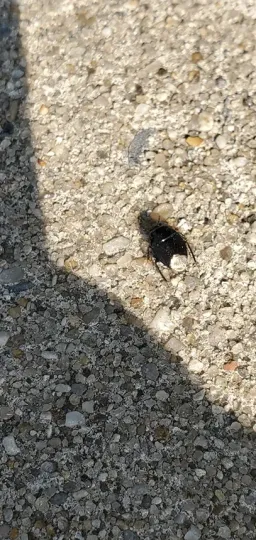
Pangaeus bilineatus, commonly known as a burrowing bug, belongs to the family Cydnidae. These insects are easily recognized by their dark, oval-shaped, and slightly convex bodies, typical of ground-dwelling species.
Adults reach approximately 6–8 millimeters in length. Their most prominent feature is the presence of robust, spiny forelegs designed for burrowing and maneuvering through dense soil layers effectively.
The head and pronotum exhibit a smooth, shiny texture. The margins of the body and wings are lined with fine hairs, which provide traction and stability as the insect moves beneath the soil surface.
The nymphs resemble smaller versions of the adults but lack fully developed wings. Their coloration ranges from light tan to deep brown, allowing them to blend into the soil environment efficiently.
These bugs undergo incomplete metamorphosis. Their entire life cycle, including mating and feeding, is primarily centered around the soil environment, where they remain hidden from most aerial predators.
What it damages
Pangaeus bilineatus is a significant pest for various crops, including corn, cotton, and peanuts. They possess a piercing-sucking mouthpart used to drain fluids from the plant roots and stems.
Young seedlings are the most vulnerable to infestation. The bugs feed on the base of the plant, which often results in wilting, stunted growth, and the eventual death of the young plant.
Severe infestations lead to patchy field development. When numerous insects feed simultaneously on a single seedling, the damage to the root system is usually irreversible, necessitating replanting.
Besides direct sap loss, the feeding sites created by the bugs serve as entry points for soil-borne pathogens. This often leads to secondary infections, such as root rot or fungal diseases, which accelerate plant decay.
The impact is most devastating during periods of drought or low soil moisture, as the damaged plants lack the ability to recover from the stress induced by the feeding activity of the bug.
When it appears
The activity of these bugs is highly dependent on soil temperature and moisture levels. Adults overwinter in the soil or under dense plant debris, remaining relatively dormant until temperatures rise.
As soil temperatures increase in the spring, typically around 12 degrees Celsius, the adults emerge to seek out fresh roots. This timing often coincides with the germination and early growth of crops.
Peak population levels are generally recorded in late spring and early summer. During this timeframe, mating occurs and eggs are deposited into the soil to ensure a food supply for the hatching nymphs.
The summer season is characterized by high mobility. The bugs may migrate between adjacent fields in search of more suitable host plants, making them a recurring threat throughout the growing season.
With the arrival of autumn, the bugs prepare for the winter months. They move deeper into the soil profile to avoid freezing temperatures, staying in a state of diapause until the following spring.
Signs of infestation
The earliest sign of an infestation is the sudden wilting of seedling tops. The plants may appear healthy in the morning but collapse by midday, indicating severe damage to the root system.
Upon closer inspection, necrotic spots or darkened areas can be observed near the base of the stem or on the root tissue, which are direct remnants of the bug's piercing mouthparts.
Digging around the affected plants often reveals the presence of the bugs. They are typically found in the top 5–10 centimeters of the soil, clustered near the roots they are currently feeding on.
Field patches that exhibit stunted growth compared to the rest of the crop can serve as an indicator. The bugs usually spread in a non-uniform manner, creating localized centers of infestation.
The presence of fine, shredded tissue at the base of the root system or near the seed grain itself is a strong diagnostic sign that Pangaeus bilineatus is active in the field.
Control measures
Cultural practices, such as deep plowing and thorough seedbed preparation, are essential to disrupt the bug's habitat and force them to the surface, where they become susceptible to environmental stress.
Maintaining a clean field environment by removing weeds and crop residues reduces the availability of overwintering sites, significantly limiting the build-up of the bug population in the following year.
- Using systemic insecticide seed treatments to provide initial protection during germination.
- Application of soil-applied granular insecticides in the seed furrow at planting.
- Regular field monitoring to detect migration patterns and optimize the timing of chemical interventions.
Chemical control should be implemented when the population exceeds the economic injury threshold. Modern pyrethroid or organophosphate insecticides applied to the soil can offer effective suppression.
Integrating crop rotation is a highly recommended strategy. By rotating non-host crops, farmers can starve out populations that have established themselves in specific areas of the farm.
Taxonomy
- Latin name
- Pangaeus bilineatus
- Order
- Hemiptera (bugs, aphids, leafhoppers)
- Family
- Cydnidae
- EPPO code
- PNGEBI
Discussion
No discussions yet — be the first.