
Hackberry nipple gall maker
Pachypsylla celtidismamma
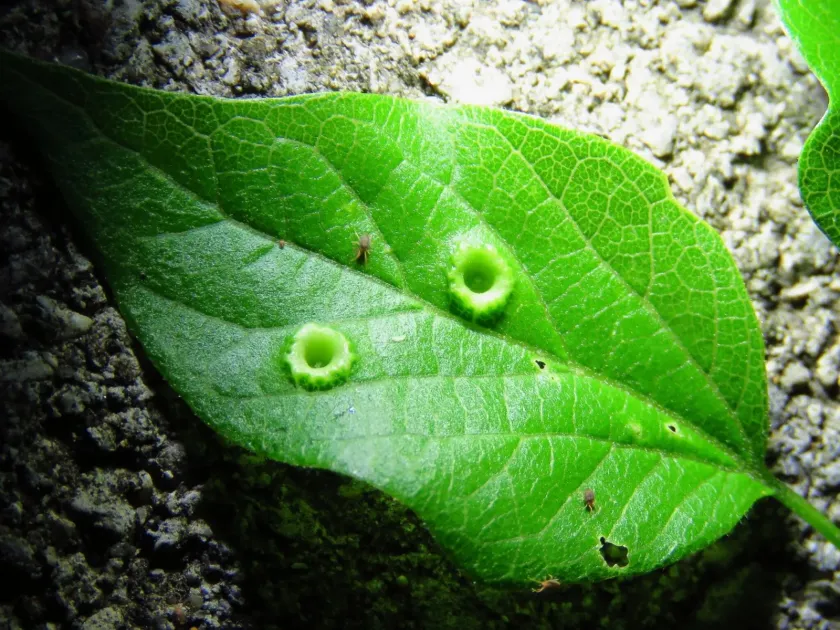
Description
How to identify
The hackberry nipple gall maker (Pachypsylla celtidismamma) is a small insect belonging to the family Psyllidae, commonly known as jumping plant lice. These insects are highly host-specific to trees of the genus Celtis.
Adult insects are typically about 3-4 mm long, with a brownish appearance. They possess powerful hind legs, allowing them to jump or fly away quickly when disturbed, which makes them difficult to catch manually.
The insect undergoes a complex life cycle. After overwintering as adults, they emerge in early spring to lay eggs on the undersides of newly developing hackberry leaves.
The nymphs produce substances that stimulate the leaf tissue to grow abnormally, resulting in the formation of a protective structure known as a gall.
This species is well-adapted to its host, ensuring that its development is perfectly synchronized with the seasonal growth patterns of the hackberry tree.
What it damages
The primary damage is the creation of nipple-shaped galls on the foliage. While these galls are unsightly, they rarely cause significant long-term structural harm to established trees.
The gall formation process redirects the tree's energy towards tissue proliferation rather than normal growth, which can stress the tree if the infestation is extremely heavy.
Heavy infestations can lead to premature leaf drop during dry summers, as the presence of thousands of galls interferes with the normal transpiration and photosynthetic processes of the foliage.
In nursery settings, aesthetic damage is the primary concern, as trees covered in galls are less marketable and may show reduced growth rates during their formative years.
Secondary issues, such as fungal growth or other pathogens, can occasionally colonize the gall tissues, though this is not the primary cause of concern for most arborists.
Signs of infestation
The most distinctive sign is the presence of numerous cone-shaped or nipple-like galls on the leaves. These structures appear in late spring and harden as the season progresses.
Each gall acts as a home for a single nymph. On the upper surface of the leaf, you will see a corresponding bump or protrusion where the gall has formed.
Adult psyllids may be observed on the twigs and bark in early spring. They are small and move rapidly, often jumping when approached, which is a classic behavior of psyllids.
As autumn arrives, the galls turn brown and dry out. The emergence of the new generation of adults from these galls is a clear indicator that the lifecycle has reached its end for the year.
Monitoring the undersides of leaves during the growing season allows for early detection of the start of gall development, which is critical for successful management.
Control measures
Control is challenging because the nymphs are encased within the gall, which protects them from most contact-based insecticides and natural predators.
The most successful strategy involves applying systemic insecticides early in the spring, just as the leaves are unfolding and the adults are laying their eggs.
Sanitation practices, such as raking and destroying fallen leaves in the autumn, can help reduce the overwintering population of the pest, although it may not eliminate the problem entirely.
Maintaining tree vigor through proper irrigation and fertilization is recommended, as healthy, stress-free trees are better equipped to withstand the burden of gall production.
If the aesthetic damage is not critical, most arborists recommend simply accepting the presence of the galls, as the hackberry nipple gall maker is generally not considered a lethal threat to the trees.
Taxonomy
- Latin name
- Pachypsylla celtidismamma
- Order
- Hemiptera (bugs, aphids, leafhoppers)
- Family
- Carsidaridae
- EPPO code
- PACPCM
Discussion
No discussions yet — be the first.