
Hackberry Psyllid
Pachypsylla
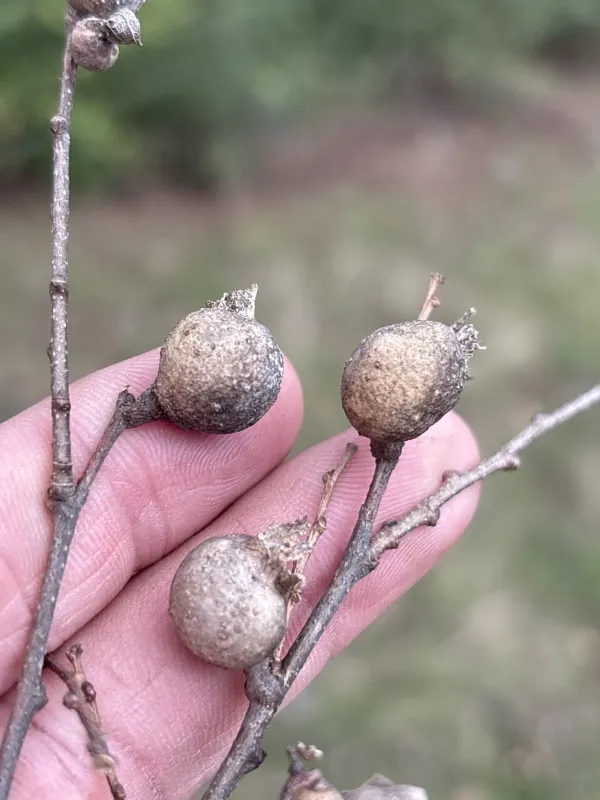
Description
How to identify
The Hackberry Psyllid (Pachypsylla) is a genus of jumping plant lice within the family Psyllidae, primarily known for causing structural changes in leaves.
These insects are small, typically ranging from 3 to 5 mm, and possess powerful hind legs designed for jumping, which helps them escape predators.
They exhibit a complex relationship with the host plant, inducing the development of galls to serve as both a food source and a protective shelter.
Their morphological characteristics include transparent or brownish wings folded roof-like over the body, aiding in concealment against tree bark.
As members of the Hemiptera order, they are equipped with piercing-sucking mouthparts, allowing them to extract essential nutrients directly from plant vascular tissues.
What it damages
The primary hosts for these insects are trees of the genus Celtis, commonly known as hackberry trees, which are widely used in urban landscaping.
By feeding on leaves, psyllids disrupt the tree's normal growth patterns, causing energy to be diverted into the formation of abnormal leaf tissues (galls).
Severe infestations can lead to significant leaf drop, which weakens the tree and makes it look unsightly throughout the mid-to-late summer months.
While mature trees generally tolerate psyllid populations well, young or stressed specimens may show signs of reduced vigor and stunted branch growth.
The economic damage is primarily aesthetic, as these trees are often chosen for their ornamental value in city parks and garden settings.
When it appears
The life cycle of the Hackberry Psyllid is closely linked to the seasonal development of the tree, starting as soon as buds begin to break in early spring.
Adults overwinter in protected areas, such as bark crevices or residential structures, waiting for the first warm temperatures to emerge.
Once active, females lay eggs on the newly emerging foliage, which hatch into larvae that immediately initiate the formation of galls.
Larval development continues throughout the spring and early summer as they reside safely inside their constructed leaf shelters.
The emergence of the new adult generation typically occurs in late summer, with these insects remaining active until seeking overwintering sites in autumn.
Signs of infestation
The most distinctive symptom of infestation is the appearance of galls — round, nipple-like, or flattened bumps protruding from the leaf surface.
These galls vary in appearance based on the specific species of Pachypsylla involved and can be found on either the top or bottom of the leaves.
Heavy infestations may result in leaf chlorosis, curling, or overall wilting of the foliage, particularly during peak summer heat waves.
In addition to galls, the physical presence of adult psyllids on branches and leaves confirms the infestation in the surrounding environment.
- Characteristic galls (bumps) on foliage.
- Yellowing and distortion of leaf blades.
- Premature leaf abscission in summer.
- High activity of jumping insects near the tree crown.
- Stunting of new shoot growth.
Control measures
Effective control of the Hackberry Psyllid requires a strategic approach, as larvae inside galls are protected from many topical contact insecticides.
Systemic insecticides applied to the soil or as a trunk injection can provide the best results by transporting the toxin throughout the tree's tissues.
Foliar sprays should be timed precisely for the early spring, targeting adult insects before they lay eggs or before the galls have fully developed.
Cultural practices, such as raking and disposing of fallen leaves in the fall, can help reduce the population of potential overwintering pests.
Maintaining proper tree health through adequate watering and mulching helps the plant withstand psyllid pressure and recover from seasonal stress more effectively.
Taxonomy
- Latin name
- Pachypsylla
- Order
- Hemiptera (bugs, aphids, leafhoppers)
- Family
- Carsidaridae
- EPPO code
- PACPSP
Discussion
No discussions yet — be the first.