
Pachypasa sericeofasciata
Pachypasa sericeofasciata
Description
How to identify
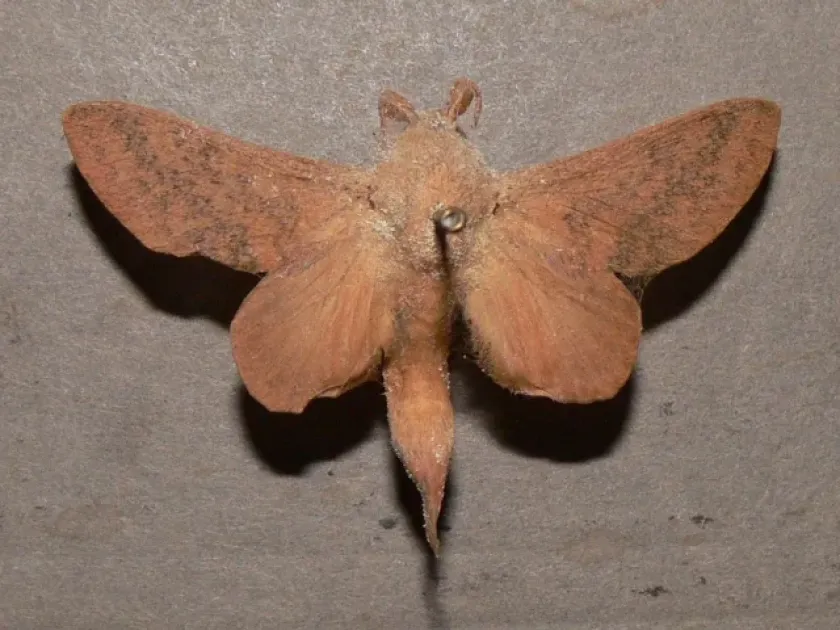
Pachypasa sericeofasciata is a moth belonging to the Lasiocampidae family, order Lepidoptera. It is a nocturnal species, and like other laxiocampids, it has a robust, hairy body adapted for survival in various environmental conditions.
The adult moths exhibit sexual dimorphism, with females generally being larger than males. Their wings have a distinct silky texture and a color pattern that provides effective camouflage against tree bark.
The larvae, or caterpillars, are also covered in hairs that may act as a defense mechanism against predators. These hairs can cause skin irritation in humans upon contact, which is a common characteristic of this group of moths.
The life cycle encompasses four stages: egg, larva, pupa, and imago. Development typically depends on local climate, with most populations completing their cycle within one to two years.
During the dormant season, the species typically persists as eggs or early-stage larvae, finding shelter within the crevices of the tree bark or hidden among needles until the following spring.
What it damages
Pachypasa sericeofasciata primarily targets coniferous trees, such as pines. It is considered a significant pest because its feeding behavior can lead to large-scale defoliation of forest areas.
Caterpillars feed on needles with their powerful mandibles, consuming young growth first before moving on to mature foliage. A heavy infestation can leave branches completely bare within a short timeframe.
Severe defoliation impairs the tree's ability to perform photosynthesis, leading to significant growth stunting and weakening the plant's overall health, making it susceptible to secondary pests.
Young trees are at the highest risk of mortality. Persistent feeding by dense populations of caterpillars can lead to total tree death, causing significant economic loss in forestry plantations.
In addition to direct physiological damage, the loss of foliage reduces the aesthetic value of ornamental conifers and increases the vulnerability of entire stands to environmental stress.
Signs of infestation
The presence of frass (caterpillar excrement) on the ground or on the lower branches is often the first visual indicator of a P. sericeofasciata infestation in the canopy.
Visible feeding damage, characterized by missing or chewed needles, is another key sign. Starting at the tips of the branches, this damage spreads as the caterpillars mature and migrate.
Early-stage larvae often create small silken nests on the branches to protect themselves during the day or during molting, which can be spotted during a routine inspection.
Pupation signs include the appearance of dense cocoons attached to the bark or hidden in sheltered foliage, indicating that the current generation is nearing its final stage.
Yellowing of the needles followed by premature dropping is a sign of advanced damage. This foliage loss is often uneven, reflecting the concentrated feeding areas of the larvae.
Control measures
Integrated pest management strategies are crucial for controlling this moth. Biological control using Bacillus thuringiensis sprays is highly effective against young larvae while preserving beneficial species.
In cases of severe outbreaks in plantation areas, professional application of approved insecticides may be required, provided they comply with local environmental safety regulations.
Regular forest monitoring, including the use of pheromone or light traps to count adult moth populations, is essential for predicting potential outbreaks and timing preventive interventions.
Encouraging the presence of natural predators, such as insectivorous birds and parasitic wasps, helps maintain a natural equilibrium and suppresses moth population growth.
For ornamental plants or small garden settings, manual removal of caterpillars and their nests during the early development stages is an environmentally friendly and highly effective method.
Taxonomy
- Latin name
- Pachypasa sericeofasciata
- Order
- Lepidoptera (butterflies)
- Family
- Lasiocampidae
- EPPO code
- PACSSE
Discussion
No discussions yet — be the first.