
Cypress lappet
Pachypasa otus
Description
How to identify
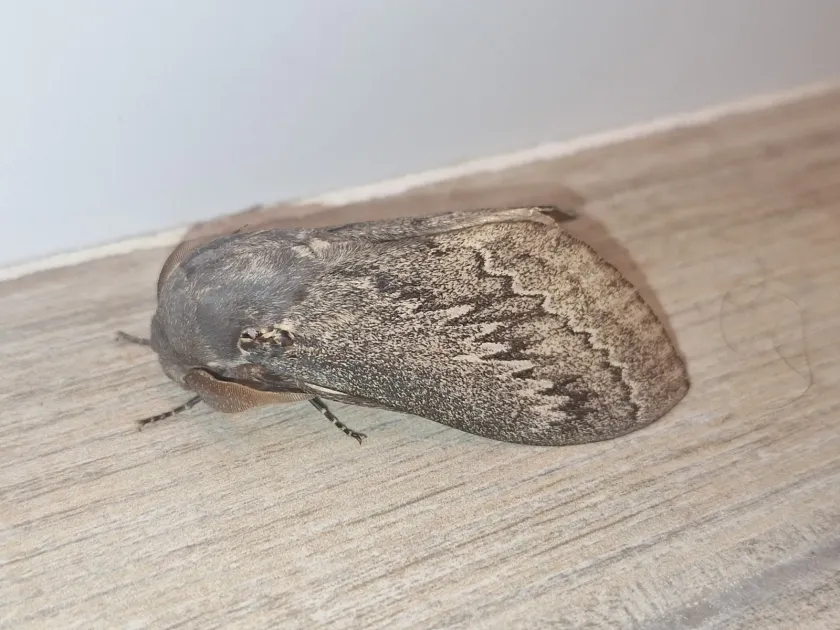
The Cypress lappet (Pachypasa otus) belongs to the Lasiocampidae family of the order Lepidoptera. It is a large nocturnal moth with a wingspan reaching 60–80 mm in females.
The adult moth features protective coloration that mimics tree bark, with a predominance of grey-brown tones and a characteristic pattern of transverse stripes.
The life cycle of this pest involves one generation per year. Larvae typically overwinter in various stages, often found in leaf litter or protected areas on tree branches.
Females lay eggs in groups on needles or thin twigs of host plants. These clusters are usually covered with protective scales from the moth's abdomen, making visual detection difficult.
This species is native to warm climates, particularly in the Mediterranean region, but can cause significant damage to plantations in other suitable zones.
What it damages
The primary food sources for the larvae are members of the Cupressaceae family, including the Mediterranean cypress, junipers, and thuja trees.
Secondary host plants can include certain oak species and other broad-leaved crops, making the pest a polyphagous insect capable of migration.
Plantations are attacked in forest areas, as well as in ornamental gardens, parks, and conifer nurseries.
Young trees suffer more severely than mature specimens, as partial defoliation leads to a loss of aesthetic appearance and weakened overall immunity.
Under high population density, the larvae can strip a tree crown almost entirely, which, combined with adverse environmental factors, can lead to the death of the plant.
When it appears
Adult activity occurs during the summer months, involving flight and mating. Insects are most visible during the night.
Larvae are most active during the spring and summer period, when intense needle growth provides them with essential nutrients.
Depending on the region, larval development proceeds through several molts, with massive foliage consumption often occurring in late spring or early summer.
Pupation usually takes place within dense cocoons attached to branches or hidden in bark crevices during mid-summer.
The duration of developmental phases is highly dependent on temperature and air humidity throughout the season.
Signs of infestation
The first sign of infestation is the presence of frass (excrement) under the tree canopy, which appears as small brown or black granules.
Visual inspection of the needles reveals signs of feeding: the edges of the needles become uneven, often leaving only skeletonized remains.
The presence of larvae is often detected by shaking branches, as they maintain a cryptic lifestyle and are primarily nocturnal.
The presence of silken nests, within which young larvae may hide, is a direct indicator of the pest's presence on the plant.
- Yellowing of individual small branches.
- Presence of dry, eaten areas of the crown.
- Wilting of needles due to shoot damage.
Control measures
Mechanical control involves the manual collection and destruction of egg clusters and larval nests during the winter and early spring.
Using pheromone traps for monitoring adult population levels allows for precise timing of chemical treatments.
During periods of massive larval emergence, the application of biological agents based on Bacillus thuringiensis is highly effective.
In cases of severe infestation, systemic or contact insecticides approved for use on ornamental conifers are recommended.
Good agricultural practice is an essential element of defense: timely irrigation, fertilization, and sanitary pruning of infected branches increase tree resilience.
Taxonomy
- Latin name
- Pachypasa otus
- Order
- Lepidoptera (butterflies)
- Family
- Lasiocampidae
- EPPO code
- PACSOT
Discussion
No discussions yet — be the first.