
Cape lappet moth
Pachypasa capensis
Description
How to identify
The Cape lappet moth (Pachypasa capensis) belongs to the order Lepidoptera and the family Lasiocampidae. It is a large, robust moth often characterized by brownish, cryptic coloration that helps it blend into tree bark.
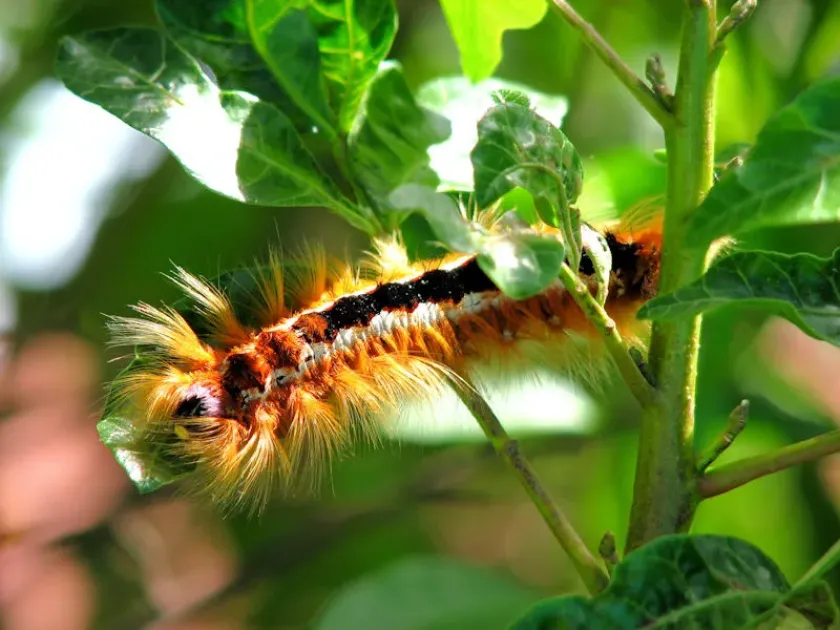
The insect undergoes a complete metamorphosis, passing through egg, larva, pupa, and adult stages. The larvae are notably hairy, and their setae can cause significant skin irritation upon contact.
Female moths lay eggs in clusters on branches or trunks, typically covering them with their own body hair to provide protection against predators and harsh environmental conditions.
Larvae are primarily nocturnal feeders, often spending the daylight hours huddled together in clusters on tree trunks or hidden within bark crevices.
Identifying the adult moth involves examining the wing pattern and body structure, which are characteristic of the Pachypasa genus.
What it damages
This species is a polyphagous feeder, known to cause severe damage to various broad-leaved trees, including commercial fruit crops like citrus and apple trees, as well as native forest species.
The larvae possess strong chewing mouthparts, which enable them to consume large amounts of leaf tissue, often leading to rapid defoliation of the host plant.
Mass infestations can strip an entire tree of its foliage, severely disrupting photosynthesis and leading to a significant reduction in overall plant vigor and yield.
Feeding damage to young buds and terminal shoots can cause branch deformities, stunted growth, and long-term decline in tree health.
Stressed trees subjected to heavy feeding become more susceptible to secondary attacks from wood-boring insects and opportunistic fungal pathogens.
When it appears
The activity period of the Cape lappet moth is closely linked to regional climate patterns and the availability of host foliage for larval development.
Larval emergence typically coincides with the arrival of spring or the onset of favorable growing conditions, when fresh vegetation becomes available.
Adult flight periods generally occur during warmer months, facilitating mating and subsequent egg-laying to initiate the next life cycle.
Overwintering occurs primarily as a pupa encased within a tough, silken cocoon, which is usually tucked away in protected areas like bark crevices.
Monitoring efforts should focus on identifying larval clusters in the early spring, as this is the most critical time to assess population density.
Signs of infestation
Initial signs of infestation often include skeletonized leaves or irregularly chewed margins on the foliage within the upper canopy.
The presence of large amounts of frass (larval droppings) on the ground beneath the tree canopy is a strong indicator of active feeding occurring above.
The discovery of thick, silken cocoons attached to branches or tree trunks during the off-season confirms that the pest has successfully completed its development.
Clusters of hairy caterpillars gathered on the bark of tree trunks during the day are a clear sign of a significant infestation level.
- Irregularly eaten leaf edges.
- Presence of silken nests or webbing.
- Reduced vigor and stunted branch elongation.
Control measures
Managing the Cape lappet moth requires an integrated pest management (IPM) approach to minimize environmental impact while effectively reducing pest numbers.
Manual removal of egg clusters and physical collection of larval groups are viable strategies for small-scale gardens or low-density infestations.
Biological control using formulations based on Bacillus thuringiensis is highly effective against early-instar larvae and is compatible with sustainable gardening practices.
In commercial orchards, chemical control using approved insecticides may be necessary if economic damage thresholds are exceeded during peak larval activity.
Maintaining tree vigor through proper pruning and nutritional management reduces the attractiveness of the host tree to ovipositing females and helps the tree recover from feeding damage.
Taxonomy
- Latin name
- Pachypasa capensis
- Order
- Lepidoptera (butterflies)
- Family
- Lasiocampidae
- EPPO code
- PACSCA
Discussion
No discussions yet — be the first.