
Pachypasa albofasciata
Pachypasa albofasciata
Description
How to identify
Pachypasa albofasciata belongs to the Lasiocampidae family (lappet moths) within the order Lepidoptera. It is a robust, medium-to-large sized moth characterized by dense hair covering its body.
The adults are recognizable by a distinct light-colored transverse band across the forewings, which gives the species its specific name and serves as a key identification mark.
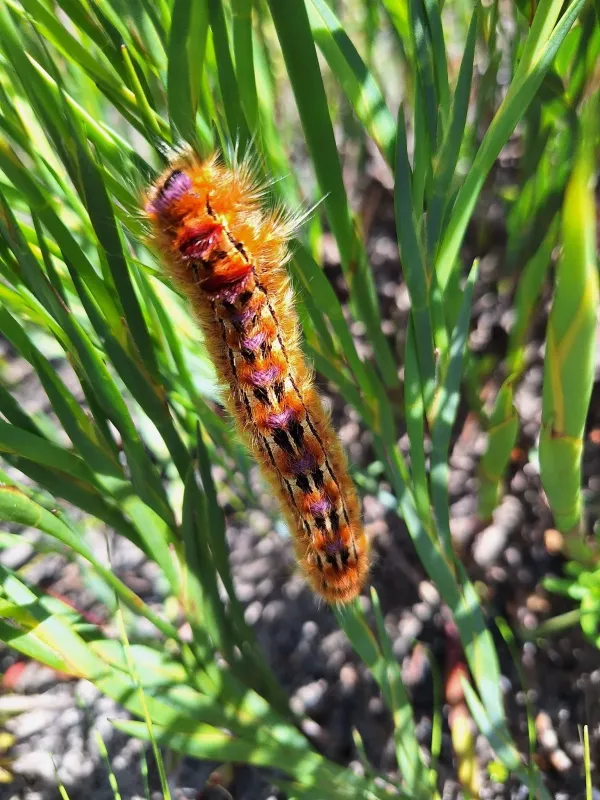
Larvae, commonly known as caterpillars, are covered with fine, sometimes irritating, hairs and exhibit cryptic coloration that blends seamlessly with tree bark or pine needles.
The life cycle encompasses four main stages: egg, larva, pupa, and adult. As adults, these moths do not feed; their lifespan is short and strictly dedicated to reproductive activities.
The species is well-adapted to woodland ecosystems, showing strong phenological synchronization with the development cycles of its primary host coniferous trees.
What it damages
The primary hosts for Pachypasa albofasciata larvae are various conifer species, particularly pine trees. Damage occurs primarily through the defoliation caused by larval feeding.
Young larvae initially graze on the surface of needles, while mature larvae consume the entire needle, leading to severe branch thinning and overall canopy reduction.
Sustained defoliation leads to a significant decrease in the host tree's photosynthetic capacity, which directly results in reduced annual growth and weakens the tree's health.
Weakened trees become susceptible to secondary pests, including bark beetles and longhorn beetles, which can ultimately lead to the tree's death if the infestation is severe.
In high-density outbreaks, these moths can cause significant economic loss in commercial timber plantations by hindering forest regeneration and wood quality.
When it appears
The adult flight period typically occurs in late summer or early autumn. During this time, mating occurs and females deposit their eggs on the host trees to prepare for the next generation.
Overwintering usually takes place in the egg or early larval stage, depending on the climatic conditions of the habitat, ensuring survival through the dormant season.
Larval activity commences in the spring when temperatures rise, coinciding with the fresh growth of conifer needles, which provide the necessary nutrition for rapid development.
The pupation stage occurs within a protective, dense silken cocoon, often anchored in bark crevices, providing a robust defense against environmental stressors.
The entire developmental cycle is highly dependent on seasonal temperature fluctuations, which dictate the speed of maturation and the potential for population spikes.
Signs of infestation
Early symptoms of an infestation include patchy thinning of the canopy and visible bite marks on the needles of the host trees, indicating active larval feeding.
Accumulated larval excrement (frass) under the affected tree branches is a primary indicator of population presence, often found during ground surveys.
Cocoons can sometimes be spotted embedded in bark crevices or at the base of branches, although their camouflage makes them difficult to find without close inspection.
Increased activity of insectivorous birds and parasitic wasps in the vicinity of infested trees can also serve as an indirect sign of a high moth population density.
- thinning or defoliated branches;
- piles of dark larval frass on the forest floor;
- cocoon clusters tucked into tree bark;
- visible larvae feeding on needles during the day.
Control measures
Integrated Pest Management (IPM) for this moth includes using pheromone traps to monitor adult population levels and determine the threshold for potential interventions.
Biological control agents, such as microbial insecticides containing Bacillus thuringiensis, are highly effective against larvae and offer an environmentally friendly alternative to chemicals.
In cases of severe infestation, targeted chemical applications may be necessary, provided they are applied during the most vulnerable stage of larval development.
Encouraging natural predators such as birds and parasitic insects through habitat management is a key strategy for long-term population suppression in forest areas.
Maintaining high forest hygiene, including the removal of dead or extremely weakened trees, reduces the availability of overwintering sites for the moth population.
Taxonomy
- Latin name
- Pachypasa albofasciata
- Order
- Lepidoptera (butterflies)
- Family
- Lasiocampidae
- EPPO code
- PACSAL
Discussion
No discussions yet — be the first.