
Turkey louse
Oxylipeurus polytrapezius
Description
How to identify
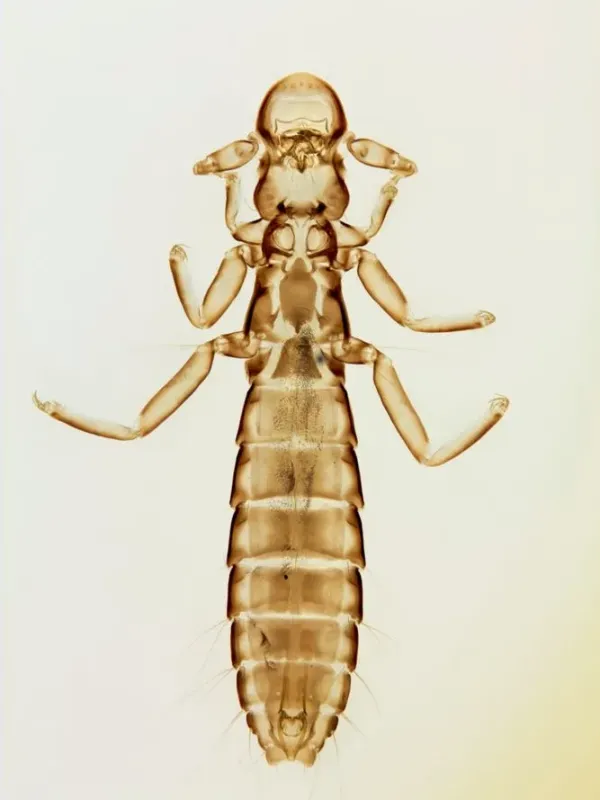
The turkey louse (Oxylipeurus polytrapezius) is a host-specific ectoparasite belonging to the order Mallophaga and the family Philopteridae. This pest thrives exclusively on turkeys, feeding on feather barbules, skin flakes, and dried blood droplets.
Adult lice are elongated, yellowish-brown insects measuring approximately 3-3.5 mm in length. They possess a distinctive triangular head equipped with strong chewing mandibles, which are specialized for damaging feather shafts and skin surfaces.
The entire life cycle occurs on the turkey host. Females attach eggs firmly to the base of downy feathers, particularly in the breast, abdomen, and underwing regions. The lice complete their development through three nymphal stages before reaching adulthood.
Under favorable conditions, such as the body temperature of the host, the cycle from egg to adult is completed in about 3 to 4 weeks. Their high reproduction rate allows them to rapidly infest a whole flock through physical contact between birds.
The turkey louse has a limited lifespan away from the host, typically surviving for less than a week. This dependency on the bird's microclimate makes environmental sanitation combined with host treatment highly effective.
What it damages
Turkey lice cause significant distress and physical damage to birds of all ages. The constant irritation from their chewing activities results in intense itching, leading to restlessness and a breakdown in the turkey's normal feeding and sleeping behavior.
Heavy infestations manifest as damaged, ragged feathers and significant thinning of the plumage, especially in high-density areas. Turkeys often resort to excessive preening and pecking, which can cause skin abrasions and open wounds.
Performance losses are common in infested flocks, including reduced weight gain in poults and lower meat quality. The energy the bird wastes on combating parasites significantly impacts growth rates and overall metabolic health.
Damaged skin and feather follicles provide entry points for secondary bacterial or fungal infections. An untreated louse infestation often compounds other health issues, significantly increasing morbidity rates within the poultry house.
- Poor feather quality and broken plumage.
- Weight loss and reduced growth in young birds.
- Increased susceptibility to secondary infections.
- Reduced stress tolerance and lower general immunity.
Signs of infestation
Signs of infestation include observable behavioral changes: birds become agitated, spend excessive time preening, and may show aggressive pecking at their own wings or breast. Frequent wing flapping is a classic indicator of intense irritation.
Visual inspection of the plumage is the most reliable method for identification. Carefully parting the feathers at the base of the neck or under the wings will reveal clusters of small, pale-colored eggs attached to the feather barbules.
The insects themselves can be seen moving rapidly across the skin or at the base of the feathers when disturbed. Skin irritation, localized redness, and small scabs are common indicators of a mature parasite population on the host.
Control measures
Effective control requires a two-pronged approach: treating the infested birds and disinfecting the poultry housing. Approved veterinary insecticides, such as pyrethroid-based sprays or dusting powders, are the industry standard for eradication.
Application must be thorough, ensuring that the treatment covers the underwing area, the vent, and the breast regions. Repeating the treatment according to the product label is essential to kill emerging nymphs that hatch from eggs.
Providing dust-bathing areas with a mixture of wood ash and fine sand can significantly help turkeys suppress louse populations naturally. This practice is an excellent preventive measure that maintains feather health and discourages parasite attachment.
Strict biosecurity measures, including the quarantine of new birds for at least 14 days, prevent the introduction of lice into a clean flock. Regular monitoring and visual health checks are vital for early detection.
Deep cleaning and sanitizing the coop between batches is critical. Removing old litter and treating all surfaces helps break the life cycle by eliminating eggs and nymphs that may have fallen off the host.
Taxonomy
- Latin name
- Oxylipeurus polytrapezius
- Family
- Philopteridae
- EPPO code
- OXYLPO
Discussion
No discussions yet — be the first.