
Goose louse
Anaticola anseris
Description
How to identify
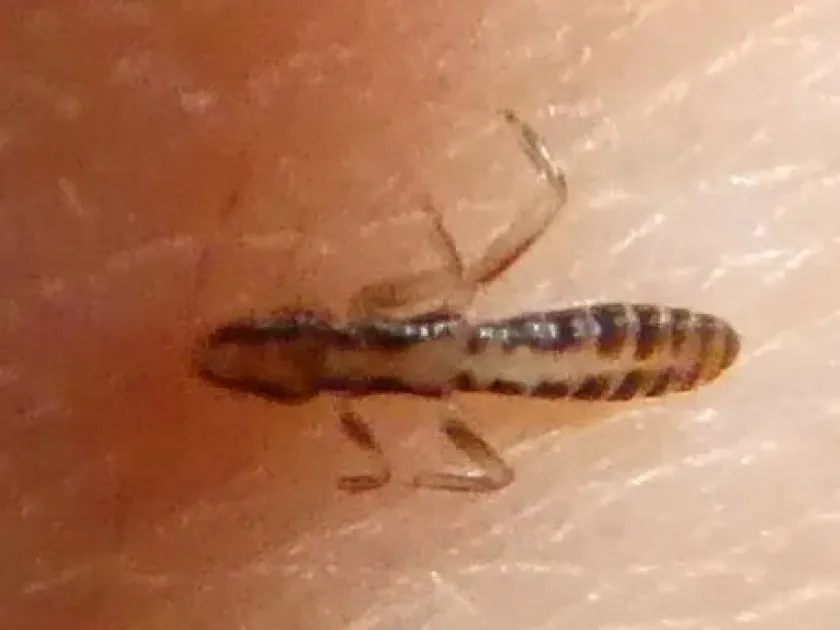
The goose louse (Anaticola anseris) is a small, wingless insect belonging to the order Mallophaga, family Philopteridae. Measuring approximately 2-3 mm in length, it has an elongated body with pale yellowish coloration and distinct dark lateral markings.
Unlike blood-sucking lice, this species possesses chewing mouthparts. It feeds exclusively on the bird's feathers, down, and skin debris. Its flattened body morphology is an adaptation for gliding between the barbs of feathers.
The entire life cycle occurs on the bird's body. Female lice attach their eggs, or nits, securely to the feathers with a specialized adhesive secretion, making them highly resistant to mechanical removal or grooming.
The life cycle involves three stages: egg, nymph, and adult. In favorable conditions of heat and humidity provided by the host, the cycle from egg to adult is completed in roughly three to four weeks.
Goose lice are host-specific and cannot survive for long periods away from their host. Environmental survival is limited, usually spanning only a few days without a food source, which aids in management strategies.
What it damages
This parasite is a significant concern for goose farmers. It causes mallophagosis, leading to poor feather condition and physical distress, though it has no impact on crop health or agricultural plants.
Signs of infestation
Infested geese exhibit chronic restlessness, frequent preening, and excessive feather picking. A visual inspection often reveals damaged, frayed, or "windowed" flight and tail feathers where the louse has been feeding.
In cases of severe infestation, the birds may show signs of dermatitis and skin inflammation. Lesions are frequently clustered around the neck, wing bases, and the vent area, which are the most protected zones for the parasites.
Control measures
Effective control requires the application of veterinary-approved insecticides, such as specialized dusting powders, spray solutions, or pour-on treatments. It is critical to treat all birds in the flock simultaneously to prevent re-infestation.
Sanitation of the housing environment is equally important. Cleaning out contaminated bedding and disinfecting structures help to eliminate nits and stray nymphs. Providing dust-bathing areas with sand and wood ash is a natural and highly recommended preventative measure.
Taxonomy
- Latin name
- Anaticola anseris
- Family
- Philopteridae
- EPPO code
- ANAIAN
Discussion
No discussions yet — be the first.