
Turkey louse
Chelopistes
Description
How to identify
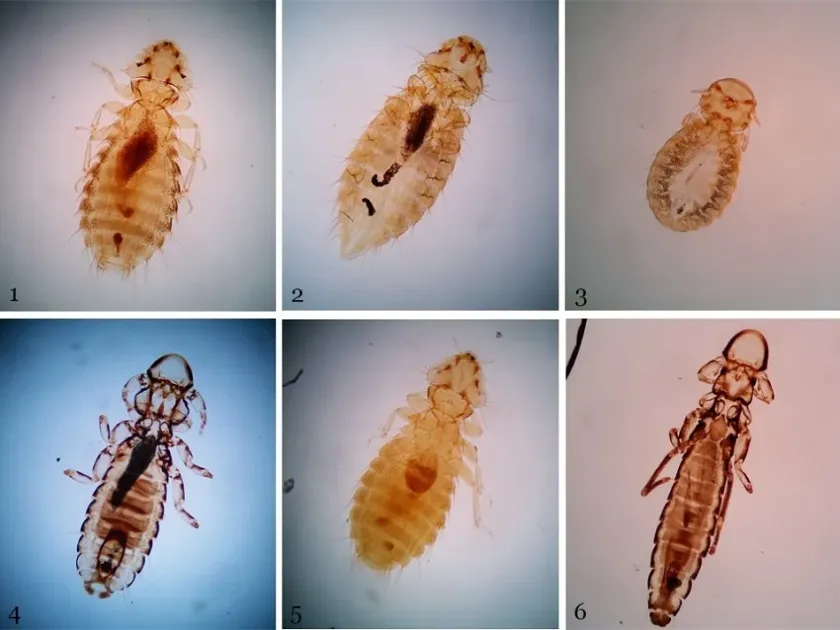
The turkey louse (lat. Chelopistes meleagridis) is a wingless insect belonging to the order Phthiraptera and the family Philopteridae. It is a specialized ectoparasite adapted for life on the surface of turkey feathers.
Adult insects are typically 2–3 mm long, flattened, and brownish in color, which helps them camouflage against the host's feathers. They possess a robust chewing mouthpart designed for feeding on feather barbs and skin debris.
The entire life cycle occurs on the host, making it an obligate parasite. The development process includes the egg, three nymphal stages, and the adult, with the full cycle completed in approximately one month.
Female lice secure their eggs onto the barbules of the feathers, usually near the skin, to ensure the eggs receive the constant body heat and humidity required for successful hatching.
These insects are highly host-specific, primarily infesting turkeys. They do not feed on human blood and cannot survive away from their bird host for more than a few days.
What it damages
The turkey louse poses a significant threat to turkeys of all ages. Younger birds are particularly susceptible to heavy infestations, which can hinder their growth and overall development.
The parasite feeds on feather barbs, skin flakes, and occasionally blood if the skin is damaged. This feeding behavior causes constant irritation and severe discomfort for the bird.
Birds infested with lice spend a large amount of time preening, which leads to damaged plumage, feather breakage, and poor coat quality, exposing the skin to environmental stressors.
Severe infestations cause extreme stress, leading to decreased feed intake and weight loss. In laying turkeys, this often manifests as a noticeable decline in egg production.
Prolonged untreated infestations can weaken the bird's immune system, making the flock more susceptible to secondary bacterial and viral respiratory or skin infections.
Signs of infestation
Signs of infestation include restless behavior, increased preening, and birds vigorously scratching their bodies or flapping their wings to alleviate the intense itching.
A physical examination of the birds often reveals adult lice moving quickly across the skin, especially in areas such as the neck, breast, and under the wings.
The presence of nits (eggs) attached to the base of the feather shafts is a key indicator of a widespread infestation within the flock.
The skin of affected birds may show localized redness, crusting, or raw patches caused by the birds pecking at themselves in an attempt to remove the parasites.
General poor condition of the flock, including ragged feathering, lethargy, and patchy feather loss, is often visible in advanced cases of louse infestation.
Control measures
Effective control involves applying veterinary-approved insecticidal powders, sprays, or pour-on treatments directly to the birds to eliminate active parasites.
It is essential to clean and disinfect the poultry housing thoroughly, paying attention to nesting boxes, roosts, and bedding where eggs and nymphs can survive.
Providing dust-bathing areas with a mixture of sand and wood ash encourages the birds to engage in natural grooming habits, which significantly helps in controlling the louse population.
Maintaining proper stocking density and hygiene standards reduces the risk of rapid parasite spread among birds that are kept in close contact.
Implementing a strict quarantine procedure for any new or returning birds is a critical preventive measure to stop the introduction of parasites into a healthy flock.
Taxonomy
- Latin name
- Chelopistes
- Family
- Philopteridae
- EPPO code
- CHEOSP
Discussion
No discussions yet — be the first.