
Anaticola
Anaticola
Description
How to identify
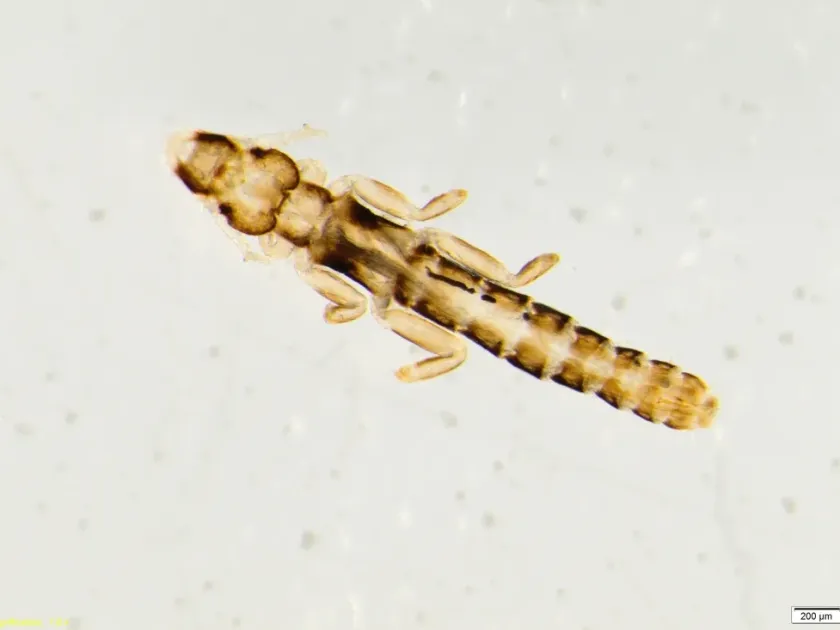
Anaticola is a genus of parasitic lice belonging to the order Mallophaga and the family Philopteridae. These small, wingless insects have evolved to live permanently within the plumage of waterfowl.
Adult specimens measure between 2 and 3 millimeters in length. Their bodies are flattened dorsoventrally, and they possess a distinct, elongated head shape that allows them to grip feather shafts securely.
The life cycle is hemimetabolous, consisting of an egg stage, three nymphal instars, and an adult stage. The entire life cycle occurs on the host, as the lice are highly host-specific and die rapidly if detached from the bird.
Females cement their eggs to the barbs of feathers, typically concentrating on the wing and tail feathers. Nymphs resemble miniature versions of the adults, gradually increasing in size with each molt.
Field identification is performed by examining the bird's wing feathers under good light. Laboratory diagnosis focuses on the specific head morphology and the pattern of bristles on the abdominal segments.
What it damages
Anaticola primarily infests waterfowl, including domestic ducks, geese, and various wild species. They are frequently found residing on the primary and secondary flight feathers.
These lice feed on skin debris, feathers, and secretions from the bird's uropygial gland. In cases of heavy infestation, they can cause structural damage to feathers by consuming the barbules.
The primary impact is the significant irritation caused to the host. Constant itching forces the bird to engage in excessive preening, leading to damaged plumage and loss of thermal protection.
Affected birds often show signs of restlessness, reduced feed intake, and stunted growth. The persistent stress and energy expenditure on self-grooming undermine the bird's overall immune status.
Economic losses in the poultry industry result from decreased weight gain, lower egg production, and reduced quality of harvested feathers, impacting the overall profitability of the farm.
Signs of infestation
Signs of infestation include visible restlessness, with the bird spending excessive time preening and pecking at its own wings. The plumage often appears ruffled and unkempt.
A closer inspection of the wing feathers often reveals characteristic notched damage or grooves along the feather shafts, created by the feeding activity of the lice.
Clumps of eggs, or nits, are often visible as small, white deposits along the primary feather shafts. These serve as a clear indicator of a well-established parasite population.
Active lice can be observed moving rapidly near the skin base when the feathers are parted. They are highly photophobic and will move deeper into the plumage when exposed to light.
In severe cases, inflammation of the skin and crusting in the vent or wing areas can occur, leading to localized feather loss or patches of bald skin.
Control measures
Effective control of Anaticola requires a combination of individual bird treatment and environmental management. Insecticidal powders or sprays containing pyrethroids are commonly used.
Proper sanitation of the bird housing is crucial. Regularly removing soiled litter and disinfecting the enclosure helps to eliminate lice that may have fallen off the host.
Providing dust bathing areas with appropriate insecticidal additives allows birds to manage parasite populations naturally and improves their overall skin health.
Quarantine protocols are essential when introducing new birds to a flock to prevent the transmission of parasites. Regular health check-ups ensure early detection.
- Periodic inspection of all birds in the flock.
- Cleaning and disinfecting poultry houses regularly.
- Monitoring nutritional status to boost bird immunity.
Taxonomy
- Latin name
- Anaticola
- Family
- Philopteridae
- EPPO code
- ANAISP
Discussion
No discussions yet — be the first.