
Duck louse
Anaticola crassicornis
Description
How to identify
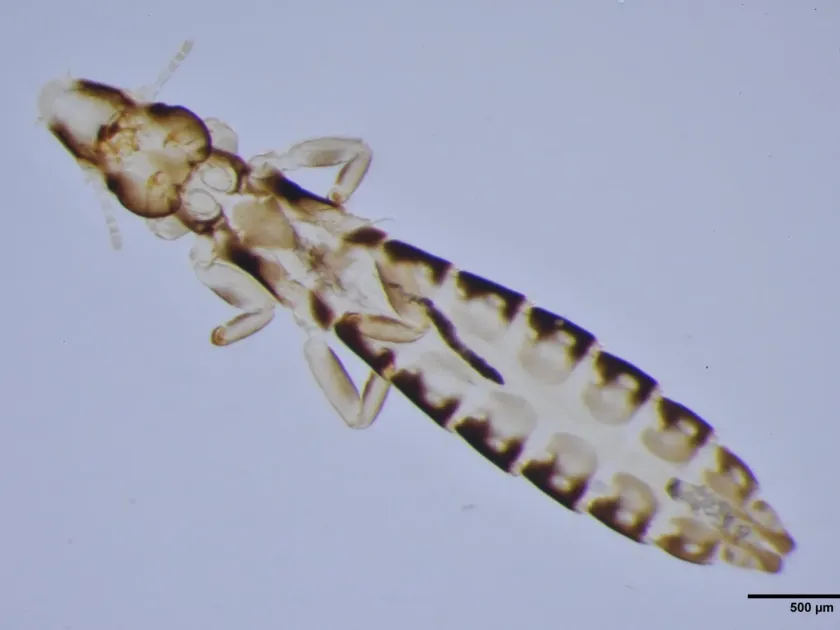
The duck louse (Anaticola crassicornis) is a chewing louse belonging to the order Mallophaga and the family Philopteridae. These are wingless insects that live permanently on the host's body.
Adult lice are elongated and pale brown, measuring roughly 2–3 mm in length. They possess specialized mandibles used for grazing on down, feathers, and skin debris from the bird's surface.
Their anatomy includes strong claws on their legs, allowing them to cling firmly to the feathers, which prevents the bird from removing them easily during preening.
The life cycle involves three nymphal stages before reaching adulthood. The entire process occurs on the host, with eggs being cemented securely to the feather shafts.
They are host-specific and highly adapted to the microclimate provided by the down feathers of waterfowl, making them difficult to eradicate without specific treatments.
What it damages
The duck louse primarily affects various species of ducks and geese. By constantly feeding on feathers, they cause structural damage that reduces the insulation efficiency of the bird's plumage.
The persistent gnawing causes significant skin irritation and itching, leading to restless behavior. This stress diverts energy away from growth, development, and egg production.
Severe infestations can lead to feather breakage and matting, leaving the skin exposed and vulnerable. This can result in inflammation, secondary infections, and dermatitis.
Young ducklings are particularly susceptible to the negative impacts of these parasites, often showing stunted growth and weakness due to the constant irritation.
The economic impact manifests through decreased poultry productivity, reduced market value of the feathers, and increased expenditure on medical interventions.
Signs of infestation
Visible signs of infestation include the presence of lice moving along the feather shafts when the bird's down is parted, particularly near the neck and under the wings.
Infested birds will spend excessive time preening, scratching themselves, and showing signs of agitation. Damaged, ragged, or brittle feathers are common indicators.
Egg clusters (nits) are often visible as small white or translucent clumps attached firmly to the base of the feathers, which can be confirmed upon close inspection.
A decline in the bird’s general appearance, including dullness of plumage and signs of restlessness, is a strong indicator of an ongoing parasitic challenge.
In cases of heavy infestation, owners may notice the birds seem unkempt and struggle to maintain their water-repellent coating, leading to dampness in the plumage.
Control measures
Treatment involves the direct application of veterinary-approved insecticides to the poultry. Dusting powders, sprays, and immersion dips are the most common methods used.
Sanitation of the housing environment is critical. Thorough cleaning and the use of authorized insecticides in nesting boxes and bedding are necessary to eliminate environmental stages.
Providing dust baths containing sand and wood ash allows birds to exhibit natural grooming behaviors that help in reducing the louse population on their bodies.
Implementing strict biosecurity protocols, such as quarantining new birds and regular inspections, is the most effective way to prevent the introduction of the parasite.
Ensuring optimal nutrition and clean living conditions strengthens the birds' natural defenses, making it harder for parasites to cause significant health issues.
Taxonomy
- Latin name
- Anaticola crassicornis
- Family
- Philopteridae
- EPPO code
- ANAICR
Discussion
No discussions yet — be the first.