
Pigeon louse
Columbicola
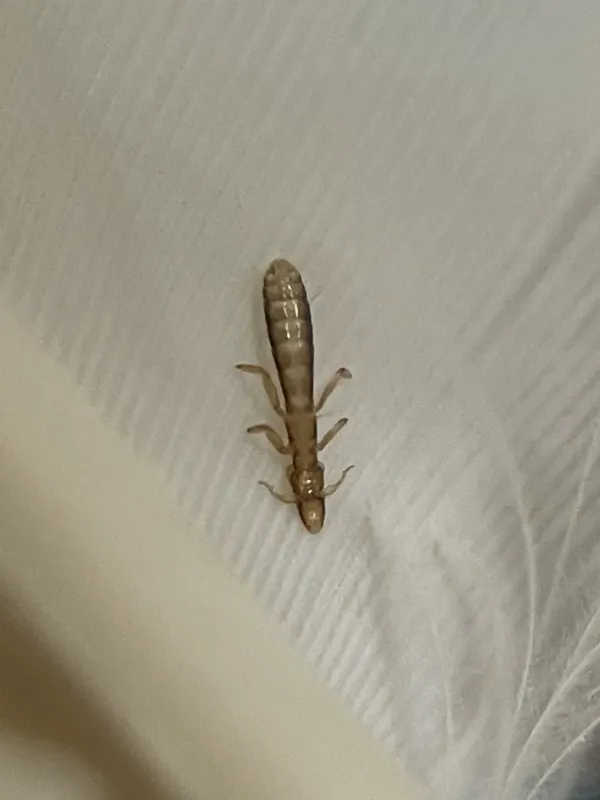
Description
How to identify
The pigeon louse, specifically Columbicola columbae, belongs to the order Phthiraptera, suborder Ischnocera. It is a slender, brownish insect measuring about 2 to 3 millimeters, well-adapted to hiding between the barbs of a pigeon's feathers.
These parasites possess strong mandibles adapted for gnawing on feather barbules and skin debris. Their specialized body shape allows them to cling tightly to the host's feathers, ensuring they are not dislodged during the bird's flight or preening activities.
The entire life cycle of this species occurs on the host, making it an obligate parasite. The female deposits eggs near the base of the wing or tail feathers, securing them with a strong adhesive secretion that is resistant to standard cleaning methods.
Development involves a series of nymphal stages that resemble the adult form but are smaller. Under favorable conditions provided by the pigeon's body temperature, the population can reach thousands on a single bird in a very short amount of time.
Transmission between birds occurs primarily through direct contact, especially during nesting or feeding. They are unable to survive for more than a few days away from the host, which simplifies the process of controlling them in a clean loft environment.
What it damages
The damage is primarily aesthetic and physiological. By destroying the structural integrity of the feathers, the lice reduce the pigeon's ability to maintain body temperature and decrease the aerodynamic efficiency required for proper flight.
Signs of infestation
The most diagnostic sign of an infestation is the presence of longitudinal rows of small, circular holes in the flight feathers. When held up to light, the wings appear damaged or "perforated," as if they were pierced by tiny needles.
Infested pigeons show signs of constant restlessness and excessive preening. In severe cases, the plumage appears ragged and dull, and the birds may show reduced vitality, weight loss, and increased susceptibility to other avian infections.
Control measures
Management focuses on the application of approved topical insecticides, such as pyrethroids, directly to the birds. It is essential to treat all pigeons in the loft simultaneously to prevent the lice from jumping between untreated individuals.
Environmental control is equally important, requiring deep cleaning and disinfection of nesting boxes, perches, and floor areas. Maintaining optimal hygiene and preventing overcrowding are the most effective long-term strategies for keeping parasite populations low.
Taxonomy
- Latin name
- Columbicola
- Family
- Philopteridae
- EPPO code
- COLMSP
Discussion
No discussions yet — be the first.