
Louse
Oxylipeurus
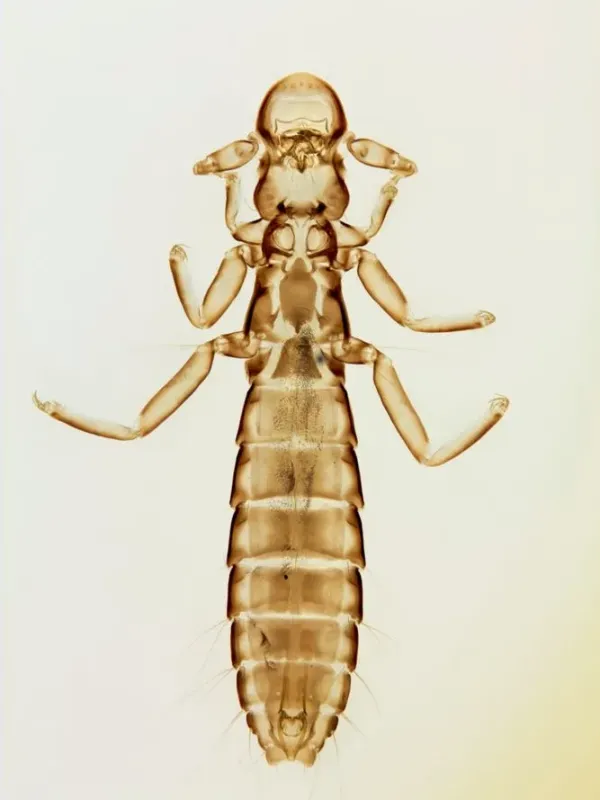
Description
How to identify
The bird louse of the genus Oxylipeurus belongs to the order Mallophaga. These are small, wingless insects characterized by a flattened body and a wide head, which is typical for chewing lice. They are permanent parasites that spend their entire life cycle on the host's body.
The life cycle consists of eggs, three nymphal stages, and adults. Female lice attach their eggs, commonly known as nits, to the base of feathers using a specialized cement-like substance, ensuring that the next generation remains firmly attached to the bird host.
What it damages
This pest primarily affects poultry, including chickens, turkeys, and pheasants. Unlike blood-feeding parasites, these lice feed on skin debris, feather scales, and sometimes blood from skin lesions caused by the host's excessive grooming and scratching.
While not lethal on their own, heavy infestations lead to significant feather damage and skin inflammation. Birds under constant stress from itching exhibit reduced feed intake, weight loss, and a decrease in overall production efficiency.
Signs of infestation
Signs of infestation include restless behavior, excessive preening, and feather picking. Upon close inspection, the presence of adult lice and clusters of eggs can be detected, particularly near the skin on the breast, vent, and under the wings.
Infested birds often have broken, ragged, or thin feathers. In severe cases, the skin may appear raw and irritated. A decline in egg production and poor body condition in the flock are major indicators that a parasite management plan is urgently needed.
Control measures
Effective control requires a two-pronged approach: treating the infested birds and sanitizing the housing environment. Approved veterinary insecticides, such as dusts, sprays, or systemic spot-on treatments, are necessary to eliminate lice from the birds themselves.
- Thoroughly clean and disinfect coops and nesting boxes.
- Ensure proper ventilation to reduce humidity.
- Provide dust bathing areas with sand and wood ash.
- Isolate new birds to prevent introducing parasites to the flock.
Taxonomy
- Latin name
- Oxylipeurus
- Family
- Philopteridae
- EPPO code
- OXYLSP
Discussion
No discussions yet — be the first.