
Rice grasshopper
Oxya yezoensis
Description
How to identify
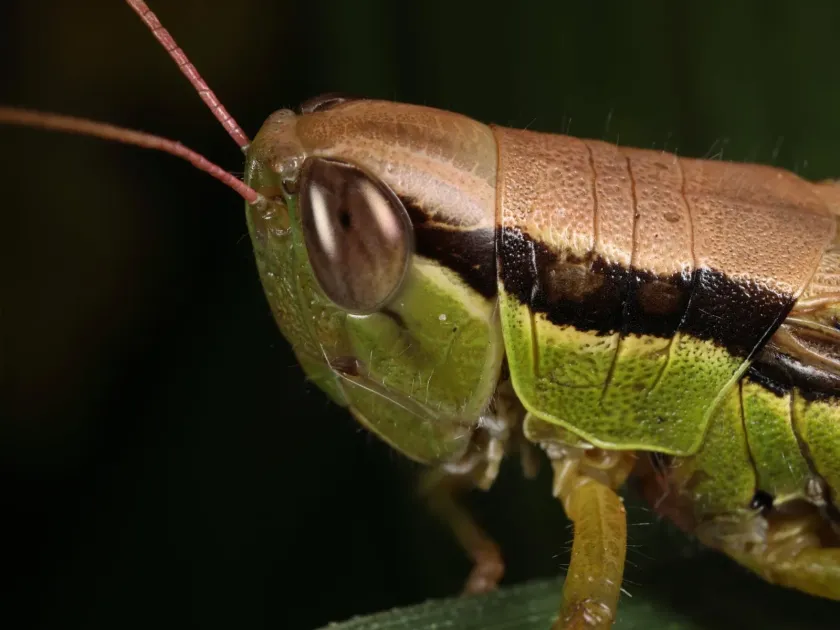
The rice grasshopper (Oxya yezoensis) belongs to the Acrididae family within the order Orthoptera. Adult insects typically measure 25 to 35 mm in length and feature a slim body with olive-green or brownish coloration, providing excellent camouflage in vegetation.
A distinctive feature of this species is a dark stripe extending from the eyes along the sides of the pronotum. The hind legs are robust and specialized for jumping, allowing the grasshopper to escape predators quickly.
Females are generally larger than males and possess strong ovipositors, which they use to lay eggs in plant tissues or the upper soil layer. They have fully developed wings, enabling active movement between fields.
Unlike swarming locusts, the rice grasshopper is generally a solitary species, though its population can reach damaging levels under favorable environmental conditions.
Nymphs resemble the adults but are smaller and lack fully formed wings. They go through several developmental stages (instars) before reaching maturity.
What it damages
The rice grasshopper primarily feeds on cereal crops, with rice being the most susceptible target. It may also damage millet, corn, and various wild grasses found near cultivated fields.
Both adults and nymphs cause damage by actively consuming leaf tissue. Under heavy infestation, they can strip leaves down to the central vein, severely reducing the plant's photosynthetic efficiency.
This damage stunts plant growth and development, leading to significantly lower yields and reduced grain quality, making it a critical economic pest in rice-producing regions.
In addition to leaf consumption, these pests can attack the rice panicles, leading to chaffy grains and direct loss of harvest volume.
The feeding wounds also create entry points for various bacterial and fungal pathogens, potentially causing secondary infections that further weaken the crop.
When it appears
The life cycle of the rice grasshopper is highly dependent on humidity and temperature. The species typically overwinters as eggs buried in the soil or within plant debris.
Nymph hatching occurs in the spring when soil temperatures reach optimal levels. Their most active feeding period usually aligns with the tillering stage of the cereal crops in early summer.
Adults emerge in mid-summer, reaching peak activity and population density during the second half of the growing season, which is when they cause the most noticeable damage.
There is usually one generation per year, though warmer climates may accelerate development. Adults can live for several months, during which they mate and lay eggs for the following year.
Weather patterns, such as excessive rainfall or extreme heat, can influence the timing of emergence and the overall population dynamics, necessitating careful field monitoring.
Signs of infestation
The first sign of infestation is ragged leaf margins, often referred to as "notching." As feeding intensity increases, the entire leaf blade may be decimated, leaving only the midrib.
High numbers of grasshoppers in the field, which jump or fly away when disturbed, are a clear indicator of a significant infestation that requires attention.
The presence of grasshopper frass (excrement) near the base of the plants or on the soil surface is a sign of high feeding activity and a large local population.
Visible feeding damage on the panicles or reproductive structures of the rice plant is a critical sign that the pest is affecting the yield-bearing parts of the crop.
A general yellowing or stunted appearance of the crop, especially in patches, often indicates high concentrations of the pest feeding on the plants.
Control measures
Effective cultural control starts with weed management, as non-crop vegetation often acts as a breeding ground and shelter for the grasshoppers.
Water management is a powerful tool; controlled flooding of rice paddies during specific times can effectively disrupt the hatching process and drown nymphs.
Biological control, using entomopathogenic fungi or bacterial agents, is recommended to manage populations while protecting the natural ecosystem and beneficial insects.
If the population exceeds the economic threshold, targeted application of approved contact or systemic insecticides is necessary to prevent major crop losses.
- Rotate crops to disrupt the life cycle of the pest.
- Plow fields after harvest to destroy overwintering egg pods.
- Monitor field boundaries regularly for early signs of population buildup.
Taxonomy
- Latin name
- Oxya yezoensis
- Order
- Orthoptera (locusts)
- Family
- Acrididae
- EPPO code
- OXYXYE
Discussion
No discussions yet — be the first.