
Rice grasshopper
Oxya intricata
Description
How to identify
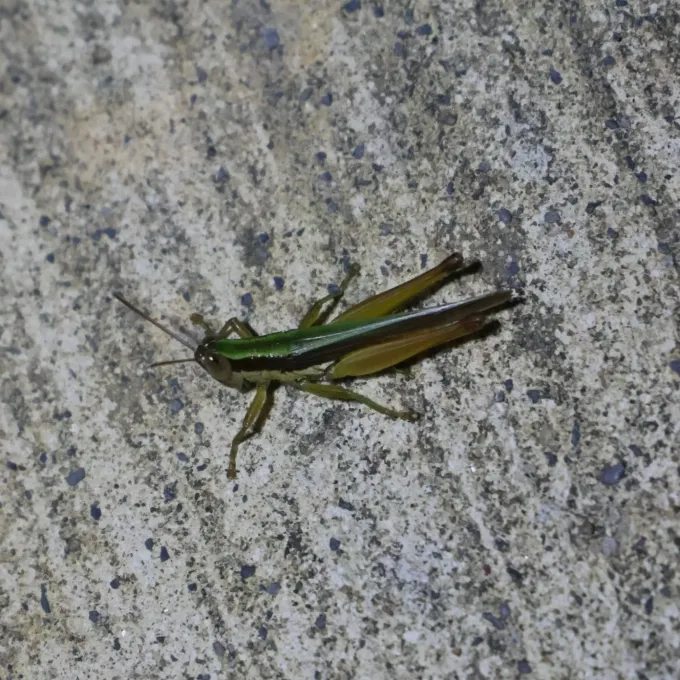
The rice grasshopper (Oxya intricata) belongs to the order Orthoptera and the family Acrididae. It is a medium-sized insect with a slender, greenish-brown body, perfectly adapted for camouflage within the dense foliage of rice plants.
The insect possesses strong, chewing mouthparts designed for consuming the tough leaves of cereal crops. It features well-developed hind legs for powerful jumping and functional wings that allow adults to travel long distances.
The life cycle includes the egg, nymph, and adult stages. Eggs are typically laid in the soil or within plant tissues near the surface, where they overwinter before hatching in the following season.
Sexual dimorphism is evident, with females usually being larger than males. Body coloration may vary slightly depending on humidity levels and developmental stage, aiding in survival within varied field microclimates.
These pests thrive in humid environments with lush vegetation, making paddy fields an ideal habitat for their population growth and survival throughout the growing season.
What it damages
Rice is the primary host for the rice grasshopper, but it is also known to damage other cereal crops and grasses growing in surrounding areas.
Both nymphs and adults feed on the leaves, consuming the leaf blades and leaving only the midribs behind, which significantly reduces the photosynthetic capacity of the plants.
The most severe damage occurs during the tillering and booting stages, when the plant is most vulnerable and the loss of leaf area directly impacts grain development.
High infestation levels can lead to severe defoliation, stunted plant growth, and substantial reductions in yield, as the plants struggle to recover from intensive grazing.
- Consumption of leaf blades;
- Damage to young stems;
- Reduced plant vigor and stunted growth;
- Loss of grain weight and quality.
When it appears
Nymphs typically emerge in late spring, coinciding with rising soil temperatures and the early growth stages of the rice crop, providing an immediate food source.
The peak activity of adult grasshoppers occurs during mid-summer, characterized by intensive feeding, mating, and egg-laying for the next generation.
Irrigation management plays a role in their distribution, as nymphs often move to drier parts of the field or surrounding vegetation when the paddy is flooded.
These insects are primarily active during the day, making them highly visible during sunny hours when they jump between plants or take short flights.
As the season progresses and temperatures drop, the adult population gradually declines as they prepare for the next reproductive cycle in the soil.
Signs of infestation
The most prominent sign of an infestation is the presence of irregular, notched, or shredded leaf edges, which are characteristic of the chewing action of grasshoppers.
A quick inspection of the field will often reveal the insects themselves, as they jump or fly when disturbed, alerting the agronomist to their presence.
Small, dark fecal pellets left on the leaves or the soil surface are common indicators of a concentrated feeding population within the field.
Severe infestations manifest as patches of yellowed or wilted foliage, which can be easily identified during field scouting or aerial crop monitoring.
Field margins often show signs of infestation first, as grasshoppers migrate from non-cropped areas or weeds into the rice field to feed.
Control measures
Cultural control is a primary management tool, involving the removal of weeds and grasses along field borders that serve as breeding and overwintering sites.
Optimizing sowing dates and maintaining uniform field growth helps the crop outpace the grasshopper development, reducing the window of susceptibility.
Chemical control is required when the economic threshold is reached, utilizing approved insecticides applied via ground or aerial spraying.
Monitoring for nymphs is crucial, as treating the field at the early stages of infestation is significantly more effective than controlling established adult populations.
Rotational use of insecticides with different modes of action is recommended to mitigate the risk of resistance development within the grasshopper population.
Taxonomy
- Latin name
- Oxya intricata
- Order
- Orthoptera (locusts)
- Family
- Acrididae
- EPPO code
- OXYXIN
Discussion
No discussions yet — be the first.