
Rice grasshopper
Oxya hyla
Description
How to identify
The Rice grasshopper (Oxya hyla) is a species of short-horned grasshopper within the Acrididae family. These insects are commonly found in rice-growing regions and wetlands, where they thrive in humid environments.
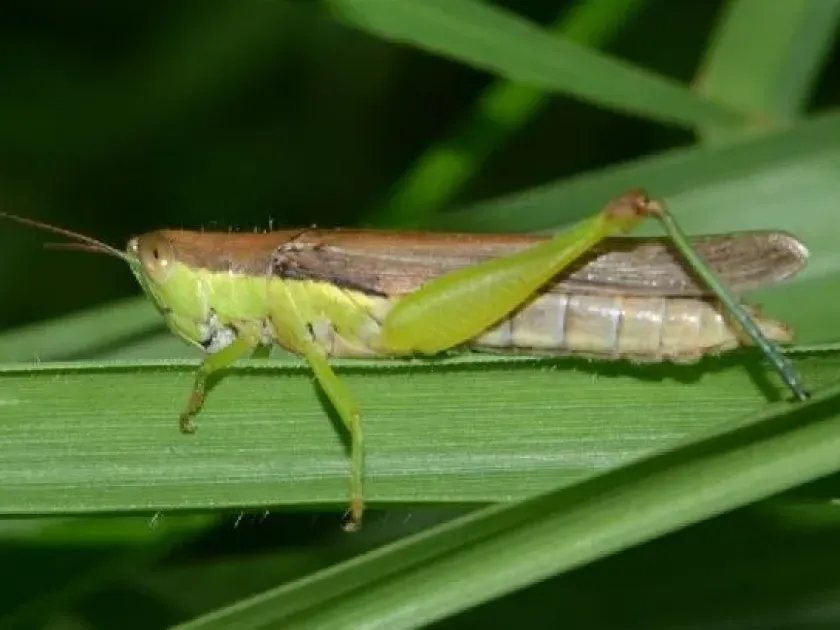
Adults typically measure between 20 and 35 millimeters in length. Their bodies are generally green or greenish-brown, providing excellent camouflage against rice stalks and leaves in the paddy fields.
They possess long, powerful hind legs adapted for jumping and narrow forewings that extend beyond the abdomen. The head features a strong chewing mouthpart, specifically designed for consuming tough grass tissues.
Nymphs go through several instars before reaching adulthood. They resemble smaller, wingless versions of the adults and remain in the same habitats, feeding on tender plant parts until they mature.
Their life cycle is closely linked to the availability of moisture. Because they spend their life in or near rice fields, they have evolved to survive in conditions where both soil moisture and water-logged areas are present.
What it damages
The primary crop damaged by this insect is rice, though it is also known to attack maize, sugarcane, and various wild grasses. The damage is primarily caused by feeding on leaf blades.
By grazing on the edges or the centers of the leaves, the grasshopper reduces the total photosynthetic area of the plant. This weakens the crop and stunts its overall growth and development.
Severe infestations can lead to the destruction of the plant's panicles, especially during the boot stage. This results in empty grains or reduced grain filling, which significantly lowers the final yield.
In addition to direct tissue consumption, the wounds created by the grasshoppers serve as entry points for various fungal and bacterial pathogens, leading to secondary plant diseases.
Massive outbreaks can cause total defoliation in localized patches within the rice field, leaving only the midribs of the leaves, which causes significant economic loss to the farmer.
When it appears
The population dynamics of the Rice grasshopper depend heavily on the temperature and rainfall patterns of the region. They typically undergo one or two generations annually depending on the climate.
Eggs overwinter in the soil or within the stalks of host plants. With the onset of warmer temperatures in the spring, nymphs hatch and begin feeding almost immediately on young green vegetation.
The peak activity of adult populations is usually observed during the summer months. This corresponds with the vegetative stage of the rice crop, providing an abundant food source for the growing population.
As the season progresses toward autumn, the grasshoppers prepare for winter. Female grasshoppers deposit their eggs in secure locations within the soil, where they remain dormant throughout the cooler months.
Environmental conditions like prolonged flooding or heavy rain can temporarily suppress population growth, but high humidity generally favors their survival and reproductive success.
Signs of infestation
The most recognizable sign of an infestation is the presence of irregular, notched patterns along the leaf margins. These serrated-looking edges are a hallmark of grasshopper feeding.
Field inspectors can identify the presence of the pest by observing the sudden movement or jumping of insects when walking through the rice paddy. This is often the first visual indicator of a population buildup.
Accumulation of fecal pellets on the leaves or at the base of the rice plants is a clear sign that feeding is actively occurring. These droppings are often visible before significant plant damage is noticed.
In later stages of development, if the grasshoppers have shifted to attacking the reproductive parts, damaged panicles or partially consumed grain heads will be visible across the field.
A yellowing or wilting of the crop canopy, occurring in patches, often indicates high localized density of the insects, requiring immediate monitoring and potential intervention.
Control measures
Integrated Pest Management (IPM) is the most effective approach to control this pest. Keeping the field edges and irrigation channels free of weeds is crucial to eliminate overwintering sites.
Water management plays a role in control; adjusting the water levels in the paddies at critical times can drown or displace nymphs, reducing the overall pressure on the rice plants.
Biological control, utilizing natural enemies like egg parasitoids or microbial pathogens such as specific fungal sprays, can help maintain the grasshopper population below the economic threshold.
Chemical control should be reserved for periods of high infestation where yield loss is imminent. Selective insecticides should be used to minimize the impact on non-target beneficial aquatic life.
Application timing is vital, with early morning or evening being the most effective times for chemical intervention to ensure maximum contact with the insects while they are actively feeding.
Taxonomy
- Latin name
- Oxya hyla
- Order
- Orthoptera (locusts)
- Family
- Acrididae
- EPPO code
- OXYXHH
Discussion
No discussions yet — be the first.