
Chinese rice grasshopper
Oxya chinensis
Description
How to identify
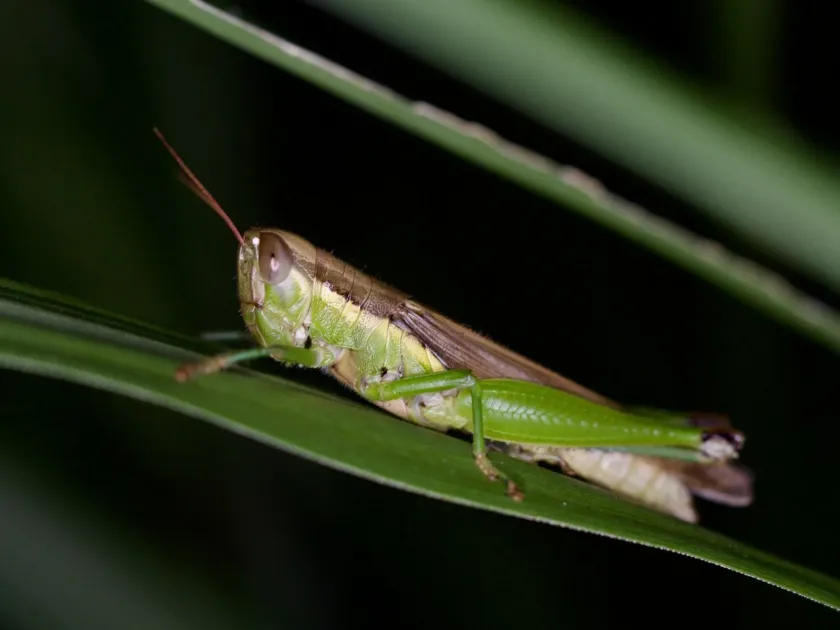
The Chinese rice grasshopper (Oxya chinensis) is a member of the order Orthoptera and the family Acrididae. These insects are medium-sized and typically exhibit green, yellow, or brownish coloration, which provides excellent camouflage within dense rice paddies.
Adults possess well-developed wings, enabling them to disperse effectively across agricultural landscapes. Their mouthparts are of the chewing type, specifically adapted to consume the tough, fibrous tissues of various grass species.
Morphologically, they are characterized by the distinct shape of the pronotum and specific body proportions typical of the genus Oxya. Sexual dimorphism is present, with females being significantly larger than males, which is a common trait among grasshoppers.
The reproductive cycle involves laying eggs in the soil or at the base of plants within protective structures known as egg pods. Development follows a hemimetabolous pattern, progressing through nymphal instars before reaching the adult stage.
Nymphs resemble smaller versions of the adults but lack fully developed wings. They undergo several molts as they grow, and their feeding activity increases progressively with each developmental stage, making them consistent threats to crop health.
What it damages
While the Chinese rice grasshopper primarily targets rice crops, its host range is quite broad. It frequently attacks wheat, corn, millet, and various wild grasses, making it a significant pest in diversified agricultural regions.
Both nymphs and adults cause damage by feeding on leaves, stems, and reproductive structures. By skeletonizing the leaves, they significantly reduce the plant's ability to perform photosynthesis, thereby hindering its growth and development.
During the flowering and grain-filling stages of rice, the grasshoppers often feed on the panicles. This causes direct yield loss through grain destruction and leads to empty or shriveled grains, which significantly lowers overall quality.
High population densities can lead to severe defoliation, leaving plants stunted and vulnerable. Wounds caused by their feeding can also act as entry points for secondary bacterial or fungal infections, exacerbating the overall crop damage.
- Defoliation resulting in ragged leaf edges.
- Damage to panicles leading to grain loss.
- Reduced plant biomass and stunted growth.
- Increased susceptibility to plant diseases.
- Significant reduction in yield quantity and quality.
When it appears
The life cycle of the Chinese rice grasshopper is heavily influenced by ambient temperatures and humidity levels. Nymph hatching typically aligns with the early stages of the rice growing season, providing immediate access to food sources.
Population activity peaks during the warmer summer months when metabolic rates are highest. Depending on the geographical location and climatic conditions, the pest may complete one or multiple generations within a single season.
Adult grasshoppers are most active during the day, showing high mobility when foraging for fresh plant material. As temperatures drop and the season concludes, egg deposition ensures the continuation of the species through the winter months.
Regular monitoring is essential for managing this pest, starting from seedling emergence through to the grain-ripening stage. Early detection allows for more effective intervention before populations reach critical thresholds.
Climatic variability, such as extreme heat or excessive rainfall, can modulate population dynamics, yet this species remains highly adaptable, making it a persistent concern in many rice-growing areas.
Signs of infestation
The most recognizable sign of an infestation is the presence of irregular, notched leaf margins. As feeding progresses, large sections of the leaves are consumed, leaving behind only the central veins.
Visual identification of the insects is relatively easy in sunny conditions; they are known for their sudden jumping behavior when disturbed. Detecting them at the base of rice plants or within the foliage is a key indicator of population pressure.
The accumulation of frass (droppings) on the leaves and soil surface is a clear sign of active feeding. The presence of these droppings helps farmers map out infested areas that require prioritized management or control actions.
In cases of severe infestation, stems may appear damaged or twisted, and panicles may show signs of premature wilting. These symptoms indicate significant damage that can negatively impact the final harvest outcome.
A noticeable decrease in plant stand density on young crops is another warning sign. If left unmanaged, the cumulative feeding damage can lead to sparse fields and reduced crop vigor.
Control measures
Cultural control practices, such as post-harvest field plowing, are highly effective in destroying the egg pods buried in the soil. Maintaining clean field margins by removing weeds reduces alternative host plants for the grasshoppers.
Water management plays a crucial role in rice paddy environments. Strategic flooding can drown nymphs or force them out of the foliage, making them more susceptible to natural predators or mechanical removal.
Chemical control involving insecticides is utilized when population levels exceed the economic threshold. Applying treatments during the early nymphal stages is the most effective approach to preventing widespread damage.
Biological control, including the use of entomopathogenic fungi or encouraging natural predators like birds and spiders, can help keep population numbers in check while minimizing the environmental footprint.
An integrated pest management (IPM) strategy that combines monitoring, cultural practices, and targeted chemical applications provides the most sustainable defense against the Chinese rice grasshopper.
Taxonomy
- Latin name
- Oxya chinensis
- Order
- Orthoptera (locusts)
- Family
- Acrididae
- EPPO code
- OXYXCH
Discussion
No discussions yet — be the first.