
Oxya
Oxya
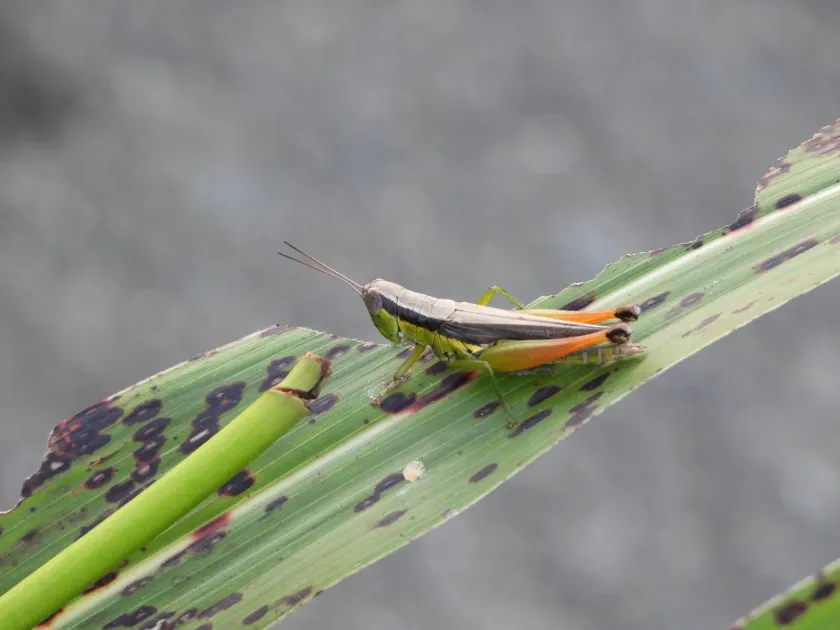
Description
How to identify
Oxya is a genus of grasshoppers belonging to the family Acrididae. These insects are distinguished by a specific physical structure, including a sharp prosternal tubercle located between the forelegs.
Adult insects typically exhibit colors ranging from bright green to brown, allowing them to effectively camouflage themselves within the dense foliage of their host plants.
They possess a slender body shape with well-developed wings and powerful hind legs, enabling them to perform both long-distance flights and rapid jumping movements.
The head features a strong, biting mouthpart designed for consuming fibrous plant tissues, while their antennae are relatively short and filiform compared to other Orthoptera.
Sexual dimorphism is noticeable, as females are generally larger than males and are equipped with a specialized ovipositor designed for laying eggs in soil or plant stems.
What it damages
Oxya primarily attacks graminaceous crops, with rice being one of their most frequent and economically significant targets in agricultural regions.
Beyond rice, they also feed on maize, sugarcane, millet, and a wide variety of wild grasses typically found in wet or irrigated environments.
Damage is characterized by the consumption of leaves, stems, and reproductive structures, which directly reduces the photosynthetic capacity of the plants.
In outbreaks, heavy infestations can result in total defoliation of young seedlings, necessitating immediate intervention to prevent total crop failure.
As the crops mature, the pests may feed on the panicles or ears, leading to significant yield losses due to decreased grain weight and poor overall quality.
When it appears
The life cycle of Oxya is deeply influenced by environmental conditions, particularly temperature and humidity levels in tropical and subtropical regions.
They overwinter as eggs deposited in the soil, which provides protection against environmental stress until the return of favorable spring conditions.
Springtime hatching of nymphs coincides with the availability of young, succulent plant tissues, ensuring the rapid development of the new generation.
Multiple generations can occur throughout the growing season, which allows for a rapid population explosion if conditions remain optimal for feeding and reproduction.
As autumn approaches and temperatures drop, adult activity declines as they focus on mating and oviposition to ensure the survival of the next year's population.
Signs of infestation
The most common sign of an Oxya infestation is the presence of jagged or tattered leaf edges, as they start consuming the plant tissue from the margins.
Under high population density, leaves may be skeletonized, leaving only the primary veins visible, which severely stunts the plant's growth and development.
The presence of grasshopper frass (excrement) on the leaves and surrounding soil is a clear indicator of active feeding behavior occurring within the canopy.
Audible stridulation of males during the day can serve as an early warning sign of increasing population levels, signaling the need for closer field inspections.
Damage to the flowering or fruiting parts of the crop can result in empty grains or stunted spikes, which become evident as the crop reaches maturity.
Control measures
Effective management begins with regular monitoring of fields, particularly along irrigation canals and field borders where populations often congregate.
Cultural control involves the systematic removal of weeds and grasses from around the field, which destroys the breeding and refuge sites for the pests.
Post-harvest tillage of the soil is highly recommended as it helps to disrupt and kill the egg masses buried in the upper soil layers.
Biological control using entomopathogenic fungi or predators can be an effective way to manage population levels while minimizing chemical usage.
- Applying insecticides only when economic thresholds are exceeded.
- Improving water management in rice paddies to discourage colonization.
- Using light traps to monitor adult flight activity and density.
Taxonomy
- Latin name
- Oxya
- Order
- Orthoptera (locusts)
- Family
- Acrididae
- EPPO code
- OXYXSP
Discussion
No discussions yet — be the first.