
Black grass fly
Oscinella maura
Description
How to identify
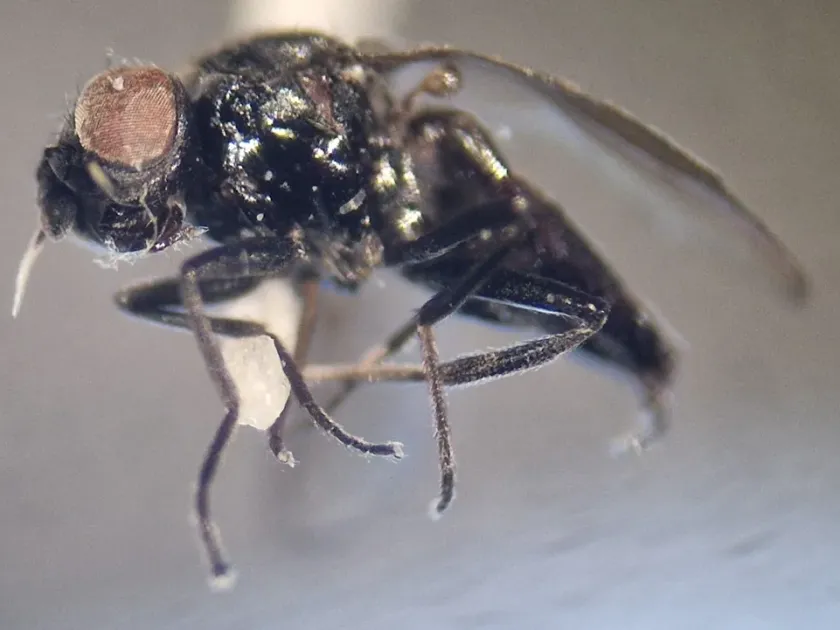
The Black grass fly (Oscinella maura) is a member of the Chloropidae family, within the order Diptera. Adults are very small, typically 2 to 3 mm in length, and are easily recognized by their shiny black or dark-brown body. The legs are generally black, providing a distinct appearance compared to other related frit fly species.
What it damages
This pest primarily attacks various cereal crops, including winter and spring wheat, barley, oats, and rye. It acts as a significant threat to young plants, while wild grasses such as couch grass and meadow grass often serve as alternative hosts, allowing the pest to thrive even in the absence of primary cereal crops.
When it appears
The insect typically completes two to four generations per year depending on environmental conditions. The activity of the first generation is critical as it synchronizes with the early tillering phase of cereal crops, posing the highest risk of reducing plant stands and yield potential during the spring season.
Signs of infestation
Symptoms of infestation occur when larvae tunnel into the main stem of the plant to feed on tissues. This leads to the characteristic yellowing and withering of the central leaf, often referred to as "dead heart." Severely affected plants stop growing, resulting in thin, uneven stands and significant reduction in grain weight at harvest.
Control measures
Management focuses on agronomic practices like early sowing date optimization and deep plowing of crop residues to destroy overwintering larvae. Furthermore, the use of systemic seed treatments is recommended to protect seedlings during the early growth stages, complemented by targeted foliar insecticide applications when monitoring confirms high pest density.
Taxonomy
- Latin name
- Oscinella maura
- Order
- Diptera (flies)
- Family
- Chloropidae
- EPPO code
- OSCIAL
Discussion
No discussions yet — be the first.