
Gout fly
Chlorops pumilionis
Description
How to identify
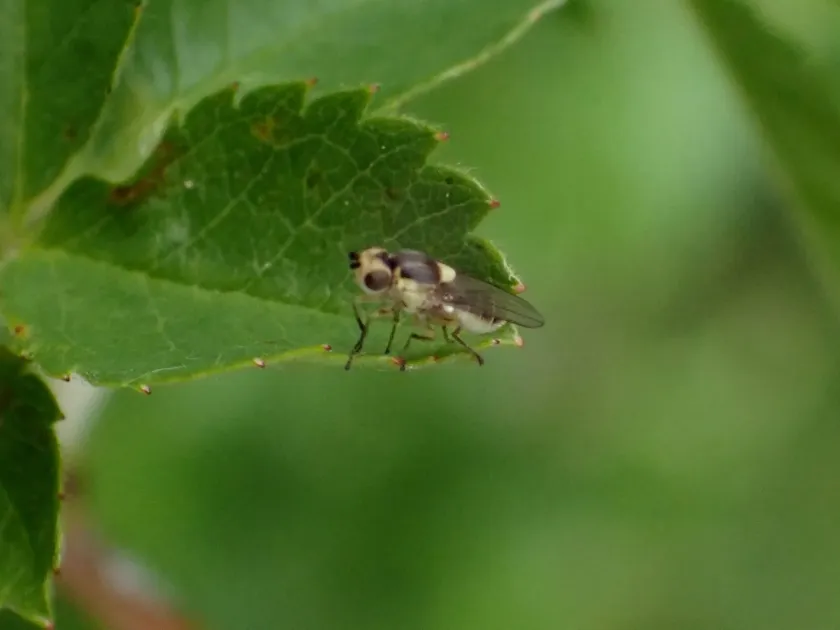
The Gout fly (Chlorops pumilionis) belongs to the family Chloropidae within the order Diptera. The adult fly is small, measuring 3–4 mm in length, with a distinct yellow body, black longitudinal stripes on the thorax, and bright green eyes, which are diagnostic for this species.
The larvae of the Gout fly are legless, cylindrical, and reach 6–7 mm in length. They are typically whitish to light yellow and possess specialized mouth hooks used for feeding on the tissues of host plants during the larval stage of development.
Pupation occurs within a brown, flattened puparium, usually found inside the plant stem or near the leaf sheath. This stage provides the insect with protection against environmental changes during the transition to adulthood.
This pest is widely distributed across temperate regions of Eurasia. Adults are typically active during daylight hours and are frequently found in sunny, open areas near cereal fields where they feed on flower nectar and plant secretions.
Monitoring for the Gout fly is crucial for efficient field management. Agricultural professionals often utilize yellow sticky traps to identify the presence and density of the adult population during the critical stages of crop growth.
What it damages
The Gout fly primarily attacks cereal crops, causing significant damage to winter and spring wheat, barley, rye, and oats. In addition to cultivated plants, it can utilize various wild grasses as secondary hosts for its development.
The larvae are responsible for the damage. They burrow into the stem during the tillering or shooting stages, feeding on the developing plant tissues and the growing point. This destruction often leads to stunted growth or the total death of the primary shoot.
Infected plants display yellowing and eventual death of the central leaf, often referred to as "heart death." Depending on the crop stage, the pest can cause significant deformation of the spike, rendering it sterile or preventing it from emerging from the leaf sheath.
The economic impact of this pest can be severe, especially during years with heavy infestations. Yield losses in susceptible wheat or barley fields can reach up to 30 percent, significantly reducing the quantity and quality of the harvested grain.
Furthermore, the damage caused by larval tunneling creates entry points for various fungal and bacterial pathogens, such as root rots, which further compromise the health and productivity of the cereal crop.
When it appears
The Gout fly overwinters as a larva inside the stems of winter cereals or wild grasses. As spring temperatures rise, the larvae continue their development before pupating in late April or early May.
The first generation of adults emerges when average daily temperatures exceed 10–12 degrees Celsius. After mating, females lay their eggs on the leaves or stems of young cereal plants, starting the cycle for the new growing season.
Depending on regional climatic conditions, the Gout fly can complete two to three generations per year. Each generation is timed to coincide with specific growth stages of their host cereal crops.
The final generation of the season typically infests early-sown winter cereal crops in late summer and autumn. The resulting larvae then settle within the plant tissues to hibernate, ensuring the survival of the species through the winter.
Environmental factors, particularly humidity and the timing of crop planting, significantly influence the population density. Optimal conditions for the fly often involve mild, moist springs and the availability of vigorous, early-stage cereal plants.
Signs of infestation
The most prominent sign of a Gout fly infestation is the yellowing and wilting of the central leaf in young plants during the tillering stage. This "heart death" is the primary indicator used for field scouting.
Upon dissecting the affected stem, one can observe the internal tunnel created by the larva as it moved towards the growing point. Along with the tunnel, one may find larval excrement and the larva itself within the plant tissue.
As the plant progresses, signs of damage include stem shortening and twisting. If a spike manages to form, it is often severely malformed or remains trapped within the leaf sheath, failing to produce viable grain.
Infestations typically occur in patches across the field. If groups of stunted or deformed plants are spotted, it usually indicates a concentrated population of the pest and justifies closer investigation of the surrounding area.
The lack of ear development in some plants, despite otherwise healthy-looking tillers, is also a subtle diagnostic sign that larvae have compromised the plant's reproductive tissues earlier in the season.
Control measures
Effective control of the Gout fly relies heavily on agronomic practices. Planting winter crops at optimally late dates and spring crops as early as possible helps the plants bypass the peak periods of adult egg-laying activity.
Sanitation is essential; destroying wild grasses around field edges removes the reservoir hosts where the fly survives between crop seasons. Deep plowing of crop residues can also help reduce the number of overwintering larvae.
Providing balanced fertilization, particularly with nitrogen, allows crops to maintain vigorous growth, which enables them to better withstand or recover from minor larval damage during their development.
Chemical control is warranted if the economic threshold is exceeded. Insecticides from the pyrethroid or organophosphate groups are effective when applied during the mass flight of adult flies, before they have the opportunity to lay their eggs.
Promoting natural biological control agents, such as small parasitic wasps, is a key component of integrated pest management. Maintaining a healthy balance of these natural enemies can significantly suppress Gout fly populations over time.
Taxonomy
- Latin name
- Chlorops pumilionis
- Order
- Diptera (flies)
- Family
- Chloropidae
- EPPO code
- CHLPPU
Discussion
No discussions yet — be the first.