
Oat frit fly
Oscinella coxendix
Description
How to identify
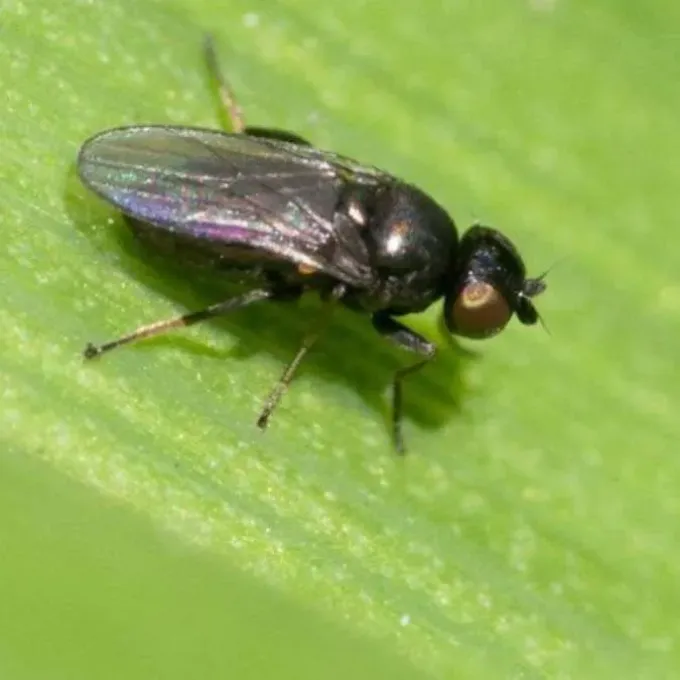
The oat frit fly (Oscinella coxendix) is a member of the Chloropidae family within the order Diptera. These are tiny insects, typically measuring about 2 mm in length, with a shiny black body and yellowish legs.
The larvae of this pest are legless and cylindrical, reaching up to 4 mm in length. Their color ranges from white to yellowish-white, allowing them to remain hidden within the stems of host plants.
The life cycle encompasses four distinct stages: egg, larva, pupa, and adult (imago). Depending on regional climate, the insect can complete two to three generations annually.
Overwintering usually occurs in the larval stage, residing inside the stems of winter cereals or wild grasses, which act as refuge areas during the colder months of the year.
Precise identification of Oscinella coxendix often requires laboratory examination due to its morphological similarity to other related frit fly species that inhabit cereal fields.
What it damages
The primary hosts for this pest include oats, barley, and common wheat. Occasionally, the infestation may also extend to rye and several types of forage grasses in the field.
The most significant damage occurs during the early growth stages when the larva bores into the main shoot, causing it to die and disrupting the plant's development at the tillering phase.
Subsequent generations of the fly may damage the reproductive parts of the plant, including the developing ear or panicle, which directly affects grain yield and seed quality.
Affected plants show stunted growth, reduced tillering capacity, and in severe cases, the death of the primary stem, leading to significant stand thinning and yield loss.
Economic losses vary significantly based on the timing of the infestation; however, during outbreaks, the pest can cause substantial reduction in total harvest tonnage.
Signs of infestation
The first observable sign of an infestation is the yellowing and wilting of the central leaf in young plants, which eventually dries out and stops growing altogether.
An increased incidence of side-tillering is often observed as the plant attempts to compensate for the loss of its central shoot, leading to an uneven and sickly crop appearance.
Inspection of the plant base reveals internal tunnels caused by larval feeding, often accompanied by the presence of the larvae themselves or brown puparia nestled within the stem.
Later in the season, symptomatic "whitehead" development can occur, where ears or panicles become empty or produce shriveled, stunted grains due to earlier larval damage.
Monitoring the adult population using yellow sticky traps placed at the canopy level helps identify the period of peak flight and indicates the risk of imminent egg-laying.
Control measures
Cultural control practices, such as choosing optimal sowing dates to avoid peak flight activity, are crucial for minimizing damage to young cereal crops.
Deep plowing after harvest is an effective method to bury crop residues, thereby killing overwintering larvae and reducing the local population for the next season.
Chemical control usually involves the application of systemic insecticides during the peak flight period to prevent adult flies from laying eggs on vulnerable young plants.
Seed treatment with systemic insecticides is widely considered the most effective proactive measure, providing protection for the crop during the most vulnerable germination stages.
- Maintaining diverse crop rotations to disrupt pest cycles.
- Using resistant cereal cultivars where available.
- Controlling grassy weeds that serve as alternative hosts.
- Ensuring adequate nitrogen fertilization to promote vigorous early growth.
- Regular field scouting during the tillering stage to monitor pest pressure.
Taxonomy
- Latin name
- Oscinella coxendix
- Order
- Diptera (flies)
- Family
- Chloropidae
- EPPO code
- OSCICO
Discussion
No discussions yet — be the first.