
Frit fly
Oscinella
Description
How to identify
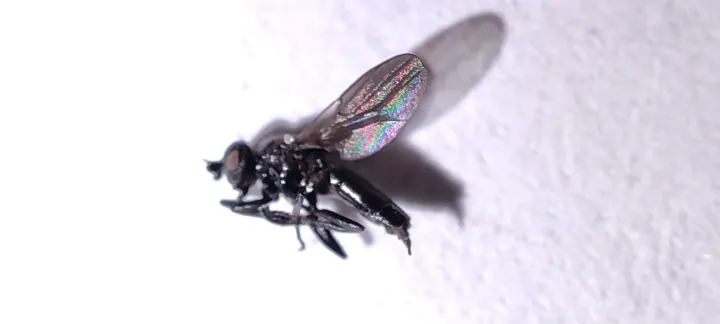
The frit fly (Oscinella frit) belongs to the Diptera order, Chloropidae family. The adult is a tiny insect, only 1.5–2.5 mm long, with a shiny black body.
The larva is cylindrical, measuring about 3–4 mm. It is white or pale yellow in color with distinct black, hook-shaped mouthparts used for feeding.
The eggs are microscopic, elongated, and milky white. Female flies deposit them primarily on young cereal seedlings during the first-leaf stage.
The puparium (pupa case) is dark brown and develops inside the plant stem, where the pest often completes its overwintering cycle.
The life cycle of this insect is highly dependent on ambient temperature, allowing for two to four generations per season under favorable conditions.
What it damages
The primary damage is caused by larvae that burrow into the stems of cereal crops. Common hosts include spring wheat, barley, oats, and maize.
Besides agricultural crops, the frit fly colonizes various wild grasses, such as couch grass, which act as a reservoir for the pest population.
Larval feeding causes the central leaf to yellow and wither. If the larva destroys the growing point, the tiller stops developing and often dies.
Damage is most severe during the early growth stages. Infested plants show stunted growth, reduced tillering, and often fail to produce a viable ear.
In cases of severe infestation, yield losses in cereals can reach 20–40%, making it a significant economic concern for farmers worldwide.
When it appears
The spring emergence of overwintered flies typically begins when average daily temperatures exceed 10–12 degrees Celsius.
The timing of egg-laying for the first generation coincides with the emergence of spring cereals, which is the most critical period for protection.
Subsequent fly flights are spread out throughout the season, usually peaking in June and July, affecting both spring and winter crops.
In autumn, flies lay eggs on newly emerged winter cereals, where the larvae overwinter inside the young stems until spring activity resumes.
Moist weather and moderate temperatures create optimal conditions for rapid reproduction, increasing the overall threat to fields.
Signs of infestation
The primary symptom of an infestation is the yellowing and wilting of the central leaf of a young plant, while the outer leaves remain green.
- Affected stems can be easily pulled out from the base, revealing internal tissue damage.
- Upon splitting the stem, one can often find the larva or signs of tunneling within the plant tissue.
- General plant stunting compared to adjacent healthy crops is a clear indicator of localized infestation.
- Visible thinning of the crop stand, often appearing as patches where seedlings have been killed by larvae.
Control measures
Early planting of spring cereals is a key cultural practice that helps crops reach a growth stage less susceptible to first-generation fly damage.
Aggressive weed control, especially targeting wild grasses, and deep autumn plowing are essential to destroy overwintering sites and larval habitats.
Chemical control involving insecticide application during the peak flight of adult flies is effective in reducing the population in high-risk areas.
Treating seeds with systemic insecticides provides robust protection during the critical seedling stage, preventing larvae from entering the stem.
Implementing strict crop rotation protocols helps break the pest cycle and prevents the buildup of frit fly populations over successive seasons.
Taxonomy
- Latin name
- Oscinella
- Order
- Diptera (flies)
- Family
- Chloropidae
- EPPO code
- OSCISP
Discussion
No discussions yet — be the first.