
Orthochtha ampla
Orthochtha ampla
Description
How to identify
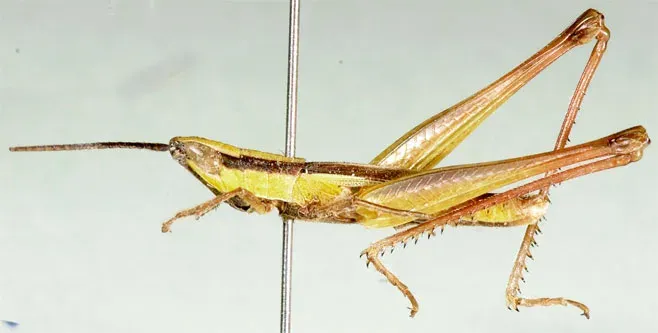
Orthochtha ampla is a species of grasshopper belonging to the family Acrididae (order Orthoptera). It is known for its slender body shape, typical of many grasshoppers adapted to living among grass stems.
Adults typically exhibit a straw-yellow or light brown coloration, which provides excellent camouflage against the dry grass and crop debris found in their habitat.
These insects possess well-developed wings, enabling them to move rapidly between fields and disperse across agricultural landscapes during the growing season.
The morphology includes powerful hind legs designed for jumping and a robust chewing mouthpart, specifically adapted to consume the leaves and stems of various grasses.
The species thrives in open areas with specific moisture requirements, often being found in proximity to grain fields, meadows, and wetlands where food resources are abundant.
What it damages
The primary hosts of Orthochtha ampla are plants within the Poaceae family, making it a significant pest for crops such as wheat and rice.
Damage is caused by both nymphs and adults feeding on the aerial parts of the plants, including leaves, stems, and sometimes tender shoots during the tillering stage.
Extensive feeding reduces the total leaf surface area available for photosynthesis, which directly impacts the plant's ability to produce biomass and develop healthy grain.
Severe infestations can lead to significant yield losses, especially when the insect population density is high during the critical vegetative phases of the crop.
By weakening the plants, these grasshoppers also make the crops more susceptible to environmental stress and secondary fungal or bacterial infections.
When it appears
The life cycle of this species is closely synchronized with seasonal rainfall patterns, which are essential for egg development and nymph survival.
Eggs are typically deposited in the soil or at the base of host plants, where they may undergo a diapause period to survive harsh, dry conditions.
Nymphal development proceeds through several stages (instars) following the onset of the wet season, coinciding with the early growth stages of the crops.
Adult populations usually emerge during the peak of the growing season, which is when they exert the most significant feeding pressure on agricultural fields.
Reproduction follows the feeding period, and the cycle repeats as eggs are laid in the soil to overwinter or survive the dry season until the next cycle begins.
Signs of infestation
The most characteristic sign of infestation is the appearance of jagged or notched leaf edges, which result from the insect's direct feeding activity.
Observing fields during the day usually reveals the presence of grasshoppers as they jump or fly when disturbed by human activity or agricultural machinery.
The accumulation of frass (insect excrement) on leaves and stems serves as an additional diagnostic indicator of high pest density in the area.
Patchy damage, where sections of the field show yellowing or stunted growth, often highlights areas where grasshopper populations have concentrated.
Regular field scouting using standard entomological tools helps farmers track population trends and determine if control measures are required.
Control measures
Cultural control methods involve maintaining field hygiene, such as clearing weeds and grass from field boundaries, to reduce available breeding sites.
Tillage practices that disturb the soil surface can physically destroy egg pods, thereby reducing the number of nymphs that emerge in the following season.
When populations exceed economic injury levels, chemical control using approved insecticides applied as sprays or baits remains a common management strategy.
Biological control, including the use of pathogens like entomopathogenic fungi, is an environmentally friendly alternative being explored to manage grasshopper outbreaks.
Integrated Pest Management (IPM) programs emphasize continuous monitoring and the combination of various tactics to keep populations below damaging levels.
Taxonomy
- Latin name
- Orthochtha ampla
- Order
- Orthoptera (locusts)
- Family
- Acrididae
- EPPO code
- OCHTAP
Discussion
No discussions yet — be the first.