
Oplomus dichrous
Oplomus dichrous
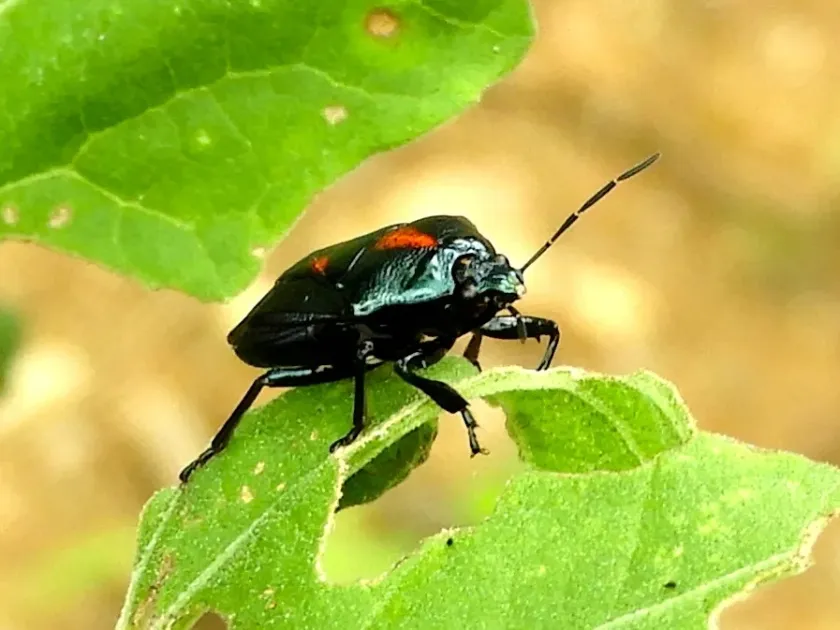
Description
How to identify
Oplomus dichrous is a species of stink bug (family Pentatomidae) within the order Hemiptera. These insects are characterized by their distinct shield-shaped bodies and vibrant, contrasting coloration, often featuring black, orange, or red patterns that act as aposematic signals to potential predators.
The life cycle follows a hemimetabolous development path, consisting of eggs, multiple nymphal instars, and adults. Each stage is adapted to survival in varied environmental conditions, with nymphs often congregating on the undersides of leaves to avoid direct solar radiation and excessive heat.
Adults possess a piercing-sucking mouthpart, which is highly efficient for penetrating plant tissues. This anatomical feature allows them to access the vascular system of the host plant, extracting essential nutrients and moisture, which is vital for their reproduction and growth.
The insect’s presence is usually tied to warm, sunny climates where they can thrive. They exhibit migratory behavior, moving between host plants as the season progresses, which often coincides with the phenological stages of local crops that provide optimal food sources.
Identification in the field involves looking for the characteristic clusters of eggs on foliage or observing the movement of the bugs across the plant canopy. Their flight capability allows them to colonize new fields rapidly, making early detection a primary goal for integrated pest management.
What it damages
The damage caused by Oplomus dichrous stems from their feeding activity, during which they inject enzymes into plant tissues. These enzymes soften the tissue and cause local necrosis, resulting in discolored spots, wilting, and, in severe cases, the death of shoots or leaves.
They affect a broad range of host plants, including vegetable crops and various ornamental species. By draining sap, the insects weaken the plant's structural integrity and physiological capacity, leading to reduced growth rates and poor development of reproductive structures.
A notable sign of infestation is the appearance of mottled or deformed leaves and the premature shedding of fruit or blossoms. These physical signs are often accompanied by stunted plant growth, which significantly impacts the overall yield and market value of the agricultural production.
Beyond direct feeding, the wounds created by these bugs provide entry points for secondary pathogens, such as bacteria and fungi. This synergistic effect often causes more severe damage than the direct feeding of the insects alone, leading to potential disease outbreaks across the field.
The economic impact is particularly high during years with favorable conditions for rapid population growth. If not managed effectively, these pests can quickly turn a productive plot into one with significant yield losses, requiring costly intervention and management strategies.
Control measures
Effective management begins with regular monitoring of crop fields, focusing on the undersides of leaves where egg masses are typically laid. Early detection allows for targeted interventions that can significantly limit the need for widespread pesticide applications.
Cultural control practices, such as maintaining field hygiene and removing weeds, are essential in minimizing the availability of alternative food sources. Deep plowing of fields after harvest can also disrupt the overwintering sites of the bugs, effectively reducing the population for the next season.
Chemical control remains a staple in pest management when populations exceed economic thresholds. It is crucial to use systemic or contact insecticides that are specifically effective against Hemiptera, while rotating chemical classes to prevent the development of pesticide resistance in the pest population.
Biological control methods, such as encouraging the presence of natural predators and parasitoids, provide a sustainable alternative to traditional chemical methods. These natural enemies can keep pest populations at low levels, provided the environment is managed to support their survival.
Integrating these methods into a comprehensive pest management program ensures long-term crop protection. By combining preventative measures with precise monitoring and selective chemical use, growers can maintain healthy crops while minimizing their environmental footprint.
Taxonomy
- Latin name
- Oplomus dichrous
- Order
- Hemiptera (bugs, aphids, leafhoppers)
- Family
- Pentatomidae
- EPPO code
- OPLMDI
Discussion
No discussions yet — be the first.