
Green meadow grasshopper
Omocestus viridulus
Description
How to identify
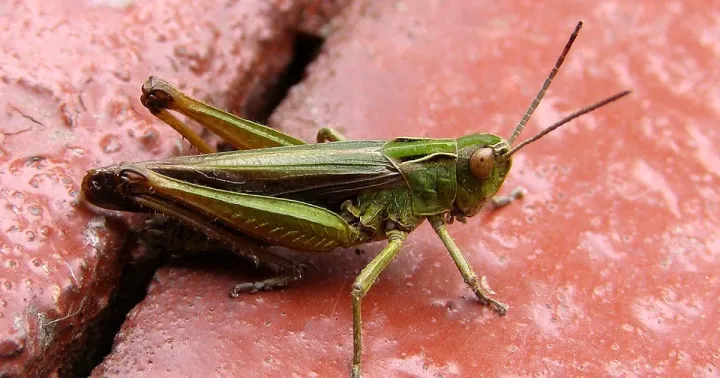
The green meadow grasshopper, known scientifically as Omocestus viridulus, is a species belonging to the family Acrididae, common in temperate climates.
Adult grasshoppers typically measure between 15 and 25 millimeters in length, with a body structure adapted for jumping and stridulation.
Their coloration is highly variable, ranging from vibrant green to shades of brown, which serves as an effective camouflage within grasslands and cereal crops.
A key diagnostic feature is the shape of the pronotal side keels, which are distinctly curved inward, allowing entomologists to identify the species accurately.
Females lay eggs in the soil, encased in protective pods or egg masses known as oothecae, which are shielded by a hardened, foam-like substance.
What it damages
This species is a polyphagous pest, meaning it feeds on various plants, with a strong preference for members of the Poaceae family (grasses).
Both nymphs and adults cause significant damage to cereal crops, including wheat, barley, and oats, by consuming foliage and stems.
Severe infestations often result in massive defoliation, which severely reduces the photosynthetic capacity of the plants and impacts overall grain yield.
Young nymphs start by eating the tender tissues of young shoots, while older insects move on to tougher stems and leaves, often severing them entirely.
On pasture lands, the grasshopper can deplete high-quality forage, leading to lower biomass production and a decrease in the nutritional value of the hay.
When it appears
The green meadow grasshopper follows a univoltine life cycle, meaning there is only one generation produced per year under normal environmental conditions.
Overwintering occurs exclusively at the egg stage, with the eggs remaining dormant in the upper layers of the soil throughout the winter months.
Nymphal development begins in late spring, typically in May, depending on the accumulation of degree-days and local temperature conditions.
The insects progress through several nymphal stages over the course of the summer, rapidly increasing in size and feeding intensity as they mature.
Adults are most active during July and August, at which time they mate and deposit their eggs into the soil, completing their life cycle before the first frost.
Signs of infestation
The presence of this pest is often signaled by irregular, shredded margins on the leaves of cereal plants and grasses where they have been actively feeding.
Farmers can observe sudden movement or "jumping" when walking through an infested field, especially during sunny days when the insects are most active.
Accumulated frass, or insect droppings, found at the base of plants or on leaves is a definitive indicator of a significant infestation level.
Large patches of thinned vegetation or completely bare spots in meadows or fields often suggest the presence of dense grasshopper populations.
During the early morning, nymphs may cluster in lower, cooler areas near the base of stems, making them easier to spot during scouting activities.
Control measures
Management strategies focus on cultural practices and targeted chemical interventions to minimize economic loss during peak infestation years.
Deep plowing in the autumn is highly effective at destroying the egg pods embedded in the soil, significantly reducing the next generation's population.
Chemical control involving approved insecticides should be applied only when population thresholds are exceeded to ensure both efficacy and environmental safety.
Encouraging the presence of natural predators, such as birds and various ground beetles, can help maintain population levels below the economic threshold.
- Maintain clean fields by removing weeds that act as host reservoirs.
- Utilize edge treatments where the pest often aggregates before moving into crops.
- Implement systematic field monitoring to detect early-stage nymph activity.
Taxonomy
- Latin name
- Omocestus viridulus
- Order
- Orthoptera (locusts)
- Family
- Acrididae
- EPPO code
- OMOCVI
Discussion
No discussions yet — be the first.