
Rufous grasshopper
Omocestus rufipes
Description
How to identify
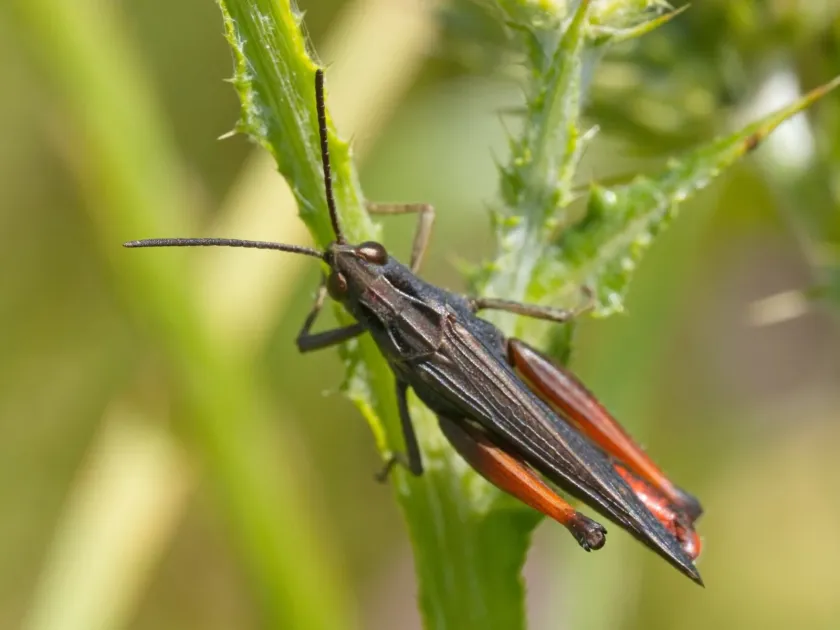
The rufous grasshopper Omocestus rufipes is a member of the Acrididae family within the Orthoptera order. It is a common grasshopper species found in temperate regions across Europe and Asia.
Adults typically measure between 15 and 22 mm in length. They exhibit a range of colors, often varying from green to brown, which provides excellent camouflage within their natural grassland habitats.
Key identification features include dark longitudinal stripes on the pronotum that narrow in the middle, and a distinctive reddish tint at the tip of the male's abdomen.
They possess well-developed wings, allowing them to fly between adjacent habitats. Their antennae are thread-like, and their head shape is typical of many short-horned grasshopper species.
Nymphs resemble smaller, wingless versions of adults. They pass through five distinct instar stages before reaching sexual maturity and developing their wings.
What it damages
The rufous grasshopper is a polyphagous pest, meaning it consumes a wide variety of plants. It frequently targets cereal crops, grasses, and occasionally vegetable crops near field edges.
Both nymphs and adults feed by chewing plant tissues. They have powerful mandibles that allow them to consume large portions of leaves, leading to reduced photosynthetic capacity.
When populations reach high densities, they can cause significant thinning of crops. This reduces the overall yield and affects the economic viability of the affected fields.
The damage is most severe during hot and dry spells when natural forage sources become scarce, forcing the grasshoppers to migrate into cultivated agricultural lands.
Beyond leaf consumption, the physiological stress caused by heavy feeding makes plants more susceptible to secondary fungal infections or environmental stress.
When it appears
The life cycle begins with eggs overwintering in the soil. They are deposited by females in small clusters (egg pods), usually in undisturbed soil patches or dense turf areas.
Nymphs typically emerge in late spring, around April or May, depending on the soil temperature and seasonal heat accumulation patterns in the specific geographic area.
The nymphal stage lasts approximately 40 to 50 days, during which they grow rapidly. They transition to adulthood during the mid-summer months, typically in June or July.
Adults remain active throughout the summer, feeding and mating. Egg-laying occurs during the latter part of the season, ensuring the next generation survives the winter.
Warm and dry weather patterns promote faster development and higher survival rates of nymphs, often leading to increased pest pressure on crops during these particular years.
Signs of infestation
The primary sign of infestation is irregular, notched leaf margins. These areas look ragged and are often accompanied by reduced leaf tissue at the edges of the plant.
Field monitoring during warm, sunny days often reveals the presence of adult grasshoppers through their distinctive buzzing or clicking sounds in the vegetation.
Visual inspection of leaves reveals small, dark droppings (frass) left by the feeding insects, which serves as a reliable indicator of recent pest activity in the field.
Heavily infested patches show severe defoliation. In extreme cases, plants may be stripped down to their main veins and stems, leaving significant gaps in the field crop.
A sudden decrease in vegetation density along the field margins is a strong indicator that a grasshopper population is migrating from adjacent non-cultivated areas.
Control measures
Cultural control is highly effective; deep plowing or harrowing of field edges after harvest destroys egg pods and reduces the population for the following season.
Maintaining clean field borders and managing weeds in adjacent areas prevents the buildup of grasshopper populations before they move into the primary crop area.
Biological control options include the use of entomopathogenic fungi or predators that naturally target grasshopper nymphs, keeping populations below economic threshold levels.
Chemical control involving approved insecticides should be targeted at younger nymphal stages when they are most susceptible and before they gain high mobility as adults.
- Regular crop scouting for signs of leaf damage.
- Deep cultivation to disrupt egg-laying sites.
- Maintaining vegetation-free zones along field boundaries.
- Timed insecticide applications based on economic thresholds.
Taxonomy
- Latin name
- Omocestus rufipes
- Order
- Orthoptera (locusts)
- Family
- Acrididae
- EPPO code
- OMOCVE
Discussion
No discussions yet — be the first.