
Lesser mottled grasshopper
Omocestus petraeus
Description
How to identify
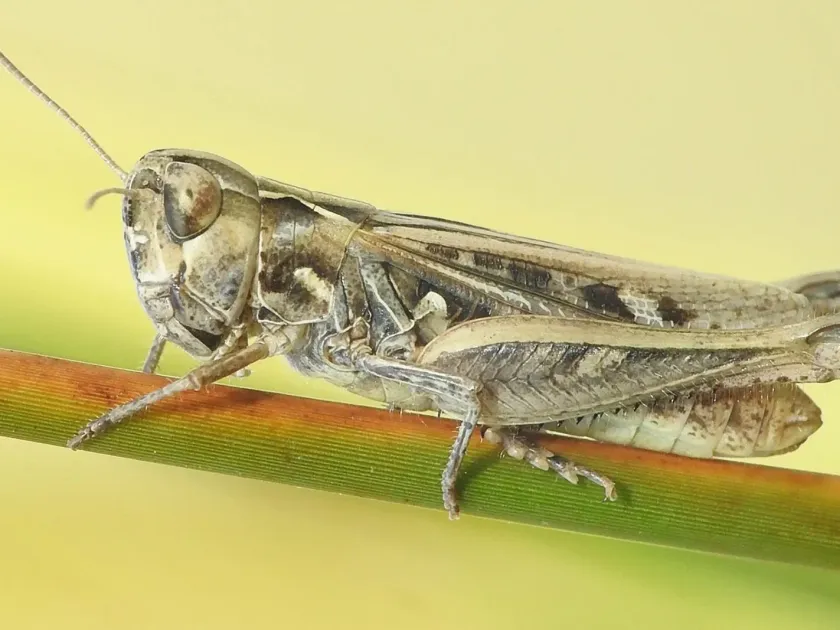
The lesser mottled grasshopper (Omocestus petraeus) is a member of the Acrididae family within the Orthoptera order. This species is relatively small and relies on its mottled, earth-toned camouflage to blend into rocky or dry grassland environments.
Key morphological features include a distinctively shaped pronotum and relatively short tegmina (forewings). The coloration ranges from pale yellow to dark brown, often with dark spots that provide excellent crypsis against soil and dry debris.
There is a noticeable size difference between sexes, with females being generally larger and more robust. Their compound eyes are well-developed, allowing them to detect movement in their surroundings effectively.
The life cycle involves incomplete metamorphosis, moving through egg, nymph, and adult stages. They are well-adapted to hot, arid climates where their eggs can successfully overwinter in the soil.
These insects are most frequently found in dry, sparsely vegetated areas, such as steppe grasslands, rocky hillsides, and the edges of cultivated fields.
What it damages
As a phytophagous insect, the lesser mottled grasshopper feeds on the foliage of various graminaceous plants. It poses a potential economic threat to cereal crops such as wheat, barley, and rye.
Beyond cultivated crops, these grasshoppers significantly impact pasture land by consuming valuable forage, which can lead to reduced livestock productivity if infestations are severe.
Both nymphs and adults feed by scraping or eating the leaf tissue, which drastically reduces the photosynthetic surface area and weakens the overall plant vigor.
In outbreaks, high population densities can cause significant damage to early-stage cereal crops, resulting in stand thinning and potential yield losses in affected areas.
The severity of the damage is usually correlated with the density of the population, with the most significant impact observed during hot and dry growing seasons.
When it appears
The species overwinters in the egg stage, with eggs deposited in the soil within protective egg pods. Development is highly sensitive to soil temperature, with spring warmth triggering the hatching of nymphs.
Nymphs go through several instars, feeding throughout the late spring and early summer. During this time, they gradually increase in size and prepare for their transition to the adult stage.
Adult activity peaks during the mid-to-late summer months, coinciding with warmer temperatures which are optimal for feeding, mating, and subsequent egg-laying.
Monitoring efforts should be intensified during this peak period to identify infestation hotspots before the insects disperse into the center of large agricultural fields.
Following the mating season, females lay their eggs in the soil, and adult populations decline as temperatures drop with the approach of autumn.
Signs of infestation
The primary indication of an infestation is irregular feeding patterns on leaf margins. Leaves may appear ragged or partially consumed, reducing the plant's overall health.
Observing the field edges, especially on sunny, hot days, is a reliable way to spot these grasshoppers, as they tend to congregate in warm, open patches.
High population numbers are often evidenced by numerous jumping insects disturbed while walking through the crop or along the field perimeter.
In cases of severe damage, the stems of cereal crops may become exposed or stripped, indicating that the population has been feeding in that specific location for an extended duration.
Field scouting should focus on the transition zones between untilled land and crops, as these are the typical starting points for grasshopper colonization.
Control measures
Effective management requires a combination of preventive agronomic practices and reactive chemical controls when the economic injury level is reached.
Deep plowing during the fall is a highly effective cultural practice, as it exposes the egg pods to harsh winter conditions and natural predators, significantly reducing future populations.
Chemical control is generally implemented via insecticides targeting nymphs, which are more susceptible and less mobile than adults, allowing for better efficacy.
Border treatments (spraying the field margins) can often contain the infestation, preventing the need for broad-spectrum application across the entire crop area.
- Implement proper crop rotation schedules.
- Practice weed control in field margins to eliminate food sources.
- Monitor nymph density to determine treatment timing.
- Use selective insecticides to minimize impact on beneficial insects.
- Promote natural biological control through habitat conservation.
Taxonomy
- Latin name
- Omocestus petraeus
- Order
- Orthoptera (locusts)
- Family
- Acrididae
- EPPO code
- OMOCPE
Discussion
No discussions yet — be the first.