
Oligotoma saundersii
Oligotoma saundersii
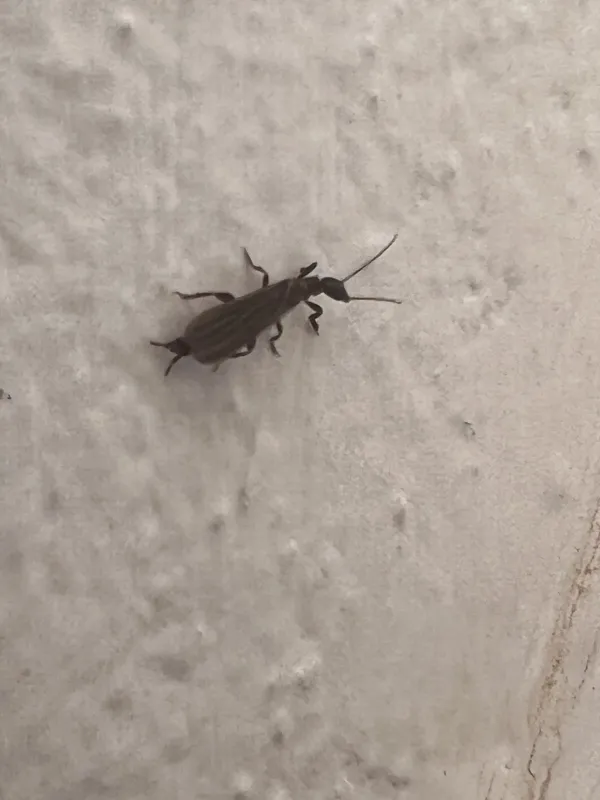
Description
How to identify
Oligotoma saundersii, commonly known as a type of webspinner, belongs to the order Embioptera and the family Oligotomidae. These insects are unique due to their ability to produce silk.
They possess a cylindrical, elongated body and are typically brown or dark brown in color. Their size generally reaches about 10 to 12 millimeters in length.
The most distinctive feature is their enlarged front tarsi (feet), which contain specialized glands used to weave elaborate silk tunnels for protection.
While females are wingless and stay within their webs, males are winged and can be seen flying, particularly during twilight or at night when searching for mates.
Due to their highly specialized biology, they require stable, humid environments to survive, which is why they are often found in sheltered areas of plants.
What it damages
These insects primarily feed on detritus, moss, lichens, and fungal spores found on the bark or surfaces of plants, making them minor pests in most garden settings.
However, when populations become dense, they may consume living plant tissue, especially the bark of young twigs or the leaves of ornamental plants.
The silk galleries they construct can cover significant portions of stems and leaves, which negatively impacts the aesthetic value of ornamental plants.
In greenhouses, these webs can interfere with normal plant growth and trap moisture, potentially leading to fungal outbreaks in the affected areas.
Persistent presence on the bark can cause long-term harm by weakening the protective layers of the plant, exposing it to environmental stress or pathogens.
Signs of infestation
The most prominent sign of an infestation is the presence of delicate, translucent silk tunnels or mats on tree trunks, branches, or near the soil base.
Observation of small, granular pellets of frass trapped within the silk galleries is a clear indicator that the insect is actively occupying and feeding in the area.
Affected plant surfaces may look discolored or have a "dusted" appearance where the insects have removed protective layers of bark or epicuticular wax.
When the silk tunnels are disturbed, the insects exhibit a characteristic rapid movement, often retreating backward into the depths of their intricate nest system.
Winged males attracted to nearby lights or congregating on foliage during the evening are also strong indicators of a reproducing population in the vicinity.
Control measures
Cultural control is the most effective approach; this includes removing excess debris, dead wood, and heavy mulch that provides nesting sites for the webspinners.
Improving air circulation and reducing humidity in greenhouses or densely planted areas makes the environment less favorable for the survival of the insects.
For high-density infestations, selective spraying with contact insecticides targeting the galleries can provide quick control of the localized population.
Mechanical removal of the silk galleries using a soft brush or water spray can expose the insects to predators and desiccating conditions, effectively managing the colony.
- Prune branches that are touching the ground to reduce access points.
- Maintain plant health to ensure a strong defense against secondary pests.
- Monitor greenhouse structures for silk accumulation during warm months.
Taxonomy
- Latin name
- Oligotoma saundersii
- Family
- Oligotomidae
- EPPO code
- OLGTSA
Discussion
No discussions yet — be the first.