
Oligotoma michaeli
Oligotoma michaeli
Description
How to identify
Oligotoma michaeli is a member of the order Embioptera, commonly known as webspinners. This family is characterized by their unique ability to produce silk using glands located on their front legs.
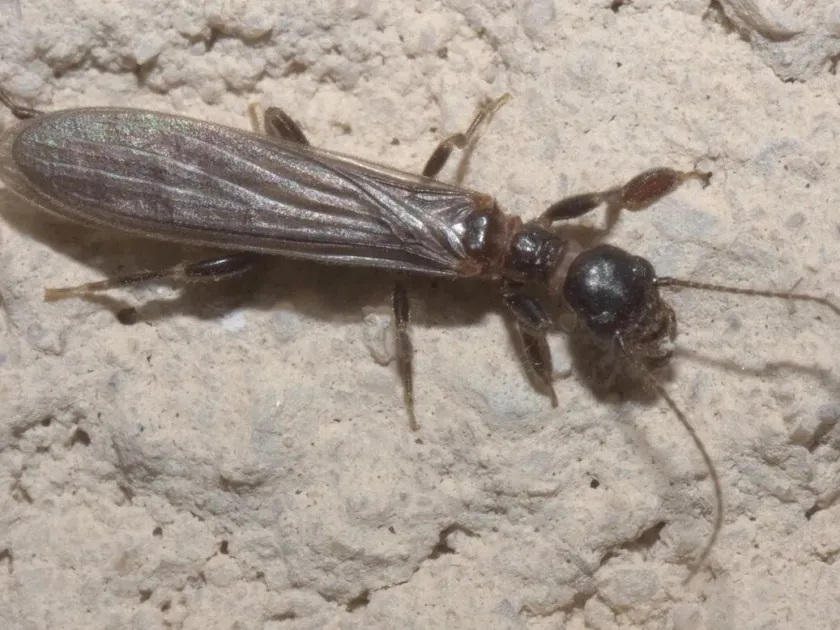
The adults have elongated, soft bodies, typically dark brown or black in color. While males are often winged and active, females are wingless and spend their entire lives within the silk galleries.
They are specialized to live in tight, confined spaces, building elaborate tunnels that protect them from predators and environmental fluctuations in humidity and temperature.
The life cycle involves incomplete metamorphosis, with nymphs appearing as smaller versions of the adults, gradually maturing as they remain within the communal silk web.
Identification is easiest by locating their silken tunnels on tree bark, rocks, or soil surfaces in humid, shady environments where these insects thrive undisturbed.
What it damages
These insects primarily feed on lichens, mosses, and organic matter found on the bark of trees, but they can damage the plant tissues during the construction of their tunnels.
While they do not typically kill healthy trees, heavy infestations can lead to physical damage to the bark, creating entry points for secondary pathogens and fungal spores.
The silk galleries can trap moisture against the bark, which may induce localized rotting or physiological stress in sensitive ornamental or fruit tree species.
Plant health is indirectly compromised when the dense silk networks cover leaves or young shoots, inhibiting normal gas exchange and photosynthesis in those areas.
Gardens with poor air circulation and high levels of debris provide the ideal environment for these pests to establish large, self-sustaining colonies.
Signs of infestation
The most distinctive sign of an infestation is the presence of silk-like galleries on the trunks and branches of affected trees, which look like small, flat white tubes.
If the galleries are disturbed, the inhabitants quickly retreat deeper into the tunnels, which is a defensive behavior unique to webspinners compared to other bark-dwelling insects.
You may notice discoloration or necrotic spots on the bark where the colony has been active for an extended period, indicating continuous mechanical abrasion.
During warm, humid evenings, winged males may be observed attracted to artificial lights, signaling a nearby population that could potentially expand into your garden.
The absence of typical spider webs—which are usually vertical or irregular—contrasts with the tightly woven, flat galleries of Oligotoma michaeli that follow the contours of the bark.
Control measures
Cultural control is the most effective approach; pruning crowded branches to improve light penetration and air circulation discourages the colonization of these insects.
Regularly cleaning the bark of deadwood and moss using a brush can disrupt the habitat, forcing the colonies to abandon their established web networks.
Reducing mulch layers or damp organic debris near the base of trees helps eliminate the moist environment these insects require for their survival and reproduction.
In cases of severe infestation, targeted applications of contact insecticides can be used, though proper timing during the adult active stage is crucial for efficacy.
Encouraging natural predators such as lacewings or spiders that inhabit similar environments can help keep the population of webspinners under natural control.
Taxonomy
- Latin name
- Oligotoma michaeli
- Family
- Oligotomidae
- EPPO code
- OLGTMI
Discussion
No discussions yet — be the first.