
Oceanic webspinner
Oligotoma oceanica
Description
How to identify
The Oceanic webspinner (Oligotoma oceanica) belongs to the order Embioptera and the family Oligotomidae. These unique insects are best known for their ability to weave silk galleries.
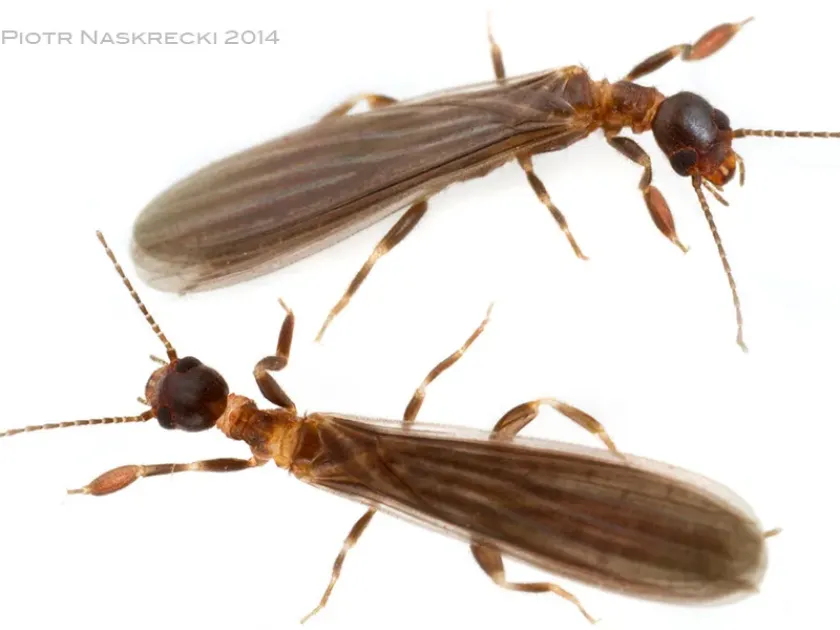
Adults exhibit significant sexual dimorphism: males are generally winged and capable of flight, while females remain wingless throughout their entire life cycle.
A defining physical characteristic is the enlarged foretarsus, which contains specialized glands that produce silk for constructing protective dwellings.
Their bodies are elongated and typically vary in color from light brown to dark brown, providing excellent camouflage against bark and debris.
Because of their secretive nature, they are rarely seen in the open, preferring to stay hidden under layers of silk, within bark crevices, or under rocks.
What it damages
While the Oceanic webspinner is not typically classified as a major agricultural pest, it can cause damage to the bark of ornamental and fruit trees.
The insects feed on bark tissue, mosses, and lichens, potentially causing surface damage that weakens the tree's protective layer.
Extensive silk galleries woven over the bark surface can restrict gas exchange, potentially affecting the health of younger stems if the colony becomes large.
By creating moist, sheltered microhabitats under their silk mats, they can facilitate the growth of secondary fungal infections or pathogens on the tree surface.
In nursery settings, the presence of these silk mats negatively impacts the aesthetic appearance of the plants, often leading to reduced market value.
Signs of infestation
The primary sign of infestation is the presence of thin, tough, silk-like galleries running along the bark, branches, or leaf surfaces.
Carefully opening these galleries often reveals the insects hiding inside, confirming their presence and current activity levels on the plant.
Areas of decaying or peeling bark where silk mats are concentrated indicate that the insects have been feeding in that specific location for an extended period.
The accumulation of small, granular frass (insect excrement) near the silk galleries is another common indicator of active colonization.
Stunted growth or wilting in small branches covered by extensive silk webs can be a clear sign of significant pest pressure.
Control measures
Manual removal of loose, old bark, moss, and lichen during the winter season effectively destroys the webspinner’s natural nesting sites.
Sanitary pruning of infested twigs and branches is an effective way to physically remove population hubs and prevent further spread.
Targeted application of contact insecticides can be useful during peak activity periods to control populations that are not reachable by mechanical methods.
Improving general plant vigor through optimal fertilization and irrigation helps trees recover from minor surface damage caused by the pests.
The use of biological control agents, such as specialized entomopathogenic fungi, can help manage populations while maintaining an environmentally friendly garden.
Taxonomy
- Latin name
- Oligotoma oceanica
- Family
- Oligotomidae
- EPPO code
- OLGTOC
Discussion
No discussions yet — be the first.