
Black webspinner
Oligotoma nigra
Description
How to identify
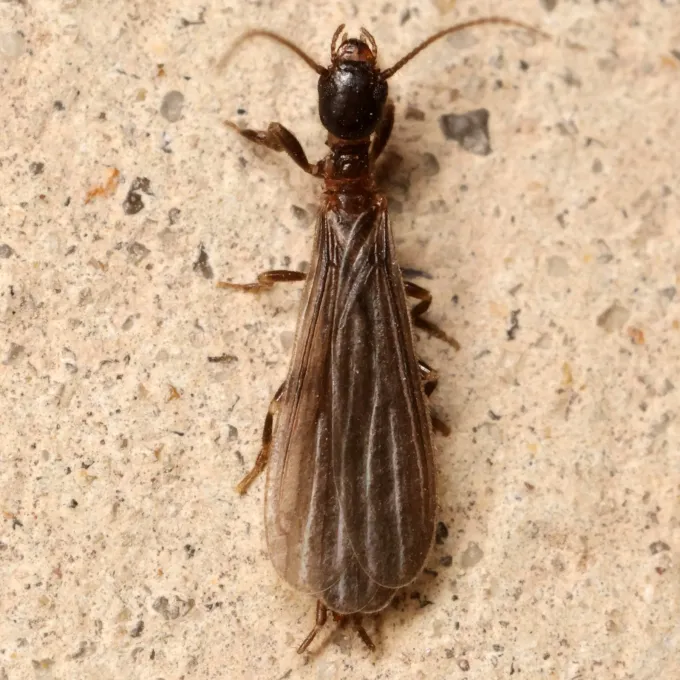
The black webspinner (Oligotoma nigra) belongs to the order Embioptera, family Oligotomidae. These are small, elongated, and flexible insects typically reaching 10-15 mm in length.
Adult males possess two pairs of functional wings and are capable of flight, while females are wingless and superficially resemble nymphs. Their body color ranges from dark brown to black.
A distinctive feature of their anatomy is the presence of specialized silk-producing glands on their forelegs. Insects use this secretion to construct protective tunnels and nests.
Their life cycle involves incomplete metamorphosis; nymphs emerge from eggs looking like miniature versions of adults. They undergo several molts before reaching sexual maturity.
These insects require specific humidity levels for reproduction, leading them to inhabit sheltered locations such as tree bark crevices, underneath stones, or within dense plant debris.
What it damages
While the black webspinner is not generally considered a major agricultural pest, it can cause damage to ornamental and fruit plants in specific ecological conditions.
The primary damage occurs as these insects feed on decaying plant matter, lichens, and occasionally on the soft bark or young shoots of weakened or stressed plants.
In greenhouses or nurseries with high population densities, webspinners can damage the root collars of seedlings and tender stems, potentially providing entry points for secondary fungal infections.
Large colonies that wrap tree branches in dense silk webbing create microclimates conducive to pathogens, which may lead to the premature wilting of terminal shoots.
Plants with textured, rough bark or dense foliage are particularly susceptible, as these surfaces provide ideal conditions for the webspinners to anchor their silk galleries.
Signs of infestation
The most prominent indicator of an infestation is the presence of characteristic silk galleries spun along the surface of tree bark or plant stems.
A close inspection will reveal small, whitish or grayish silk tunnels. These structures serve as refugia where the insects retreat when disturbed.
Small dark fecal pellets mixed with silk debris are often visible on the surface of infested bark, signaling active feeding and colony maintenance.
Localized tissue damage, including discoloration of the bark and fine cracks, can occur in areas where the insects have been feeding on surface cells or plant sap.
If a silk tunnel is carefully opened, the insects themselves may be observed; they are highly agile and move rapidly both forward and backward to escape into their tunnels.
Control measures
Effective management begins with cultural practices, such as clearing away dead bark and plant litter where webspinners construct their nests and galleries.
Improving air circulation and managing humidity levels in greenhouse environments can significantly reduce the establishment of new colonies by eliminating their preferred habitats.
In cases of severe infestation on ornamental plants, contact insecticides may be applied. It is essential to ensure the chemical penetrates the silk galleries for maximum efficacy.
Treatments using pyrethroids or organophosphates applied during evening hours, when the insects are most active outside their tunnels, often yield the best results.
Regular monitoring and the prompt removal of heavily infested plant parts are critical to preventing the spread and buildup of webspinner populations in gardens and nurseries.
Taxonomy
- Latin name
- Oligotoma nigra
- Family
- Oligotomidae
- EPPO code
- OLGTNI
Discussion
No discussions yet — be the first.