
Northern Wheatear
Oenanthe oenanthe
Description
How to identify
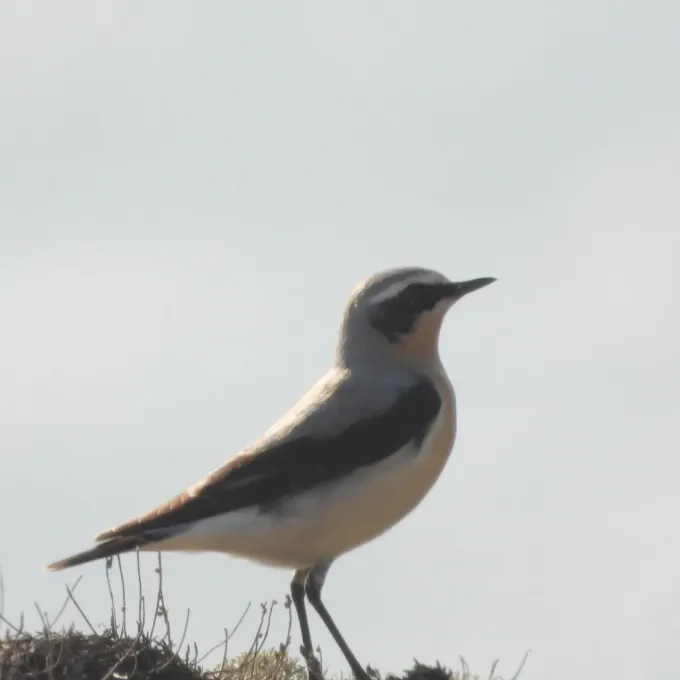
The Northern Wheatear (lat. Oenanthe oenanthe) is a small songbird belonging to the Muscicapidae family. These birds are known for their distinctive appearance and are easily identifiable in open rural landscapes.
The male in breeding plumage features a light gray back, a bold black mask through the eyes, and a bright white rump, which is highly visible during flight. Females and juveniles exhibit more subdued, brownish-buff coloration for better camouflage.
These birds prefer open habitats, including farmlands, pastures, and rocky areas. They are frequently observed perched on elevated spots such as fences, stones, or mounds, scanning the surroundings for food or predators.
They have slender, straight bills adapted for foraging insects and strong legs suited for walking and running on the ground. Adult birds measure about 14–16 cm in length with a wingspan of up to 30 cm.
Nesting sites are typically found in crevices, under stones, or in abandoned rodent burrows. This preference for nesting in disturbed areas often brings them into close proximity with agricultural operations.
What it damages
While the Northern Wheatear primarily feeds on insects, it can occasionally cause damage to crops, especially when insect populations are low or when the bird population is high near agricultural plots.
Damage often occurs during the seedling stage. The birds may dig up freshly sown seeds or pull out young sprouts while searching for invertebrates in the soil, leading to crop thinning and requiring replanting.
During the chick-rearing period, the birds' food requirements increase significantly. If fruit or berries are available on the edge of the plots, birds may peck at these, causing cosmetic and yield damage.
However, it is crucial to note that Northern Wheatears are also beneficial as they consume significant quantities of harmful insects, such as weevils and wireworms, which are common agricultural pests.
The impact is usually most pronounced in small-scale farming and gardening operations where the boundary between cultivated land and wild nesting sites is narrow, facilitating bird movement into crops.
When it appears
Northern Wheatears are migratory birds that return to temperate latitudes in April. Their arrival timing often coincides with the start of the planting season, making fields attractive for foraging.
The peak period of potential damage occurs in June and July during the nesting and chick-rearing season. During this time, the birds are highly active and spend significant energy foraging in open fields.
Following the fledging period, birds begin to congregate and roam. By late summer, they may frequent agricultural areas where early grain crops are maturing before preparing for their autumn migration.
Migration to wintering grounds usually begins in late August or September. By the onset of autumn, the birds have left their breeding territories, effectively ending the season of risk for crops.
The seasonal availability of insects is a key factor in their behavior. In years with limited natural prey, birds are more likely to exhibit opportunistic feeding behavior on vegetable crops or grains.
Signs of infestation
Typical behavior, such as hopping between perches with rhythmic tail-flicking, is the most obvious sign of their presence. They are alert and will often flush away when approached.
Physical evidence of damage includes gaps in row crops, uprooted seedlings with small puncture marks from bills, and exposed seeds on the soil surface. Such signs are usually localized around favored nesting or perching areas.
The presence of nests under rock piles or in nearby abandoned structures is a strong indicator of localized bird activity. Monitoring these areas is recommended during the early growth stages of crops.
Bird droppings near the edges of fields and on elevated perches provide visual confirmation of their regular transit points, helping to identify the exact areas where protection measures are needed.
- Reduced stand density of young crops.
- Missing seeds in the soil after planting.
- Visual sightings of birds perching near the fields.
Control measures
Visual deterrents such as reflective tapes, spinning mirrors, or predator silhouettes are effective in keeping birds away from sensitive crop areas. It is helpful to periodically relocate these tools.
Acoustic deterrents that play alarm calls or distress signals can be highly effective. The key is to use randomized timing and different types of sounds to prevent the birds from becoming habituated.
Cultural control methods involve planting seeds at the appropriate depth to minimize exposure and accessibility. Clearing debris, such as rock piles or unnecessary vegetation from field borders, removes potential nesting sites.
Netting remains the most reliable solution for protecting valuable crops in small gardens or high-value experimental plots, providing a physical barrier that prevents any access to the plants.
Since the birds provide an ecosystem service by eating pests, control measures should be targeted and applied only when necessary during peak damage periods rather than seeking total exclusion.
Taxonomy
- Latin name
- Oenanthe oenanthe
- Family
- Muscicapidae
- EPPO code
- OENAOE
Discussion
No discussions yet — be the first.