
Water dropwort
Oenanthe
Description
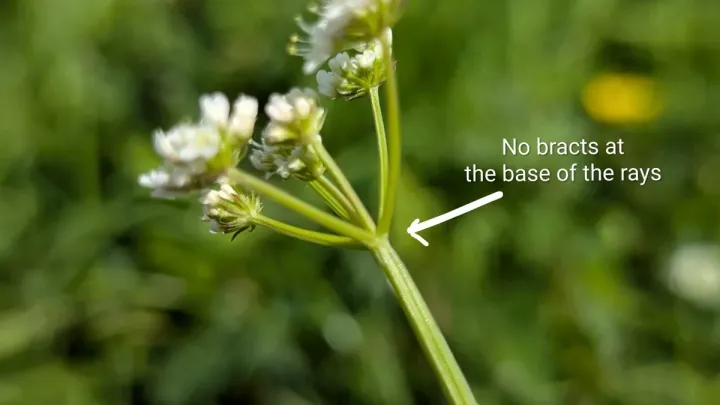
How to identify
Water dropwort (genus Oenanthe) belongs to the Apiaceae family. These plants are predominantly perennials or biennials that thrive in wetlands.
They typically exhibit fern-like foliage and white, umbrella-shaped inflorescences, making them resemble other common umbelliferous plants.
The genus is notorious for containing highly toxic species, such as Oenanthe crocata, which is lethal if ingested by humans or animals.
Their root systems often feature tuberous structures that can be mistaken for parsnips or other root vegetables by the unwary.
They are widely distributed across the Northern Hemisphere, consistently found in marshes, along riverbanks, and in waterlogged agricultural landscapes.
What it damages
Water dropwort causes minimal physical damage to crops, but poses a severe fatal threat to livestock and horses grazing in infested fields.
Ingestion of the plant causes rapid onset of symptoms, including convulsions and organ failure, which can lead to high mortality rates in livestock.
As a colonizing weed, it displaces beneficial grasses and forage crops in wet areas, effectively reducing the productivity of pastures.
Contamination of fodder with dried water dropwort fragments is a significant concern for hay production and storage quality.
Farmers must treat infestations with extreme caution, as the plant's toxicity remains high even in contaminated soil and water sources.
When it appears
The growing season for water dropwort begins in early spring, as the plant rapidly emerges from overwintering tubers as soon as temperatures rise.
Flowering usually occurs from late spring through mid-summer, representing the period when the plant's neurotoxins are most concentrated.
Seeds are dispersed in late summer and autumn, often utilizing water currents to spread into new areas across the farm and surrounding wetlands.
While the top growth dies back during the dormant winter period, the root system remains viable, allowing for explosive growth in the following season.
Weather conditions, specifically prolonged periods of heavy rainfall, significantly promote the rapid expansion of water dropwort populations.
Signs of infestation
The primary identification sign is the characteristic white, lace-like floral umbrella that stands out in damp meadow environments during summer.
Livestock poisoning signs are dramatic, characterized by drooling, nervous tremors, violent seizures, and respiratory distress shortly after ingestion.
Field infestations are clearly visible as dense clusters or patches along irrigation ditches, stream banks, and poorly drained depressions.
A telltale sign is the peculiar, sometimes sweet smell released when the roots or stems are crushed, accompanied by a yellowish or cloudy sap.
Scouting for the plant requires checking areas with high moisture levels where standard crop protection programs often miss these toxic intruders.
Control measures
Total physical removal, including the complete extraction of the tuberous roots, is the most effective way to eliminate a localized infestation.
Chemical control using systemic herbicides can be effective if applied during the plant's active vegetative growth phase before flowering.
Field drainage and infrastructure maintenance are crucial long-term strategies to make the environment unsuitable for water dropwort survival.
Strict monitoring protocols must be implemented to prevent any contaminated forage from entering the livestock feed chain.
- Manual grubbing of root tubers
- Application of selective systemic herbicides
- Improved land drainage systems
- Bi-annual monitoring of pasture edges
Taxonomy
- Latin name
- Oenanthe
- Family
- Muscicapidae
- EPPO code
- OENASP
Discussion
No discussions yet — be the first.