
Oedaleus
Oedaleus
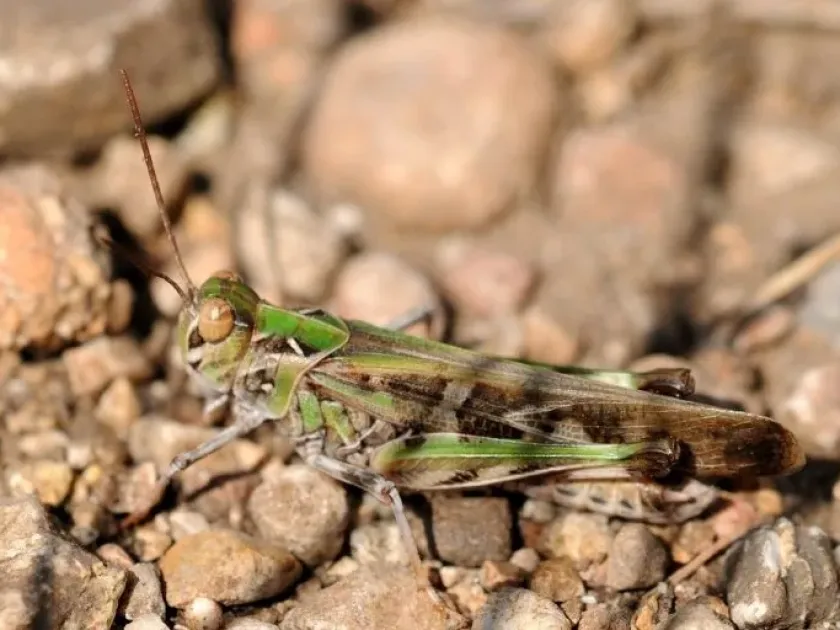
Description
How to identify
Oedaleus is a genus of insects belonging to the family Acrididae, commonly known as short-horned grasshoppers. These insects are characterized by their sturdy build and specialized jumping legs designed for rapid movement.
Adults often display cryptic coloration, blending seamlessly with dry vegetation, soil, or stubble. A notable morphological feature of many species within this genus is the presence of patterned hind wings, often brightly colored, which are revealed during flight.
The head features a strong, biting mouthpart capable of consuming various plant tissues. Their compound eyes are large and provide high-resolution movement detection, essential for avoiding predators in open field environments.
Antennae are shorter than the body length, a key diagnostic feature distinguishing them from crickets. The pronotum (the plate covering the thorax) often features distinct ridges or markings that are essential for accurate identification.
They are primarily diurnal and thrive in hot, dry climates. Agricultural fields located near uncultivated grasslands are at the highest risk of colonization by these insects, especially during drought years.
What it damages
Oedaleus grasshoppers are generalist herbivores (polyphagous) that can cause significant damage to a wide range of agricultural crops. They are particularly destructive when population numbers reach outbreak levels.
Cereal crops, including wheat, barley, oats, and millet, are frequently targeted. These insects consume both the leaf blades and the tender green stems, leading to massive defoliation of the crop canopy.
Corn and sorghum are also highly susceptible. Grasshoppers often feed on the edges of leaves first, gradually consuming the entire plant surface, which results in stunted growth and drastically reduced yields.
During extreme weather events, such as prolonged droughts, the natural vegetation dries out, forcing grasshopper swarms to migrate to irrigated fields. This sudden influx can decimate a healthy crop within a few days.
Beyond direct tissue consumption, the feeding sites become entry points for various pathogens, including fungi and bacteria. This secondary damage can lead to stem rot and systemic disease, further compromising the harvest quality.
When it appears
The life cycle of Oedaleus typically involves a single generation per year. Most species overwinter as eggs, which are deposited in the soil in clusters known as pods (oothecae).
In spring, rising soil temperatures trigger the hatching process. Nymphs emerge in stages, initially feeding on low-lying weeds and wild grasses near their hatching sites before moving into more dense agricultural crops.
The adult phase, which is the most mobile and destructive, typically occurs mid-to-late summer. During this time, insects disperse widely across the landscape, feeding aggressively to build reserves for reproduction.
Mating and egg-laying occur in the autumn. Females carefully choose sites with suitable soil moisture and temperature, often preferring compacted ground, roadsides, or fallow fields for their future generations.
Effective management requires monitoring from early spring through mid-summer. Identifying hatching sites early allows for localized control before the insects develop their wings and become harder to manage.
Signs of infestation
The first signs of infestation include irregular, ragged holes in the leaves. Unlike other pests, grasshoppers consume the leaf from the edges inward, leaving a jagged, skeletonized appearance to the foliage.
Another clear indicator is the presence of frass (fecal pellets) under the plants. These small, cylindrical pellets are easily spotted on the soil surface and indicate a large, actively feeding population.
Increased insect activity is the most immediate warning sign. Walking through a field and noticing large numbers of insects leaping into the air is a reliable indicator that the population density is high.
Large patches of completely consumed vegetation (bare spots) indicate that a swarm has been feeding in that specific area for a sustained period. These patches tend to expand as the swarm moves.
Injured plants often exhibit wilting or premature yellowing due to the loss of photosynthetic area. If damage occurs during the stem elongation stage, the plant may lose structural integrity and fall over.
Control measures
Controlling Oedaleus requires an integrated approach that focuses on both cultural practices and targeted chemical interventions. Minimizing favorable breeding grounds is the first line of defense.
Tilling the soil after harvest is highly effective at destroying egg pods. By bringing the pods to the surface, they become vulnerable to desiccation by the sun and predation by birds and small mammals.
When economic thresholds are exceeded, the use of insecticides is necessary. Effective agents include pyrethroids, organophosphates, or insect growth regulators, which are best applied while nymphs are still young.
Monitoring field borders and adjacent uncultivated land is critical. Treating these "buffer zones" can often prevent the infestation from entering the main crop, effectively reducing the need for field-wide spraying.
- Crop rotation to disrupt the life cycle.
- Maintaining clean field margins to remove alternative host plants.
- Biological control using entomopathogenic fungi or natural predators like parasitic wasps.
Taxonomy
- Latin name
- Oedaleus
- Order
- Orthoptera (locusts)
- Family
- Acrididae
- EPPO code
- ODALSP
Discussion
No discussions yet — be the first.