
Rice bug
Oebalus poecilus
Description
How to identify
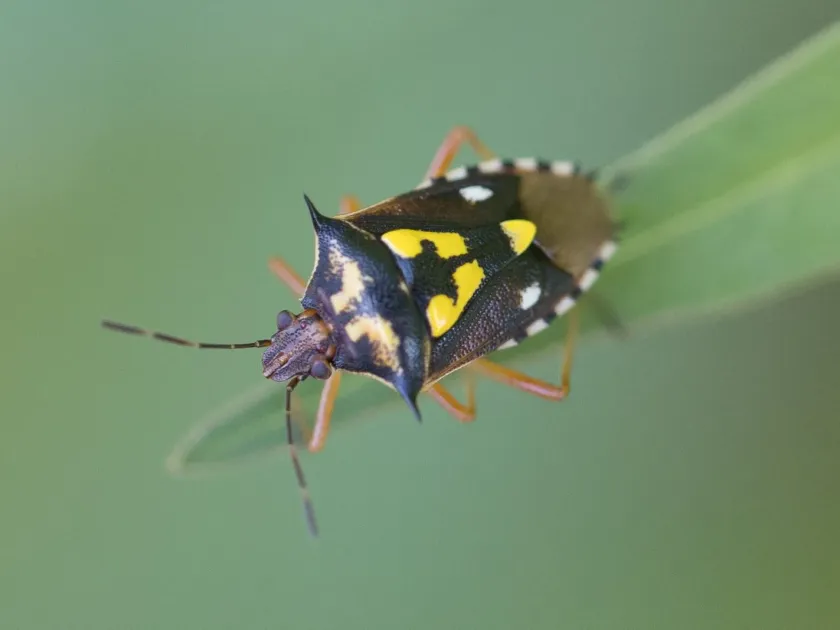
The rice bug (Oebalus poecilus) is a true bug belonging to the order Hemiptera and the family Pentatomidae, commonly known as stink bugs. Adults are characterized by their shield-like body shape, which is a classic feature of this family.
Adults typically measure between 8 and 10 millimeters in length. Their coloration ranges from yellow-brown to darker shades, enabling them to blend seamlessly with the drying stalks and leaves of the rice plant.
The life cycle involves egg-laying on plant surfaces, with eggs usually arranged in orderly rows. These eggs are barrel-shaped and undergo color changes as the embryo develops within.
The nymphal stages progress through five distinct instars. During these phases, the nymphs gradually increase in size and develop wing pads, eventually resembling the adult form.
This species is highly adapted to humid environments, particularly the aquatic conditions of rice paddies, which provide an ideal habitat for their growth and reproduction cycles.
What it damages
The primary host plant for this insect is cultivated rice. The bug is known to feed on the reproductive parts of the plant, specifically targeting the developing rice grains during the milky and dough stages.
In addition to rice, this bug utilizes various grasses and wetland vegetation as alternative hosts, which allows the population to persist even when rice fields are not in the main growth phase.
When feeding, the bug inserts its mouthparts into the grain and injects digestive enzymes. This process liquefies the grain content, which the insect then ingests, causing the grain to become empty or deformed.
High infestation levels are economically devastating, as they directly reduce both the total yield and the milling quality of the harvested grain.
The migration capacity of the adult bugs is significant, allowing them to travel between neighboring fields and rapidly re-infest areas that were previously treated with insecticides.
Signs of infestation
A telltale sign of rice bug infestation is the presence of spotted or discolored grains. These marks, often called pecky rice, are the direct result of the insect's feeding punctures.
In the field, infested panicles may appear empty or exhibit shriveled grains. Because the bug removes the endosperm, the resulting grain is light, fragile, and often breaks during harvest or processing.
Direct observation of the pest is most effective during the early morning or late evening. Adults can be found crawling or resting on the panicles and upper stems of the rice plants.
Advanced signs of damage include a general decline in the health of the panicle, with premature yellowing of the branches despite adequate water and nutrient availability.
- Dark spots on harvested grains.
- Empty, papery-like grain hulls.
- Reduced weight of processed grain.
- Presence of bugs on plant stems.
Control measures
Cultural control is the first line of defense. This involves rigorous weed management on field borders, irrigation canals, and levees, where the pests often congregate before moving into the crop.
Monitoring the population density is crucial. Scouting should be performed regularly as the rice reaches the flowering stage to determine if insecticide application is required.
Chemical control should target the younger nymphal stages, which are more susceptible to contact insecticides compared to the hardened adult bugs.
Selecting appropriate rice varieties with shorter growth cycles or synchronized maturity can help the crop bypass the peak vulnerability period during the bug's seasonal migration.
Integrated pest management (IPM) strategies emphasize the preservation of indigenous predatory insects and parasitoid wasps that can provide significant natural suppression of the rice bug population.
Taxonomy
- Latin name
- Oebalus poecilus
- Order
- Hemiptera (bugs, aphids, leafhoppers)
- Family
- Pentatomidae
- EPPO code
- OEBAPO
Discussion
No discussions yet — be the first.