
Rice stink bug
Oebalus
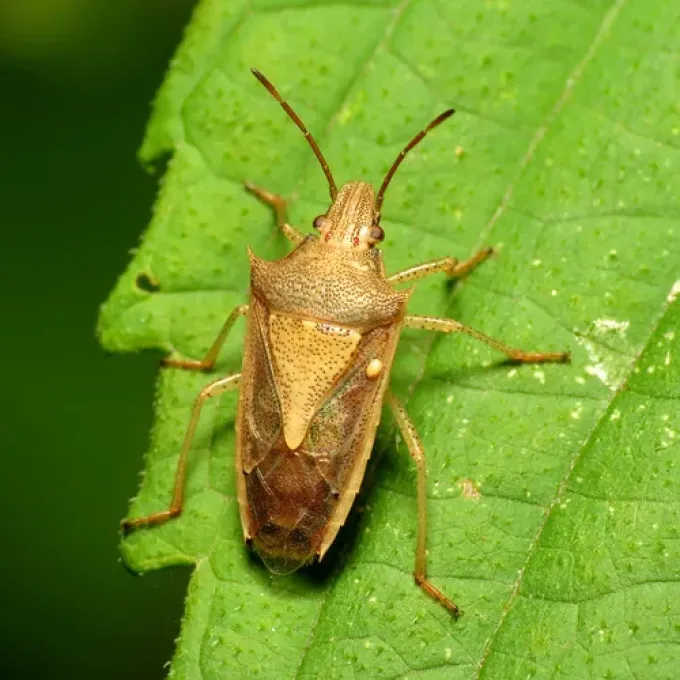
Description
How to identify
The genus Oebalus, particularly the species Oebalus pugnax, belongs to the family Pentatomidae, commonly known as stink bugs. These insects are significant pests of various cereal crops, especially rice.
Adults are straw-colored, elongated insects with a shield-like shape, measuring about 10–12 mm in length. A defining physical characteristic is the presence of sharp, thorn-like projections on the pronotum.
The eggs are barrel-shaped and typically laid in two parallel rows on the underside of leaves. Nymphs pass through five instars, progressively increasing in size and changing their color patterns.
Adults overwinter in grassy areas, leaf litter, or debris near rice fields. As temperatures rise in spring, they emerge and migrate to host plants to feed and lay eggs.
The insect's life cycle is heavily influenced by climate. In favorable conditions, multiple generations can emerge per year, leading to overlapping populations during the critical grain-filling stages.
What it damages
The primary host for Oebalus is rice. They also feed on other grasses such as barnyard grass and cereal crops like wheat, barley, and oats when available.
Both adults and nymphs cause damage by using their piercing-sucking mouthparts to feed on the liquid content of developing grains. They inject saliva containing enzymes that digest the grain contents.
Damage during the early milk stage often results in the grain becoming empty or "pecky." This causes significant yield loss and affects the overall quality of the harvest.
In later stages, the grains may remain filled but suffer from internal discoloration and structural degradation, making them prone to breakage during the milling process.
Furthermore, feeding damage facilitates the entry of pathogens, leading to fungal or bacterial infections that result in stained, darkened grains, which are commercially downgraded.
Signs of infestation
Visual presence of the bugs on the panicles is the most direct indicator. They are often seen feeding on the stems or the grains themselves during the morning or evening hours.
Small, pale spots on the surface of the rice hulls mark the feeding sites of the stink bugs. Over time, these spots can turn dark due to oxidation and secondary infections.
Stunted development of grain panicles or partially empty heads is a common sign that the infestation occurred during the early development of the grain.
A foul, pungent odor is characteristic of these insects, which can be detected in heavily infested fields due to the secretions from their scent glands.
The presence of empty or discolored grains after harvesting and cleaning is a clear diagnostic feature of damage caused by Oebalus species.
Control measures
Integrated Pest Management (IPM) is essential for controlling these bugs. Sanitation is the first step, including the removal of weeds and grasses that serve as early-season hosts.
Monitoring the fields using sweep nets is critical to determine population levels. Control measures should be initiated only when the insect count exceeds the economic injury level.
Chemical control involves the application of registered insecticides. Timing is crucial; applications are most effective when applied during the panicle emergence and grain-filling stages.
Cultural practices, such as synchronized planting, can help ensure that the crop matures uniformly, shortening the period when it is susceptible to stink bug attacks.
- Regular field scouting with sweep nets.
- Removal of wild host grasses around the field perimeter.
- Strategic insecticide application based on scouting thresholds.
- Preservation of natural predators that help suppress local populations.
Taxonomy
- Latin name
- Oebalus
- Order
- Hemiptera (bugs, aphids, leafhoppers)
- Family
- Pentatomidae
- EPPO code
- OEBASP
Discussion
No discussions yet — be the first.