
Odontotermes gurdaspurensis
Odontotermes gurdaspurensis
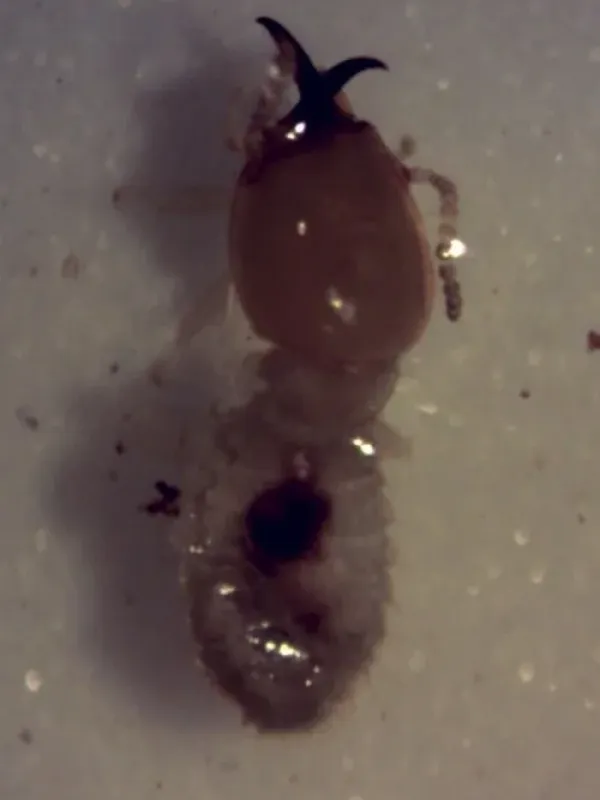
Description
How to identify
Odontotermes gurdaspurensis is a species of termite belonging to the family Termitidae. These insects are highly social and live in complex, multi-caste colonies.
The colony structure includes workers, soldiers, and reproductive individuals, each performing specific tasks to ensure the survival and expansion of the nest.
Workers are primarily responsible for foraging and building extensive subterranean tunnel systems, while soldiers defend the colony from threats.
The species is well-adapted to soil environments and requires a high-moisture microclimate, which they maintain by building elaborate tunnels and nest chambers.
Understanding their social behavior is key to pest management, as the entire colony relies on the queen and constant food supply from foraging workers.
What it damages
This termite is a polyphagous pest known to attack a wide array of crops, including sugarcane, wheat, cotton, and various fruit-bearing trees.
The primary damage is inflicted on the root system, which disrupts the uptake of water and nutrients, eventually causing the plant to wither and collapse.
In sugarcane fields, this pest is particularly devastating as it consumes setts (cuttings), leading to poor germination and patchy crop stands.
By hollowing out stems and roots, the termites significantly weaken the structural integrity of the plant, making it susceptible to lodging.
The impact is often intensified during drought conditions, as the termites aggressively penetrate living plants in search of moisture.
Signs of infestation
The earliest symptom of an infestation is the sudden drooping or wilting of plants, which occurs despite adequate soil moisture levels.
Farmers often notice muddy runways or earthen tubes along the stems of plants or on the surface of the soil, which shield termites from sunlight.
A reduced crop stand with visible gaps in the rows is a strong indicator of subterranean termite activity in the field.
Examining the soil around the base of damaged plants usually reveals the presence of workers and soldiers scurrying away from light.
Tree bark or plant bases may show signs of plastering with soil and excrement, a tell-tale behavior used by these insects to protect their feeding sites.
Control measures
The most effective strategy involves soil application of systemic insecticides at the time of planting to protect vulnerable root zones.
Sanitation practices, such as clearing plant debris and old roots from the field, are essential to remove potential food sources for termite colonies.
Baiting techniques using cellulose materials treated with slow-acting insecticides are highly effective for eliminating entire subterranean colonies.
Deep plowing of the soil is recommended to destroy nesting chambers and subterranean galleries, making the environment unfavorable for termite survival.
Integrating chemical control with proper crop rotation can disrupt the cycle of pest colonization and maintain population levels below the economic threshold.
Taxonomy
- Latin name
- Odontotermes gurdaspurensis
- Family
- Termitidae
- EPPO code
- ODOEGU
Discussion
No discussions yet — be the first.