
Odontotermes feae
Odontotermes feae
Description
How to identify
Odontotermes feae is a species of subterranean termite belonging to the family Termitidae, known for building complex mound structures.
The worker caste is characterized by a creamy-white body and strong mandibles designed for foraging and processing cellulose-rich plant material.
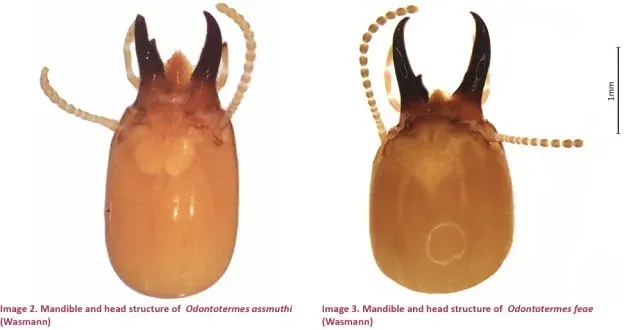
Soldier termites are distinct due to their large, sclerotized, brownish heads and sharp, powerful mandibles used to defend the colony from predators.
Reproductive adults (alates) possess a dark brown exoskeleton and two pairs of wings, which are shed shortly after the nuptial flight.
The colony structure is highly organized, with specific roles assigned to different castes, ensuring the survival and growth of the nest.
What it damages
This species is a major pest that attacks a wide variety of plants, including sugarcane, fruit trees, and various plantation crops.
The termites primarily consume the roots and the internal stem tissues, causing the plant to lose structural integrity and access to nutrients.
Damaged crops exhibit stunted growth, yellowing of the leaves, and eventual death as the root system is effectively destroyed by the pests.
Beyond live plants, Odontotermes feae also causes significant economic loss by damaging timber in buildings, fences, and harvested agricultural products.
In infested areas, the destruction of the underground root system often leads to total crop failure, necessitating immediate intervention.
Signs of infestation
The construction of earthen tubes or galleries over plant stems and tree trunks is the most definitive sign of an active infestation.
Small soil mounds or pellet-like frass at the base of plants indicate that the termites are actively feeding on the roots beneath the surface.
Sudden wilting of healthy-looking crops, especially during dry spells, is a clear indicator that the plant's connection to the soil is compromised.
Hollowed-out stems or tunnels filled with a mixture of soil and excrement are common internal symptoms found upon inspecting damaged plant tissue.
A mass emergence of winged alates following the first rains is a strong indicator of established colonies in the immediate vicinity.
Control measures
Effective management requires an integrated approach that targets both the foraging workers and the central nest structure.
Deep tillage of the soil helps destroy subterranean passages and exposes the termites to environmental stressors and natural predators.
Systemic insecticides applied as soil drenches or seed treatments provide a crucial protective zone around the root system of vulnerable crops.
Biological control methods involving entomopathogenic fungi, such as species of Metarhizium, offer a sustainable alternative for population suppression.
- Regular field scouting for earthen galleries and physical damage.
- Sanitation practices, including the removal of deadwood and crop debris.
- Utilization of slow-acting toxic bait stations to eliminate the entire colony.
Taxonomy
- Latin name
- Odontotermes feae
- Family
- Termitidae
- EPPO code
- ODOEFE
Discussion
No discussions yet — be the first.