
Odontotermes distans termite
Odontotermes distans
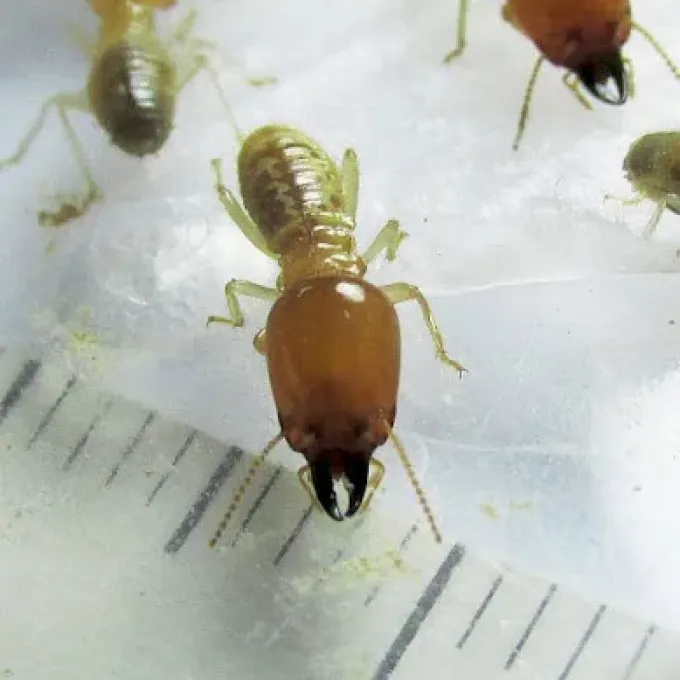
Description
How to identify
Odontotermes distans is a species of higher termite belonging to the family Termitidae, known for its complex caste system and mound-building behavior.
The colony consists of workers, soldiers, and reproductive individuals, each playing a specific role in maintaining the structure and survival of the population.
Workers are primarily responsible for foraging and maintaining fungal combs within the nest, while soldiers possess specialized mandibles for defense.
These termites are known to cultivate symbiotic fungi of the genus Termitomyces, which play a crucial role in breaking down cellulose-rich organic matter.
Identification often relies on the microscopic observation of the soldiers' morphological features, specifically the structure of the head and the mandibles.
What it damages
This species is considered a significant agricultural pest, affecting various crops such as sugarcane, maize, wheat, and peanuts.
The primary damage occurs underground, where termites consume the root systems of crops, leading to water and nutrient deficiency.
Young seedlings are particularly susceptible and can be destroyed within a very short period if the termite infestation is severe.
In addition to root damage, they may hollow out the stems of mature crops, which weakens the plant structure and makes it prone to lodging.
Environmental stress, such as drought, often exacerbates the damage as termites actively seek out live plant tissues to obtain moisture.
Signs of infestation
The presence of mud-covered tunnels or galleries on the plant stems is a classic indication of termite foraging activity in the field.
Patchy wilting of crops is a common field observation that often indicates root damage caused by termite colonies beneath the soil surface.
Upon removing the soil from the base of the plant, one may observe dense clay-like tunnels wrapping around the root zone.
The appearance of small mounds or soil structures in the field is a clear sign that a established colony is present nearby.
Stems of infected plants may show hollow cavities inside, containing characteristic fecal matter and traces of fungal growth.
Control measures
Deep tillage and soil cultivation are essential for disrupting termite mounds and exposing the colony to environmental stressors.
The application of systemic insecticides into the soil during sowing is a standard procedure in high-risk areas to protect developing roots.
Sanitation practices, such as the removal of old crop residues and organic waste, are vital to reduce the attractiveness of the site to termites.
- Biological control using entomopathogenic fungi to infect the colony.
- Maintaining optimal soil moisture to discourage termite movement towards roots.
- Using crop varieties known to have higher tolerance or resistance to termite attacks.
Implementing a regular monitoring program using wooden bait stations helps in detecting termite populations early and allows for targeted intervention.
Taxonomy
- Latin name
- Odontotermes distans
- Family
- Termitidae
- EPPO code
- ODOEDI
Discussion
No discussions yet — be the first.