
Odontotermes assamensis
Odontotermes assamensis
Description
How to identify
Odontotermes assamensis belongs to the order Isoptera and the family Termitidae. These are social insects that organize colonies into distinct castes, including workers, soldiers, and reproductives.
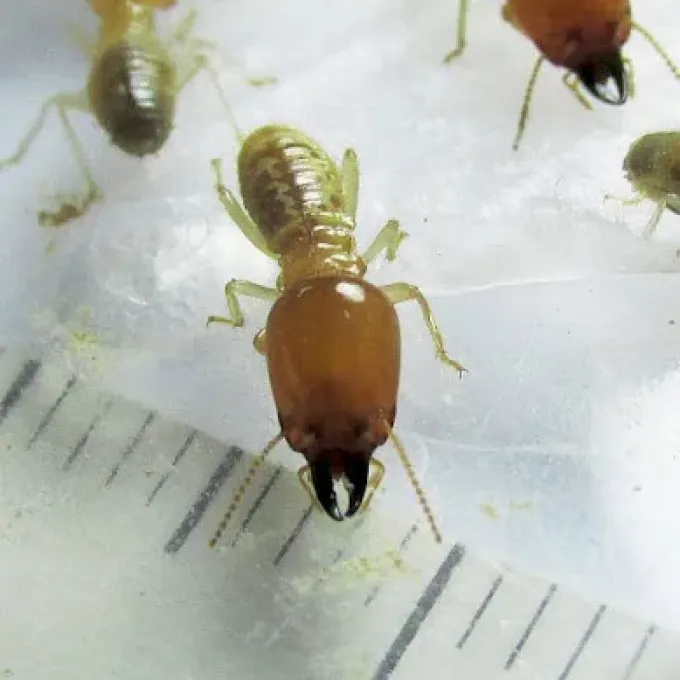
Worker termites are soft-bodied and eyeless, primarily responsible for foraging and nest maintenance. Soldiers are distinguished by their heavily chitinized heads and large, powerful mandibles used for colony defense.
The reproductive caste consists of winged individuals that leave the colony during swarming events to establish new territories. Their life cycle involves incomplete metamorphosis, progressing through egg, nymph, and adult stages.
These termites are known for maintaining symbiotic fungal gardens within their nests, which they utilize to process cellulose-rich plant material. This biological trait is critical for their survival and colony expansion.
Precise identification of this species requires expert entomological examination of soldier morphology, as they share physical characteristics with other related species in the region.
What it damages
Odontotermes assamensis is a significant polyphagous pest, with a particularly devastating impact on tea plantations. Both seedlings and mature, weakened bushes are highly susceptible to their attacks.
The termites primarily attack the root system, root collar, and bark of the plants. By consuming vascular tissues, they disrupt nutrient flow, causing the plant to wither and eventually perish.
While they prefer decaying matter, high population densities drive them to feed on healthy, living woody tissues. This makes them a major threat to the integrity of plantation crops.
The economic impact involves not only immediate crop loss but also an increased vulnerability of the plantation to various soil-borne pathogens that enter through termite-created wounds.
Root damage also impairs the plant's ability to withstand environmental stress, such as drought or nutritional deficiencies, leading to poor yield quality.
Signs of infestation
The most visible sign of an infestation is the construction of earthen tubes or galleries over the bark, which protect the termites from predators and desiccation during foraging.
Internal damage often reveals hollowed-out stems or roots filled with a mixture of soil and termite frass. These galleries can extend deep into the plant structure.
Unexpected wilting of plants, even when soil moisture appears adequate, is a strong indicator of severe root damage. In advanced stages, the plant may lose stability and lean or collapse entirely.
Massive swarming events in the vicinity of the plantation serve as a clear indicator of mature colonies nesting nearby. Small ventilation or entrance holes near the plant base may also be observed.
The presence of fungal growth inside the excavated plant tissue is a hallmark of the activity of this specific termite genus.
Control measures
Cultural control is the first line of defense, involving the removal of stumps, dead wood, and organic debris that provide food and shelter for termite colonies.
Maintaining plant health through optimal fertilization and irrigation improves the natural resilience of the crop against termite damage.
Chemical control usually involves the application of soil-acting insecticides around the plant base. Slow-acting toxic baits are also highly effective, as foragers carry the substance back to the nest to eliminate the colony.
Biological control using entomopathogenic fungi, such as Beauveria bassiana, is gaining popularity as an environmentally friendly alternative to chemical pesticides.
- Regular monitoring of plantation fields for earthen runways.
- Implementation of protective barriers during initial planting.
- Targeted fumigation of active termite mounds detected near the crop.
Taxonomy
- Latin name
- Odontotermes assamensis
- Family
- Termitidae
- EPPO code
- ODOEAA
Discussion
No discussions yet — be the first.