
Odontotermes
Odontotermes
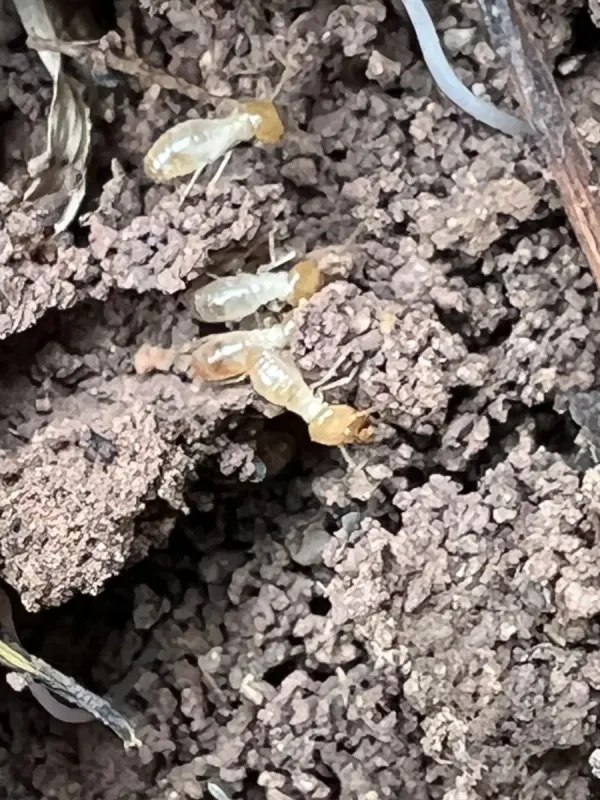
Description
How to identify
Odontotermes belongs to the order Isoptera and the family Termitidae. These social insects live in large, highly organized colonies characterized by a rigid caste system consisting of workers, soldiers, and reproductive individuals.
Worker termites are typically pale, soft-bodied, and wingless. They are responsible for foraging, nest maintenance, and caring for the brood. Soldiers are distinguished by their larger, sclerotized, dark-colored heads and powerful mandibles used for colony defense.
The reproductive caste, often seen during swarming events, possesses dark pigmentation and two pairs of nearly identical wings. After the mating flight, they discard their wings to establish new colonies deep in the soil or within decaying wood.
Colonies build elaborate mounds or subterranean structures made of soil particles and fecal matter. These structures serve to regulate humidity and temperature, providing an ideal environment for the colony to thrive.
Specific identification of Odontotermes species usually requires expert examination of the soldier caste's mandible structure and other morphological traits to ensure correct classification.
What it damages
These pests pose a significant threat to a wide range of agricultural crops, including cereals like wheat, maize, and sorghum. They are notorious for attacking cash crops such as sugarcane, cotton, and groundnuts.
Termites consume cellulose, targeting both the root systems of living plants and the stems of crops. By tunneling into the plant tissue, they disrupt water and nutrient transport, leading to wilting and eventual plant death.
Fruit trees and forestry plantations are also highly susceptible. Odontotermes can strip the bark and destroy the cambium layer, leaving trees weakened and prone to secondary infections by pathogens and fungi.
The economic impact is substantial, as they can cause total crop failure in heavily infested fields. The damage is often hidden underground, making it difficult to detect until the plant starts showing severe stress symptoms.
In addition to primary damage, these pests create entry points for soil-borne pathogens, further exacerbating the mortality rate of the plants in the field.
Signs of infestation
A classic sign of infestation is the presence of earthen tunnels or galleries on the base of plant stems and across the soil surface. These structures protect termites from exposure to light and predators while they forage.
Sudden wilting of healthy plants despite adequate soil moisture is a strong indicator of root damage. If you pull a damaged plant, it often snaps at the base due to the destruction of the main root and lower stem.
Upon excavating the area around the plant, one may discover termites and their characteristic galleries inside the root zone. Hollowed-out stems filled with soil are common findings in infested crops.
Swarming events, where winged termites emerge from the ground after rainfall, indicate the presence of mature, active colonies in the immediate vicinity that are likely to establish new infestations.
- Presence of earthen tubes on the stems.
- Yellowing and unexpected wilting of the crop.
- Hollow galleries within plant tissues.
- Easy uprooting of the plants due to root destruction.
- Appearance of winged termites after rains.
Control measures
Soil application of insecticides is the primary method for controlling these pests. Both contact and systemic chemicals can be applied during planting or through irrigation to create a protective barrier around the root zone.
Cultural practices, such as deep plowing, are highly effective in disrupting termite galleries and destroying mounds. Clearing agricultural fields of crop residues and organic waste reduces the food source available for termite colonies.
Biological control methods involve the use of entomopathogenic fungi such as Beauveria bassiana and Metarhizium anisopliae. These fungi can be introduced into the colonies to trigger epizootics, effectively reducing the termite population.
Crop rotation with non-host species is recommended to break the life cycle of the termite colony in a particular area. Integrated Pest Management (IPM) strategies emphasize early detection and targeted treatments.
Maintaining high soil fertility and optimal plant vigor can help crops resist minor infestations. In severe cases, the destruction of the queen's chamber within the central mound is the only way to permanently eradicate a colony.
Taxonomy
- Latin name
- Odontotermes
- Family
- Termitidae
- EPPO code
- ODOESP
Discussion
No discussions yet — be the first.